Above image: Walls surround Khiva, Uzbekistan’s perfectly preserved inner city, Ichan-Kala
“You’re going where?!” the familiar question asked by friends and family about out planned nineteen-day trip to Central Asia. “The Stans. The Silk Road countries. You know, the land of Genghis Khan and Marco Polo,” we responded, attempting to paint a colorful image of this remote, fabled region largely unvisited by Westerners. Central Asia’s vast territory, larger than the 48 contiguous U.S. states, sits south of Russia, north of Iran and Afghanistan, and west of China, with the Caspian Sea roughly forming its western boundary.
Today’s Central Asia Intoxicates the Senses
Why was I interested in traveling half-way around the globe to experience this part of the world? As a student and young reader who gobbled up history books about foreign lands, I fantasized about the exotic Silk Road: a fabled route traveled by camel caravans of traders and adventurers carrying silk, pearls, spices, tea, ceramics, carpets, and jade from China, on their way to Rome. From the other direction, traders left Rome traveling east to the Orient with glassware, gold, silver, woolen clothes, and wine. Central Asia sat at the crossroads of this network of travel routes, and empires and wealthy cities in this area rose and fell as key trading centers.
Our adventure took us to Turkmenistan, Uzbekistan, and Kyrgyzstan; our original plans included Kazakhstan, but a medical emergency cut our program short by three days. Working through Bestway Tours and Safaris from the Vancouver, British Columbia, vicinity to plan the itinerary, we traveled with a car, driver, and a guide in each country to shepherd us throughout our stay. The twenty-seven-hour slog from our doorstep in Philadelphia, with stops in Frankfurt and Istanbul, to final touchdown in Turkmenistan’s capital city, Ashgabat, required patience to arrive sanely. Yet the lengthy travel time was so worth it.
The long and rich history of the five “Stans” region as the crossroads of ancient and modern civilizations left abundant grand and small vestiges of its past. This vibrant multi-cultural tapestry affords the venturesome traveler diverse and fascinating opportunities and experiences.
Deserts and Mountains Dominate Central Asia’s Landscapes
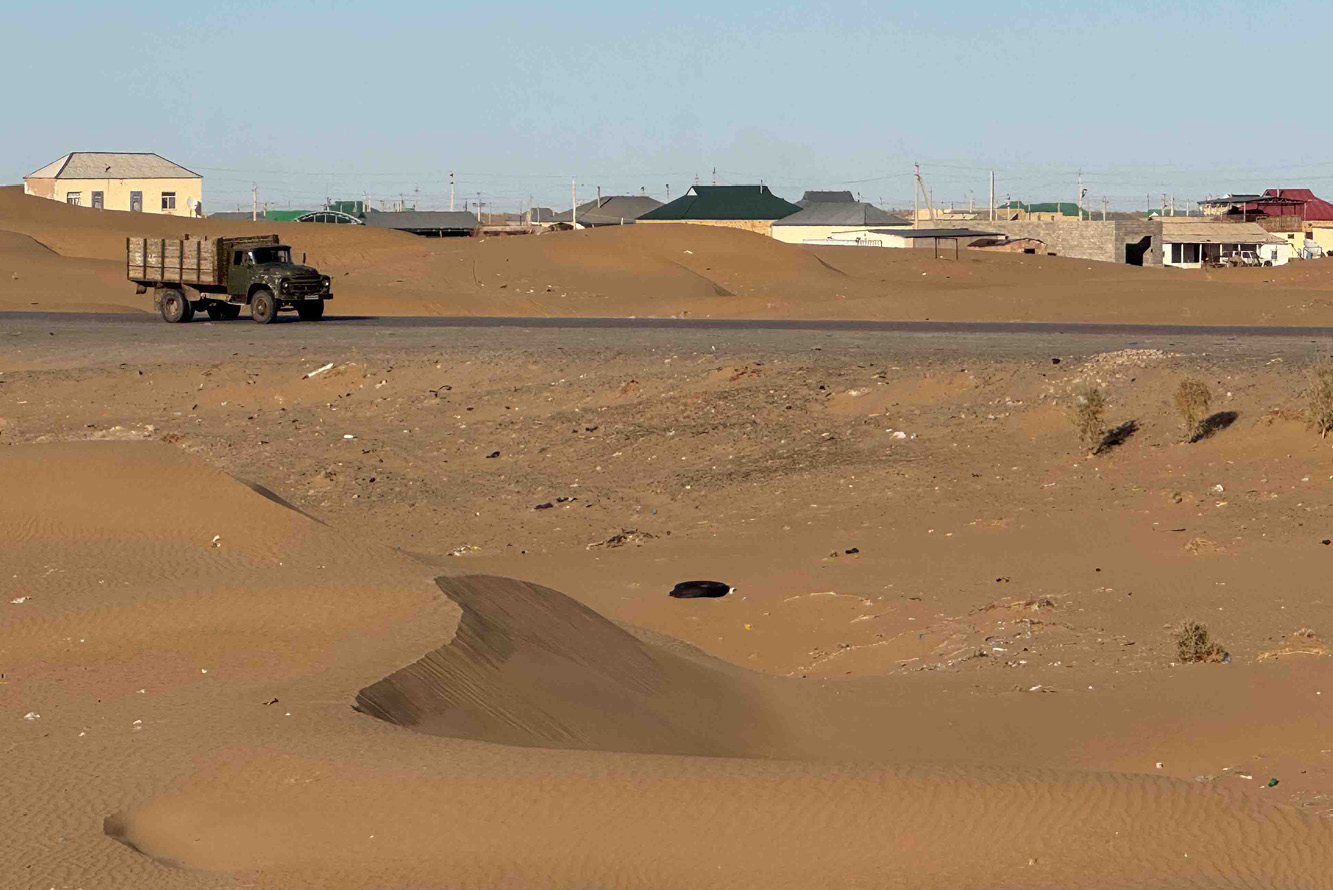
At the western end of this region, deserts occupy 80% of Turkmenistan and Uzbekistan’s lands. Driving between destinations takes hours, though I find staring out a car window hypnotic as we pass through miles of dusty, flat, sandy terrain dotted with scrubby plants, camel herders with their flocks, and occasional small, hardscrabble villages. It’s hit-or-miss finding a suitable western-style toilet at one of the occasional gas stations and local convenience shops, but experienced guides know which stops have them. At one restroom, we discovered an instructional sign designed for locals who encounter a western toilet for the first time. The traditional toilet is a hole in the floor, surrounded by ceramic foot treads to aid in squatting.
The worst road I’ve ever traveled over ran from Ashgabat, Turkmenistan for 4-1/2 hours each way to the famous and amazing Darvaza Gas Crater, on fire since 1971. In many places, the road through the desert practically disappeared. Trucks and cars had created roundabouts into the desert to circumvent these broken-up patches. The harrowing middle-of-the-night return to Ashgabat with only the head lights to guide us (no roadside light poles), narrowly missing a camel that wandered onto the road, prompted me to fall asleep in self-defense rather than indulge my anxiety.
The location of Uzbekistan’s three glorious Silk Road cities were established centuries ago in desert oases, which explains their existence as one-time caravan stops, now vibrant cities in an otherwise parched, sandy environment. The Uzbek government reports the nearly completed high speed rail system will be unveiled in 2026, connecting these cities to each other and the capital, Tashkent.
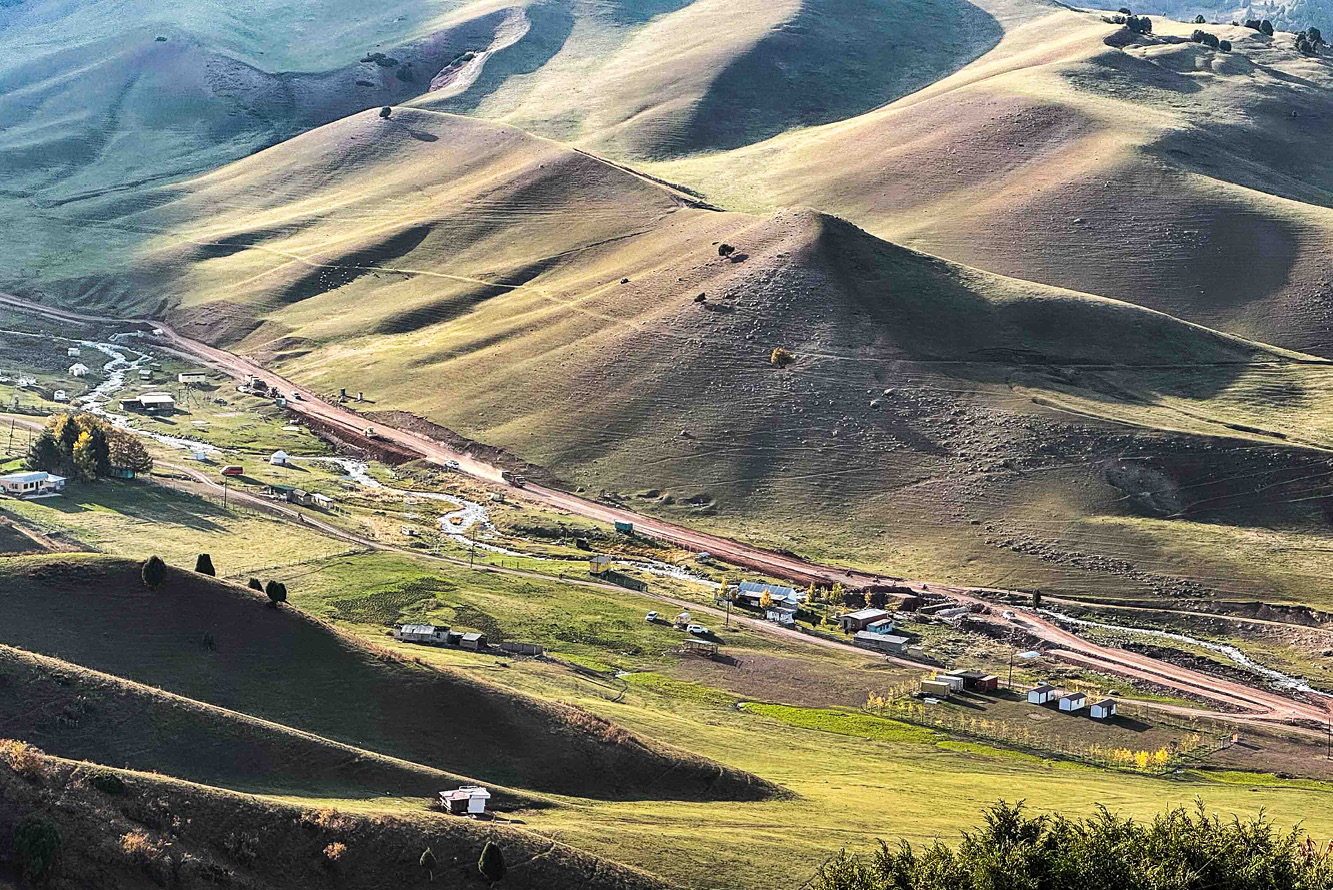
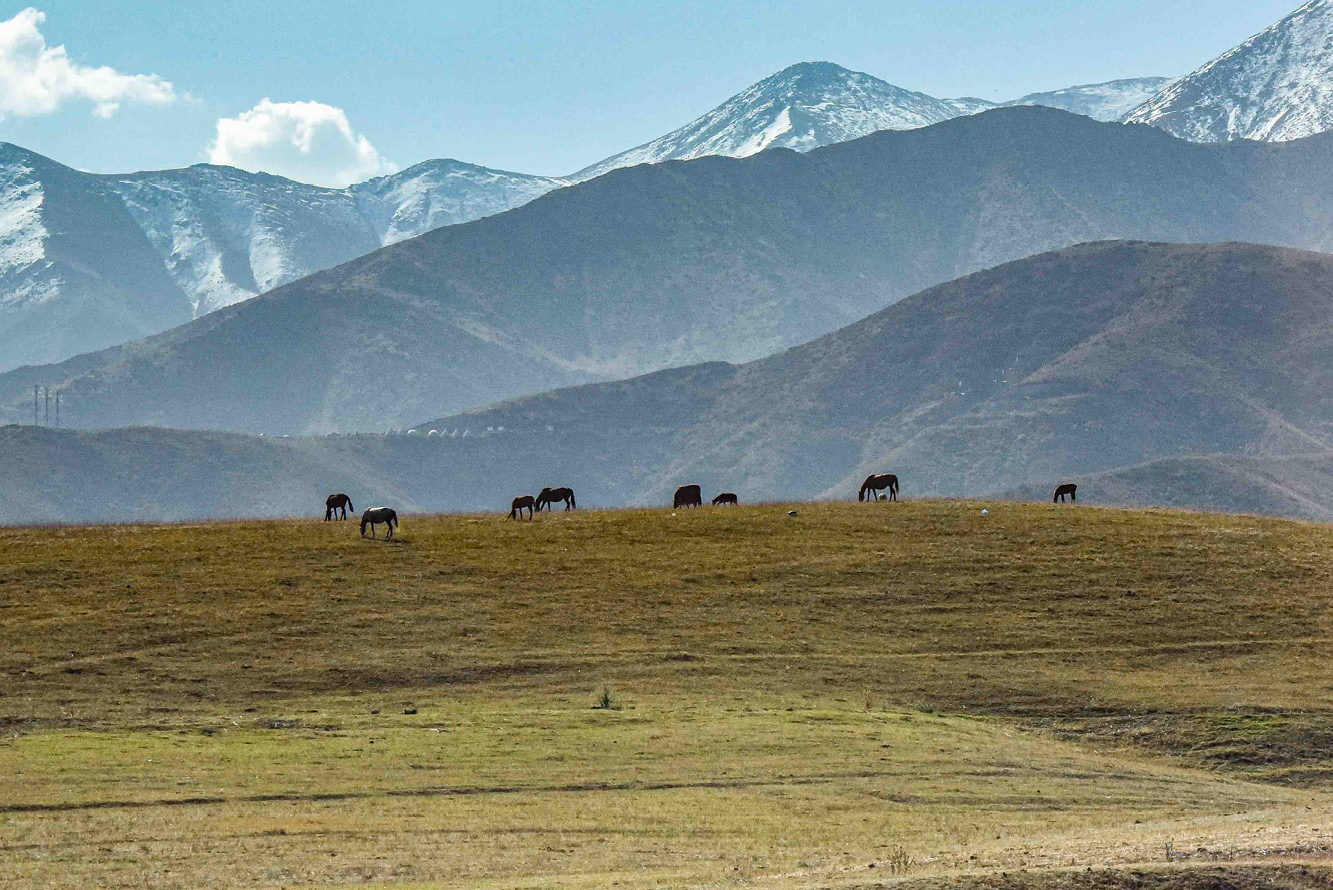
The dramatic mountainous terrain on the eastern end of Central Asia couldn’t be more different. The Tian Shan Mountains dominate 90% of Kyrgyzstan’s landscape. At an average elevation of 9,000 feet for the country, snow-capped peaks interspersed with alpine meadows, coniferous forests, steppe grasslands, glaciers, and 2000 lakes create a unique ecosystem. This idyllic scene attracts sporting aficionados worldwide to trek, ski, snowboard, ride horses and engage in other outdoor activities. Kyrgyzstan’s most famous lake––Issyk-Kul––holds its own record as the world’s eleventh largest and seventh deepest lake. Resorts, recreational facilities and marinas line its north shore, built by the Soviets during the mid-twentieth century as get-aways for their professional employees and families working in the capital cities.
From Bishkek, the country’s capital, we traveled through rolling hills where horses, sheep, and cattle grazed, to Lake Issyk-Kul’s flatter, less developed, more rustic south shore (I call it “yurt land” for the hundreds of yurt camps for travelers, scattered along the lake’s shore) to visit the once-nomadic horse-riding horse-riding eagle hunters (another blog post to check out), an ancient cultural practice kept alive to preserve the nomadic heritage. Kyrgyzstan is homeland to the nomad culture. While many former nomads are now settled in communities, 50% of the population still practice a semi-nomadic way of life, moving livestock around to maximize grazing during the warmer season.
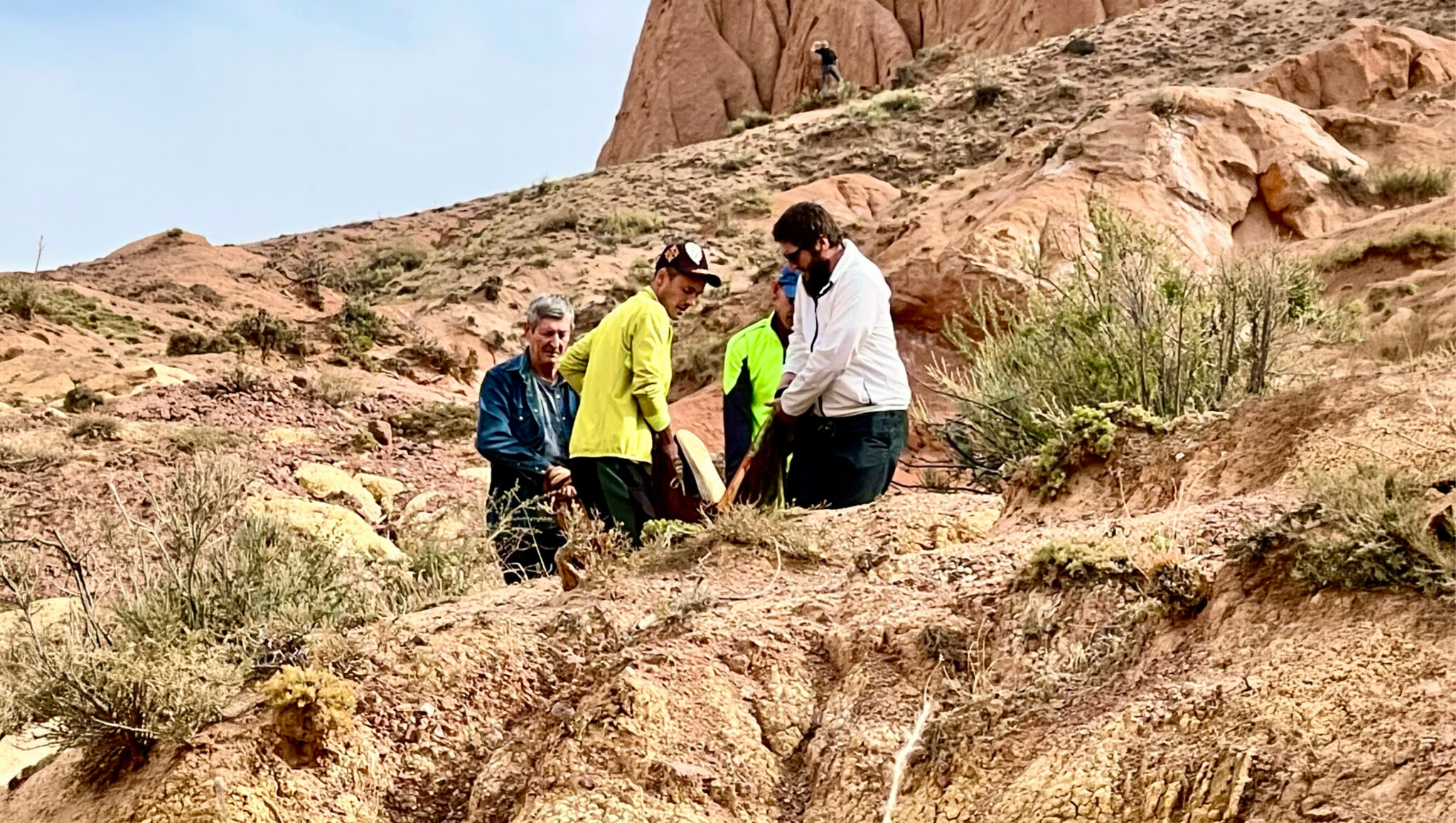
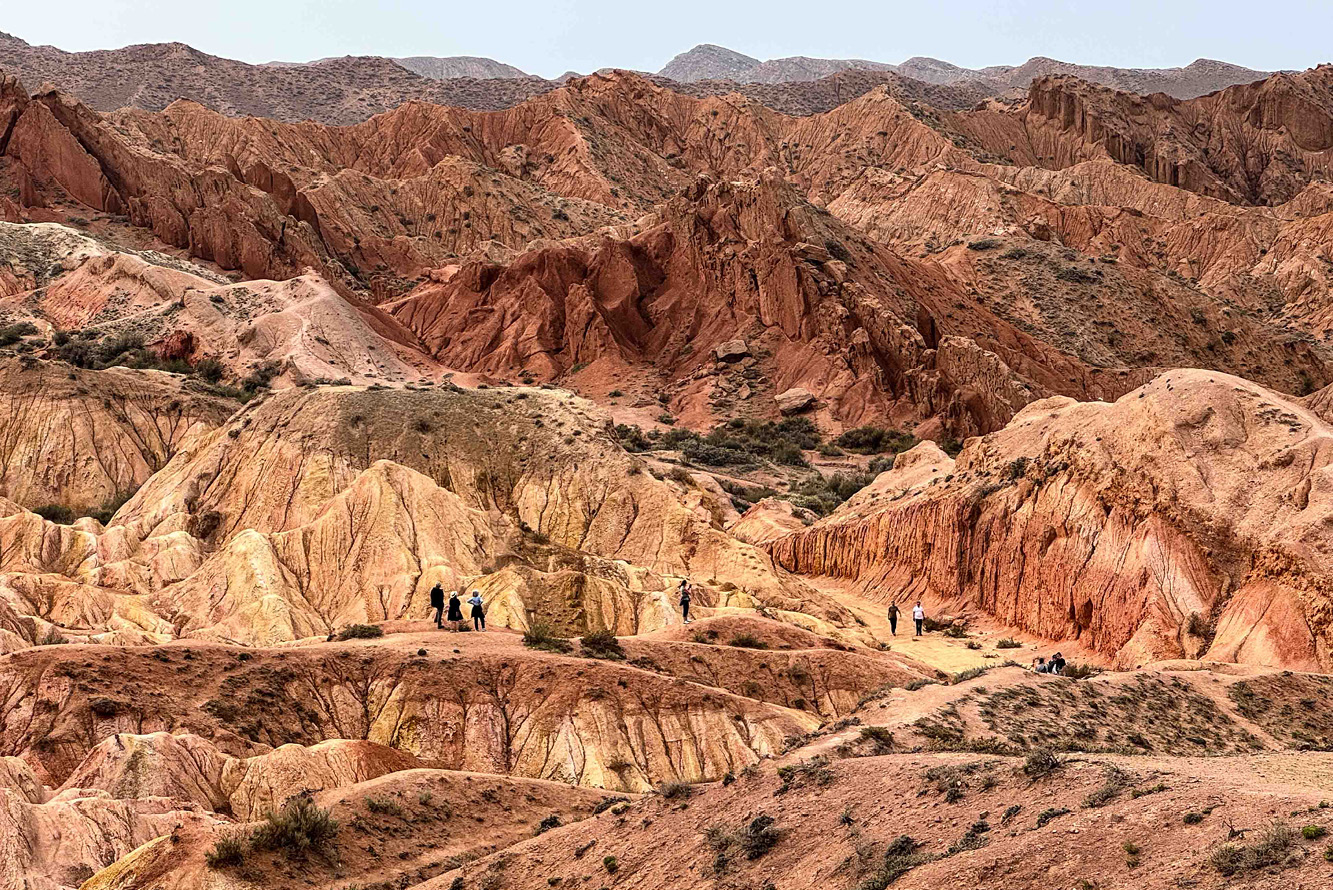
With our guide Alex, we hiked up a pine forest mountain in Barskoon Gorge to the “Beard of the Wisemen” waterfall; I found a branch on the ground that I used as a walking stick for the steep climb. We moved on to Fairy Tale Park, a geologic wonder formed when earthquakes erupted millennia ago, heaving up sedimentary sandstone to produce a kaleidoscope of striking red, yellow, orange and purple spires, ridges, and towering formations. Unfortunately, my walking stick didn’t prevent me from slipping on a gravel-covered path and breaking my leg as we descended a steep hill. Gratefully, the accident happened near the end of our travels. (A MUST: Purchase travel insurance!)

Central Asia’s Cultural Face Reflects Its Rich History
The Stans represent the cultures of all its neighboring nations whose people immigrated to the area over centuries through various conquests, wars, commerce and occupying forces.
Five distinct tribes––Uzbek, Turkmen, Tajik, Kazakh, and Kyrgyz––form the Turkic-based ethnicity of this genetic mix. The range of beautiful faces and skin tones throughout the Stans expresses a diversity of ethnicities: some faces look more Chinese; others more Mongolian. Still other faces with lighter skin tones reflect Persian, Russian and Eastern European origins.
The friendliness, smiles, bright facial expressions and a willing helpfulness spoke to a welcoming, communal culture that eased any anxiety I might have about personal interactions. Except for language, that is. While younger folks speak some English, most people don’t; the lingua franca is still the Russian everybody learned in school. My meager attempts to learn a few Russian phrases (“hello,” “goodbye,” “excuse me, where’s the bathroom?”) before the trip proved feeble at best. Again, our Russian guide came to the rescue. When not speaking Russian, local people still speak their Turkic-based tribal language and dialects, such as Turkmen, Kyrgyz, or Uzbek.
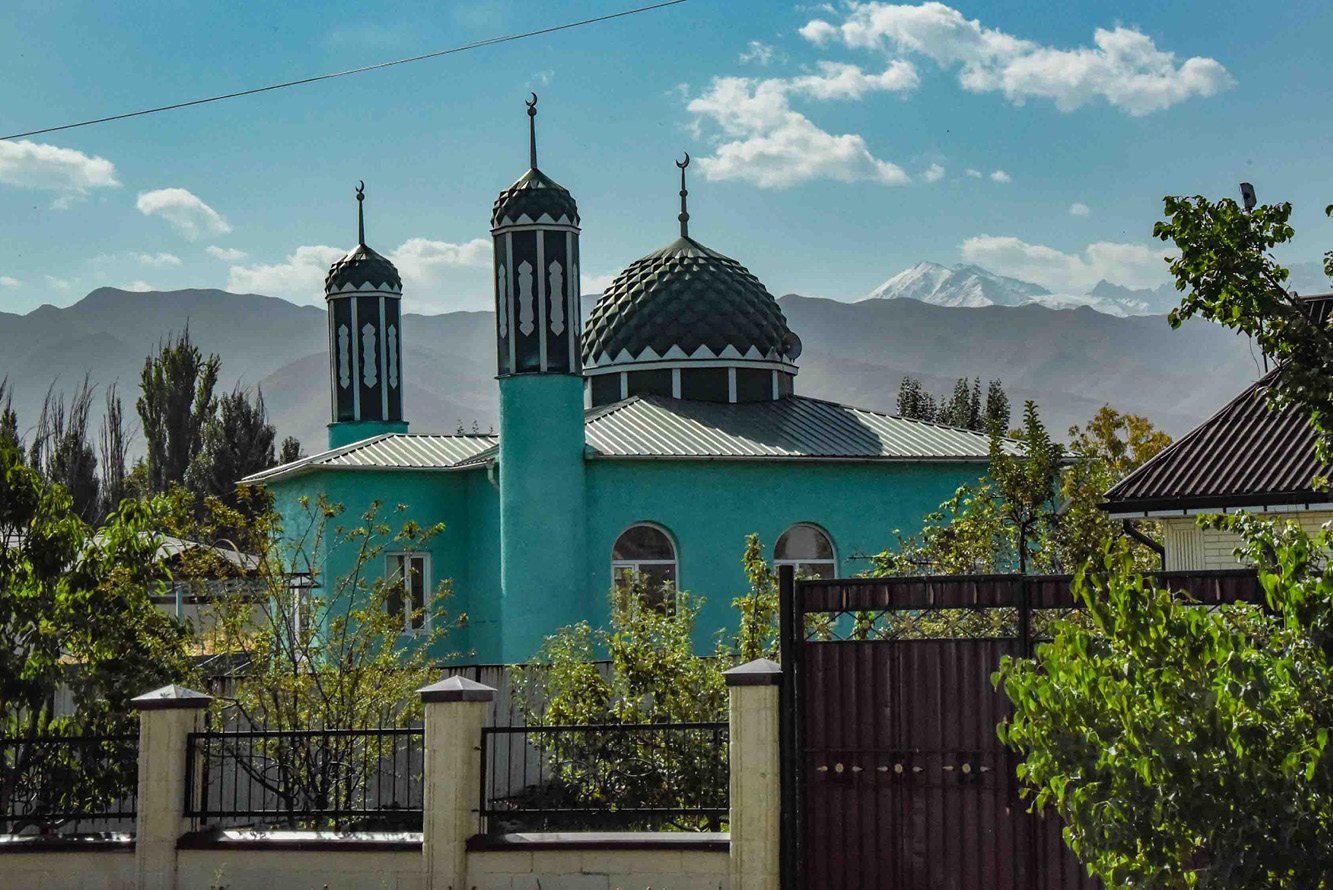
Though Sunni Islam claims the lion’s share––90%– of the region’s religious adherents, all five Stans are secular countries. This means that Islamic laws aren’t legislated through government. As in the West, church and state are separate. The secular Soviets made sure of that. Still, over 1000 years of Islamic presence impacted all elements of daily life––from daily dress, cultural arts and cuisine to the grand architecture that attracts the traveler’s attention to Silk Road cities and towns.
Historic Clothing Styles are Changing
Men and women more closely follow Islamic clothing traditions in rural villages and smaller towns. Women wear long, patterned skirts and scarves or hijabs. Men increasingly are wearing western-style pants and shirts, often donning a colorful skullcap embroidered with patterns of their ethnic community. In larger towns and cities like Tashkent and Bishkek, western clothing prevails. Trendier fashionwear has captured the sartorial preferences of residents in the urban Stans, except in Turkmenistan. This most conservative country among the five encourages its women to wear a national dress style. Men get away with western clothes, and in Ashgabat, this national clothing “suggestion” is relaxed.
Artistic Expression Reflects Rich Asian Traditions
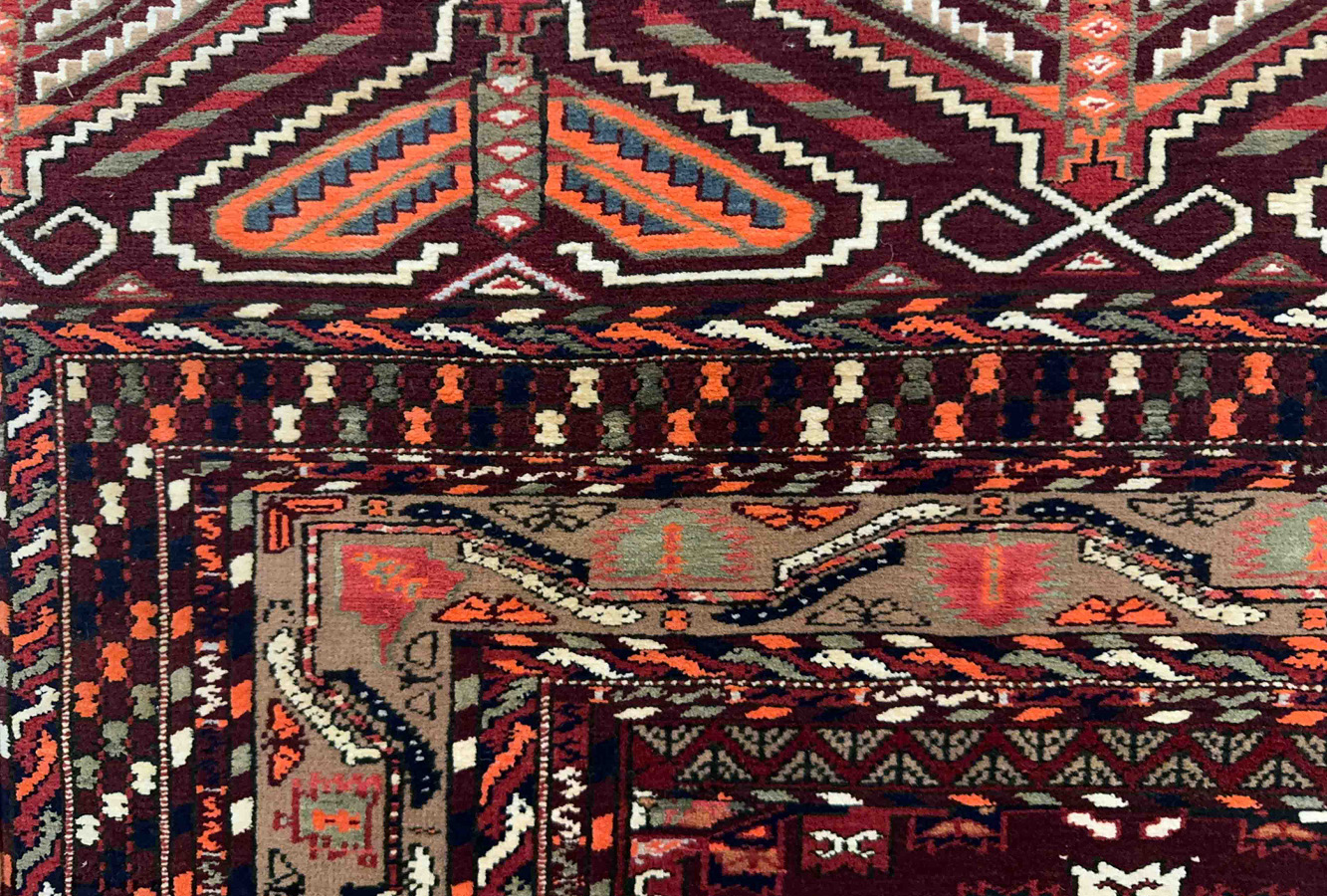
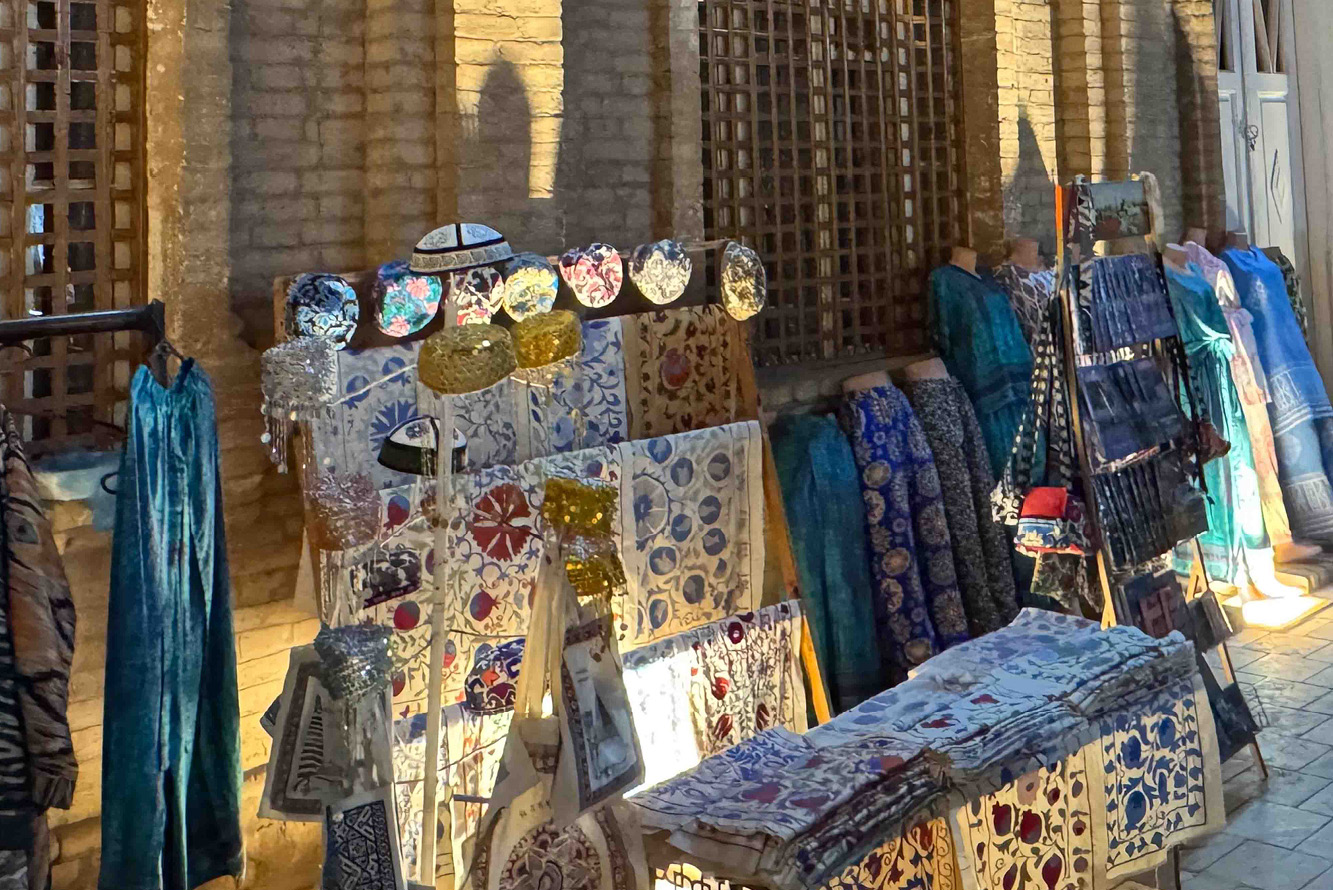
Bright colors and intricate patterns characterize the Stans’ wide variety of arts and crafts creations. Papermaking and hand embroidery of cotton and silk (from Uzbekistan), rich designs of textiles and carpets (particularly from Turkmenistan) and felt rugs, ceramics, and metalworking reflect nomadic traditions and past glory of the Silk Road. Add to that list the craft-making skills of Persian, Mongol, and Turkic origin, like wood carving, jewelry, and leather goods.
Groups of merchants often set up their shops inside former Islamic schools, called madrasas, in what were once ground floor student dorm rooms. Watching a twelve-year-old boy work metal with a chisel and hammer in Bukhara reminded me how early artists and crafts people begin their training. We visited a paper-making facility that used the bark of mulberry trees in a series of washing, drying, and mashing processes to produce the finished product. Mulberry trees serve as home to silkworms for the expanding silk-making industry in Uzbekistan.
Central Asian Cuisine Boasts Both Familiar and Unusual Dishes
With all this walking around to experience the treasures of Central Asia, we built hearty appetites, and we didn’t go hungry. Dishes vary regionally, and many dishes are variations of foods we know from other cuisines. Manty is a dumpling (India, Southeast Asia, Eastern Europe), stuffed with meat, fat, and onions. Pumpkin is a popular vegetable sometimes stuffed in manty shells, as are potatoes. Lentil soup (India) was a tasty lunch. Boorsok, fried dough (almost every cuisine serves a similar snack) is served as chips between meals. Straight from India comes samsy, a variation of samosas.
But the prized, national dish in several of these countries is plov (think pilaf). Made with fried lamb or beef in oil, with onions and orange or yellow carrots, cumin and coriander, then steaming long-grain rice until tender in a kazan, a cast-iron cauldron—a delicious concoction, if a bit on the heavy side. “Plov championships” to crown the best of the best plov maker are held regularly as part of community social gatherings. Our guide Farkhod told us he loves the dish so much that his wife makes plov on Mondays, Wednesdays, and Fridays, and he’ll eat another helping at lunch during the week.
Several meat soups (mostly fatty mutton or beef), salads (I never ate them because they’re washed in local water), a variety of pasta dishes with meat and delicious breads made fresh daily kept us from ever going hungry. Vegetarians would struggle a bit in this meat-eating culture. And I made sure I didn’t eat the often present horse meat, which is a staple in certain communities, as is the never-tried-by-me fermented mare’s milk. Other than those few no-no’s, we enjoyed eating our way across deserts and mountains.
Markets Tell the Cultural Story
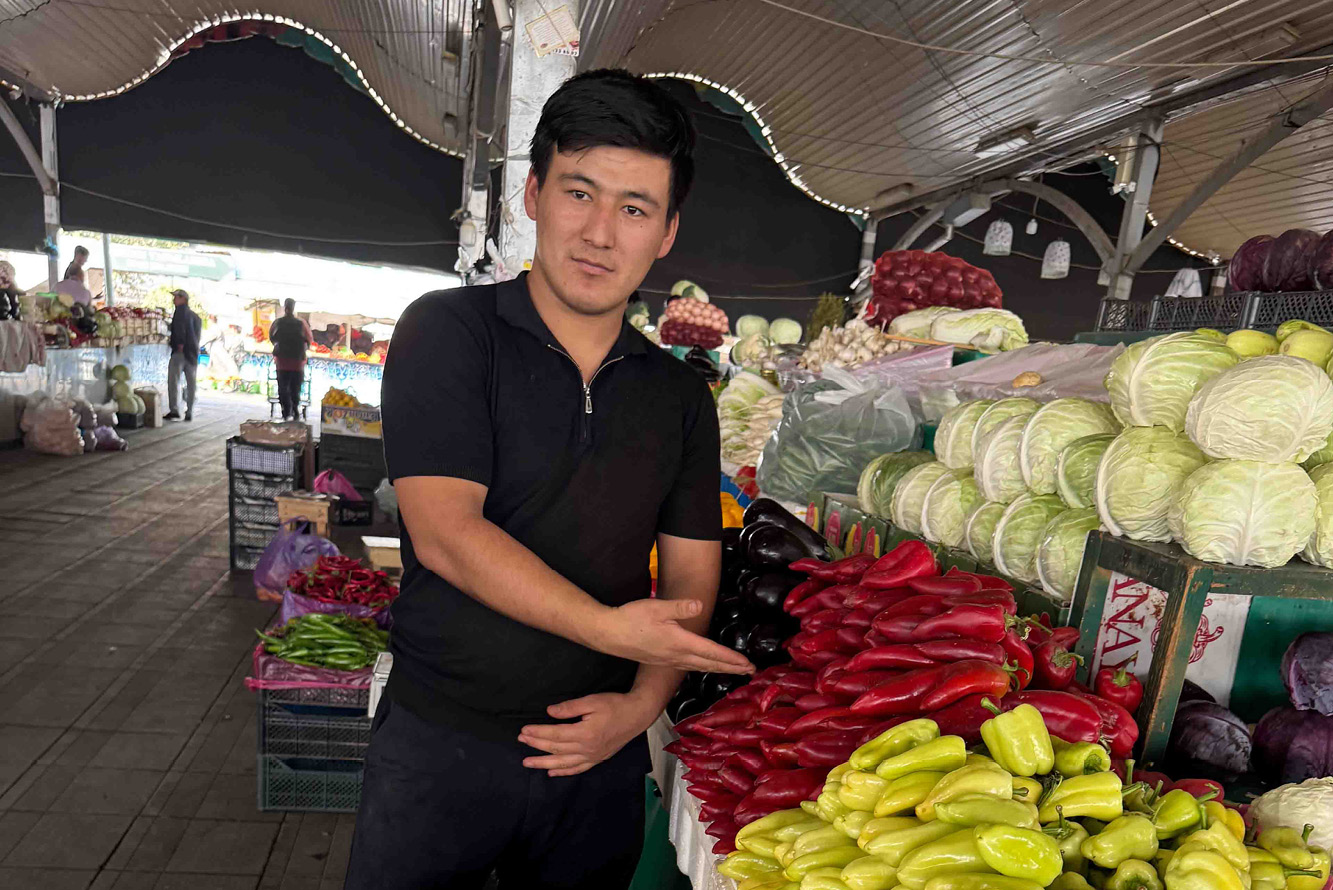
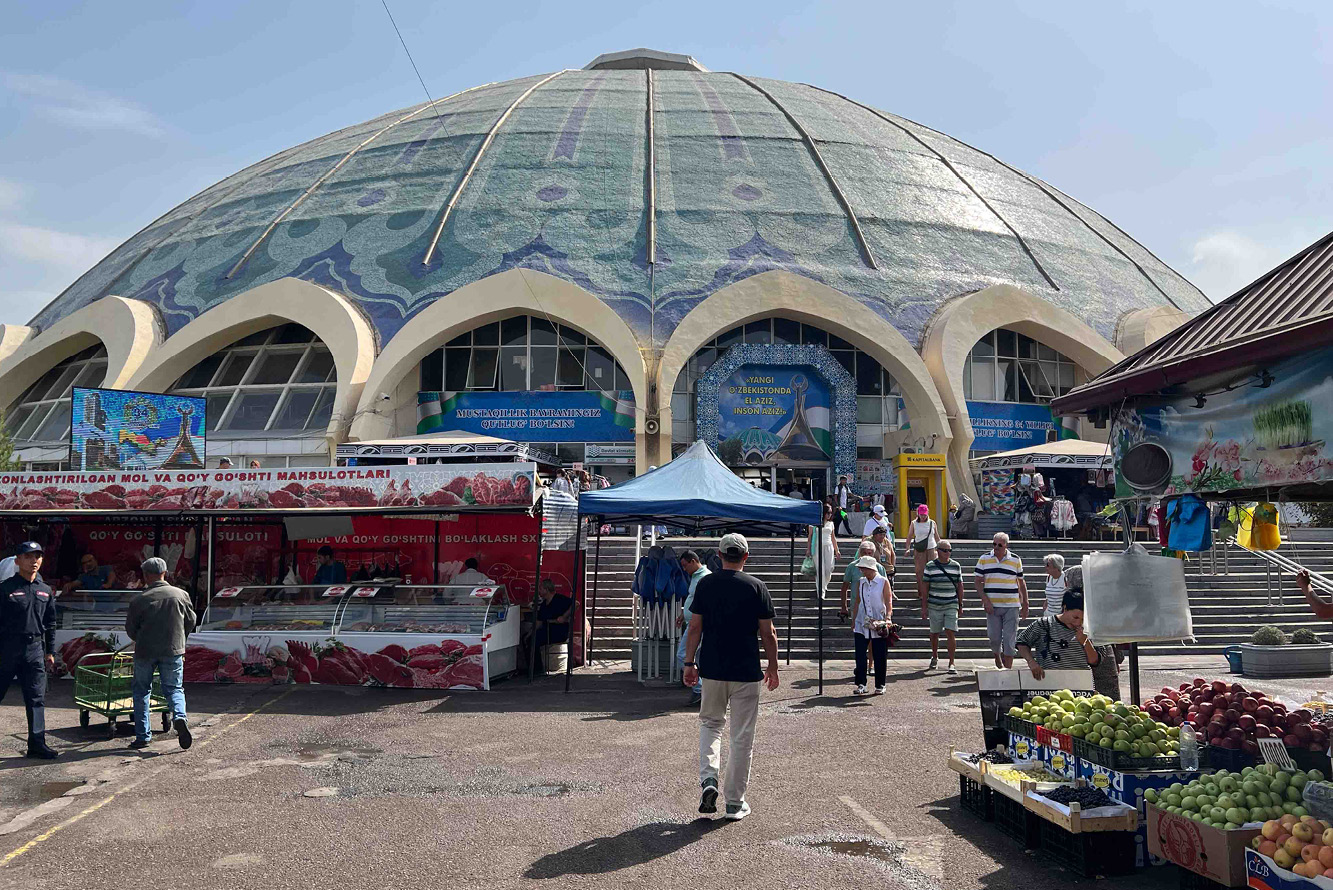
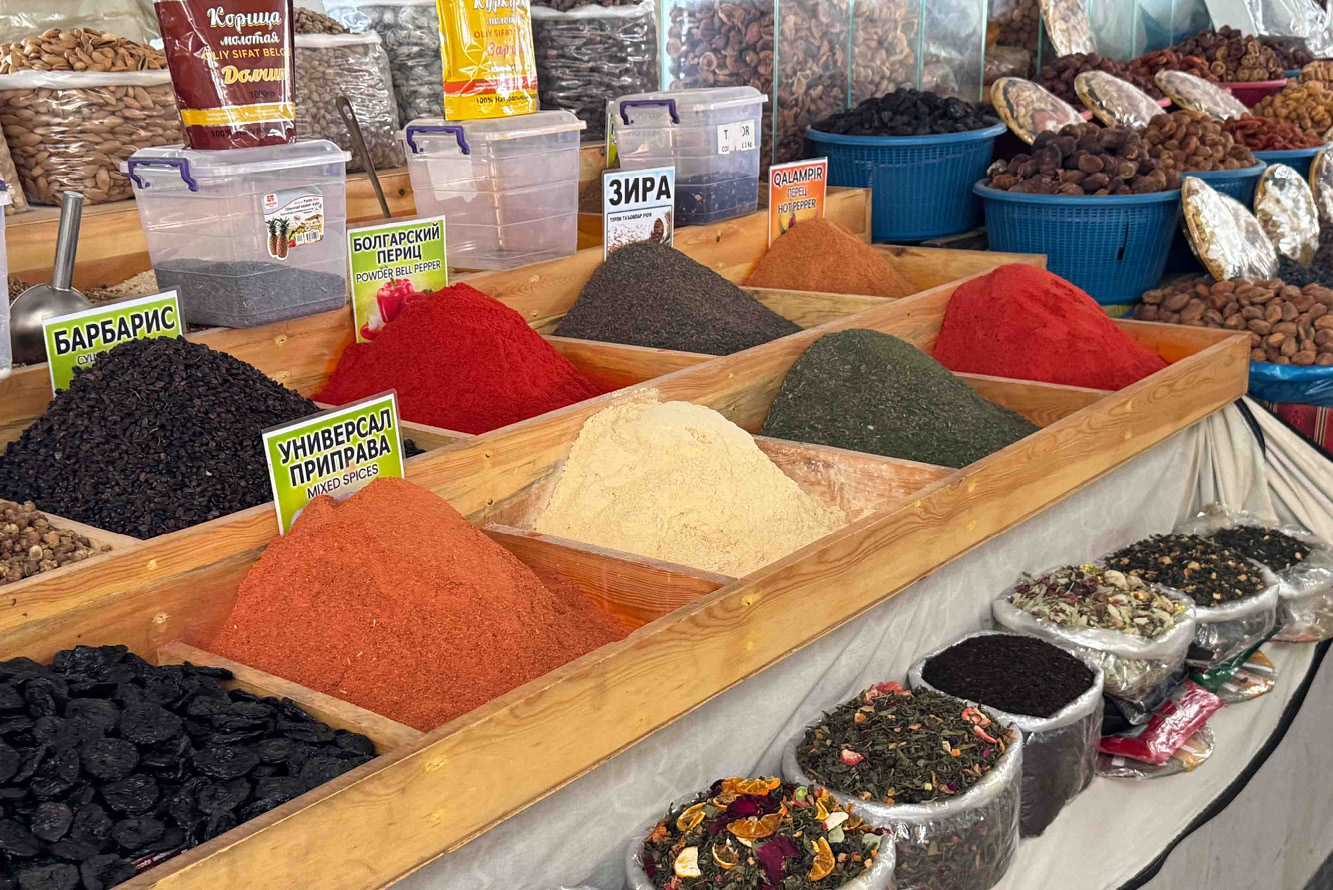
Speaking of food, we explored two large markets, one each in Samarkand and Tashkent. Colorful, tantalizing local markets reveal much about a community’s culture: the variety of goods for sale, how they’re displayed, and the interactions with sales people. Chorsu Bazaar in Tashkent’s Old City houses the meat section under a giant blue dome. Wandering under the dome, the rows of horsemeat counters fascinated me. “I could never…,” I told myself. Nearby, two massive lumps of pure fat caught my attention, learning from our guide they came from the rump of a breed of sheep. Days later, I saw these sheep in a herd that blocked our car on a country road in Kyrgyzstan. Their fatty rumps bounced around. “What kind of sheep are these?” I asked. Our guide replied, “ We call them Kardashian sheep.” Humor is universal.
Sprawling around this circular building, purveyors sell a cornucopia of everything edible––from vegetables and spices, herbs and flowers, to unusual confections and dried dairy products. White-capped men in floor-length white aprons holding long-handled wooden paddles baked bread in a bank of clay-based tandoor ovens, reaching inside the oven to stick the dough to the walls. A dozen stands sold warm loaves of breads of several shapes and sizes, some imprinted with distinctive patterns. How satisfying it was to tear off a hunk of warm bread, inhale its aroma, and stuff it in my mouth. Bread represents the culture’s soul.


Architectural Achievements Show Off Multi-Cultural Influences
The Pinnacle of Islamic Architecture is on Display
Nothing speaks more loudly to me when I visit a new place for the first time than a culture’s unique architectural styles. The most outstanding examples of Central Asia’s history reveals itself in its magnificent Islamic mosques, minarets, and madrasas. Standing next to Bukhara’s 155-foot tall Kalyan Minaret, with its bands of exquisitely designed brick patterns, I understood why Genghis Khan declared the tower so majestic that he let it stand while he razed the rest of the city when he invaded Bukhara in the early thirteenth century. (Yes, the minaret is THAT old.)
Not until I stood in front of a mausoleum in Samarkand’s Shah-i-Zinda Necropolis could I appreciate the beautifully designed and crafted façades of cobalt blue and turquoise tiles designed in geometric patterns and Arabic calligraphy. The color blue symbolizes heaven and paradise. Made from lapis lazuli, these tiles festoon mosques, minarets, and burial vaults.
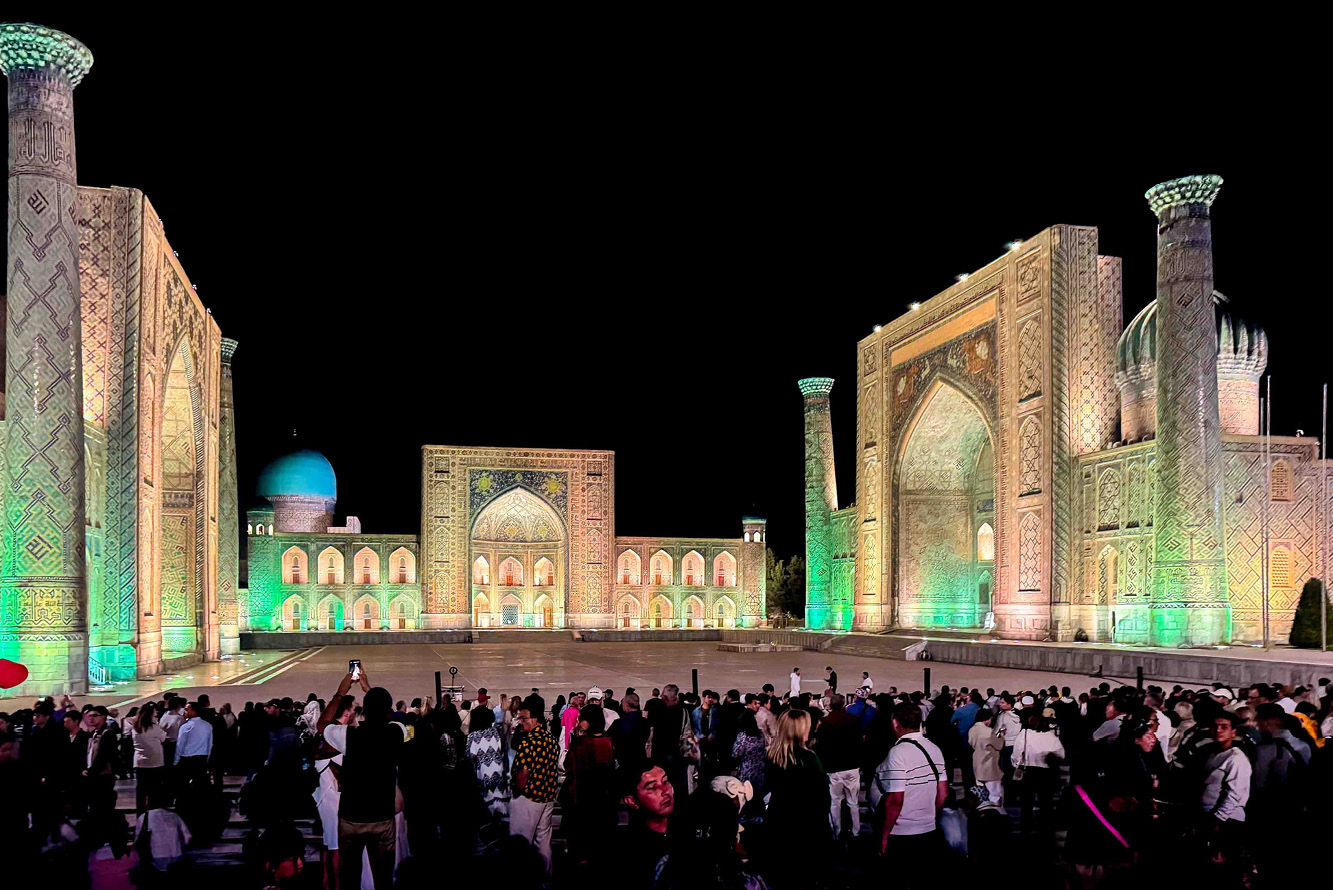
Samarkand’s Registan Square took my breath away. Considered one of the world’s most magnificent and historic public squares, three mammoth madrasas covered in blue tile surround the huge paved open space. We returned at night to see the spectacular sound and light show that told the story of Islam, highlighting the spectacular buildings.
Together these religious structures represent the pinnacle of Islamic art, particularly in Uzbekistan’s three major Silk Road cities––Khiva, Bukhara, and Samarkand.


Central Asia Has a Modern Urban Face, Too
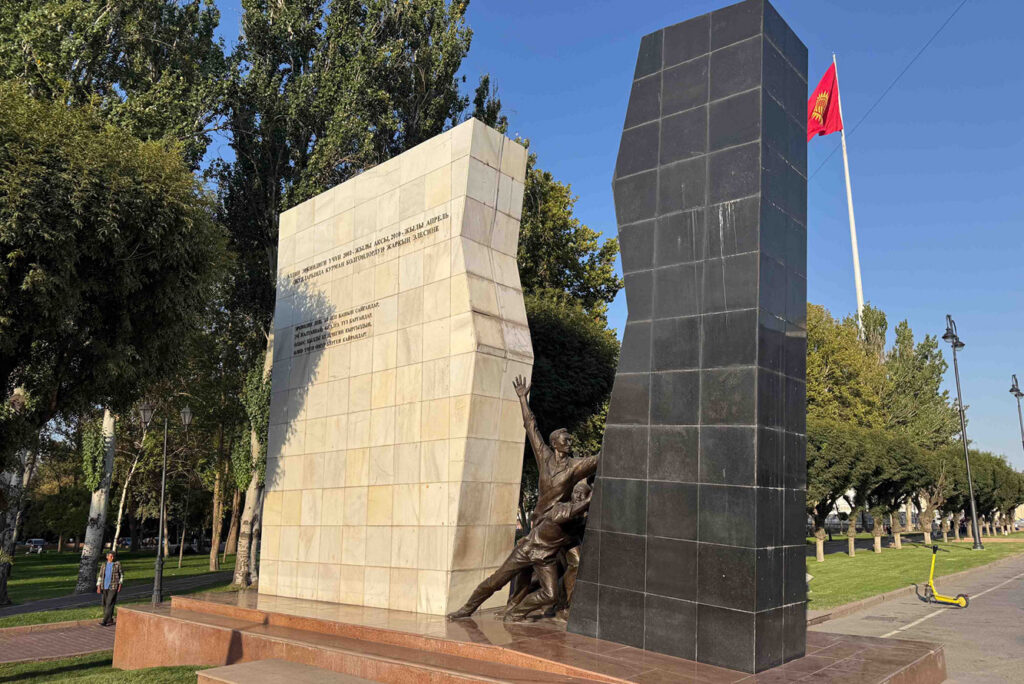
The major cities are full-blown urban centers; all were largely rebuilt and expanded significantly by the Soviets. They function like any modern city, with some interesting elements that represent Soviet urban form and architecture. Tashkent, Bishkek, and Ashgabat––capitals of Uzbekistan, Kyrgyzstan, and Turkmenistan respectively––boast grand boulevards and enormous public plazas and landscaped spaces that include well-kept and sometimes colorful gardens. Their grandiosity suggests that they could serve as a staging site for public displays of military might and the all-powerful state, à la Soviet-style. I was impressed with the scale standing in the middle of one of Bishkek’s expansive plazas, at the same time feeling dwarfed by its vastness.
These metropolitan centers also contained several examples of a favorite architectural style: Brutalism. Characterized by massive blocky structures, often finished in raw, exposed concrete, the style strips any ornamentation from the building and emphasizes function over form. After WWII, Brutalism became a signature building style throughout the USSR countries for public, governmental, and housing buildings. In Tashkent, I had the opportunity to photograph both the building and lobby of the glorious Hotel Uzbekistan, a well-regarded example of the Brutalist style. And who would imagine the walls and ceilings of stops along a subway route converted into themed art exhibits? In Tashkent, first the Soviets and now the Uzbek government have accomplished just that. We rode the trains back and forth to visit several of these subterranean works of art.
Unique-in-the-world Ashgabat holds the Guiness Book of World Records as the city with the most marble; along with gold ornamentation, marble covers all its public buildings and block apartment houses located in the city’s core. Even automobiles and delivery trucks must be white. If the police stop a dirty car, the owner receives a fine. Add to that, the city streets are mostly devoid of pedestrians, giving this monumental and impressive futuristic city a ghost town, surrealistic feel.
Kyrgyzstan’s Yurt Culture Reflects Nomadic Life
Does a yurt qualify as a type of architecture.? As a coherent form, this tent-like, circular structure with a wooden lattice frame can be collapsed and rebuilt in another location in a few hours by a family. Covered in heavy-duty fabric, some insulating and water-shedding or -resistant material, yurts have been the portable homes of Kyrgyzstan’s nomadic communities for centuries. Think teepees in indigenous America.
We stayed in two yurt camps. Supara Chunkurchak, a permanently installed thirty-yurt camp village, sits high on the side of a mountain with a spectacular view of the sublime valley below, carpeted in a velvet-textured grass. We’re familiar with the term “glamping,” which stands for “glorious camping” in an upscale, fully furnished, large tent. I refer to this experience as “glurting,” since our accommodations included an ensuite bathroom, very comfy bed, and a living room suspended over the hillside, equipped with a futon for our viewing pleasure through a full picture window. The second yurt camp was a rustic facility, though we had a view of Issyk-Kul Lake.
Traveling to Central Asia Was My “Trip of a Lifetime”
To paraphrase Dorothy in the Wizard of Oz, I knew I wasn’t in Kansas anymore, traveling through the Stans. We traversed dramatic landscapes, stood awestruck before fantastical Islamic structures, appreciated local arts and culture, and filled our bellies with tasty selections from regional cuisines. We saw a mammoth gas crater on fire for over fifty years, watched eagles with their trainers hunt prey, hiked up mountains and hills, and slept in yurts. A mixture of European and Asian influences, cities hummed as vibrant centers of human activity. One city could serve as a marble movie set located on another planet.
A trip of a lifetime––that’s what I sought. Traveling through Central Asia delivered in unimaginable ways.
If You Go
ENTRANCE REQUIREMENTS:
- Entrance requirements: no visas needed except for Tajikistan, which has an e-visa process, and Turkmenistan. That country requires an application for a Letter of Introduction from your tour company to allow you to fly into Ashgabat, where you apply for a visa at the airport
TRAVEL COMPANY:
- While visitors can travel on their own in all but one country, I recommend touring with a travel company. The staff will negotiate border crossings, language, tours, accommodations, and restaurant options. In Turkmenistan, travelers must be registered with a travel company
- Look for a travel company that offers several tours of various lengths and destinations in Central Asia. Some companies offer high-end travel, with upscale accommodations (read “expensive”). Compare prices. Research others.
- At the risk of excluding other good companies, here is a very partial list of highly rated American and English companies that offer small group tours (8 to 20 travelers) and many offer personal tours for one to four people.
- Very partial list: Bestway Tours and Safaris, Adventure Bound, East Site Travel, G Adventures, National Geographic, Wild Frontiers
AIR TRAVEL:
- Turkish Airlines is the major airline company flying into Tashkent, Ashgabat, Bishkek, Almaty, and Astana. Departs from Istanbul
- Regional airlines fly from Istanbul and other cities: Uzbekistan Airways, Air Astana, Turkmenistan Airlines
- Economy airlines: Pegasus Air, FlyArystan, WizzAir, Flydubai, others
TRAVEL INSURANCE (Necessary to have):
- We used the top-rated company according to Forbes Advisor––Faye. We bought a policy that allowed for cancellation for any reason (stubbed toe, headache, etc.)