Milan––modern, stylish, efficient, and fast-paced––buzzes with today’s rhythms. This vibrant metropolis has it all: captivating historic sites; Renaissance, Gothic, and modern art and architecture; an efficient, modern transportation system; a center of international haute couture; and the science and financial capital of Italy. Its location close to France, Switzerland, and Austria places the city in an international orbit that influences all aspects of its culture. Milan also serves as a departure point for other popular destinations in the Lombardy region–– south to the Italian Riviera and Cinque Terre, and north to Lake Como, the most famous of the eight bodies of water in Italy’s Lake District.
Milan enjoys a different vibe from Florence or Venice, two incredible cities that seem to be “museums” in their own right, in addition to the treasures they hold. Rome and Naples, two other large metropolitan cities I’ve visited, exude a southern Italian feel. Rome is warmer, reveling in its ancient history, religious heritage, and more laid-back tempo. Farther south, Naples, an ancient port city with a deep religious and cultural history, exudes a more chaotic lifestyle and community street life, influenced by its weaker economy.
Milan offers many visual, aural, sartorial and gustatory experiences that challenge a 72-hour visitation limit. I could easily have spent another day indulging in aperitivo culture at sidewalk cafés in the Breara neighborhood, sipping an Aperol spritz or a crisp white, and absorbing the city’s tempo. Still, I immediately glommed onto Milan’s high energy and ambience for an exciting stay.
We Stay in a “Cool” Neighborhood
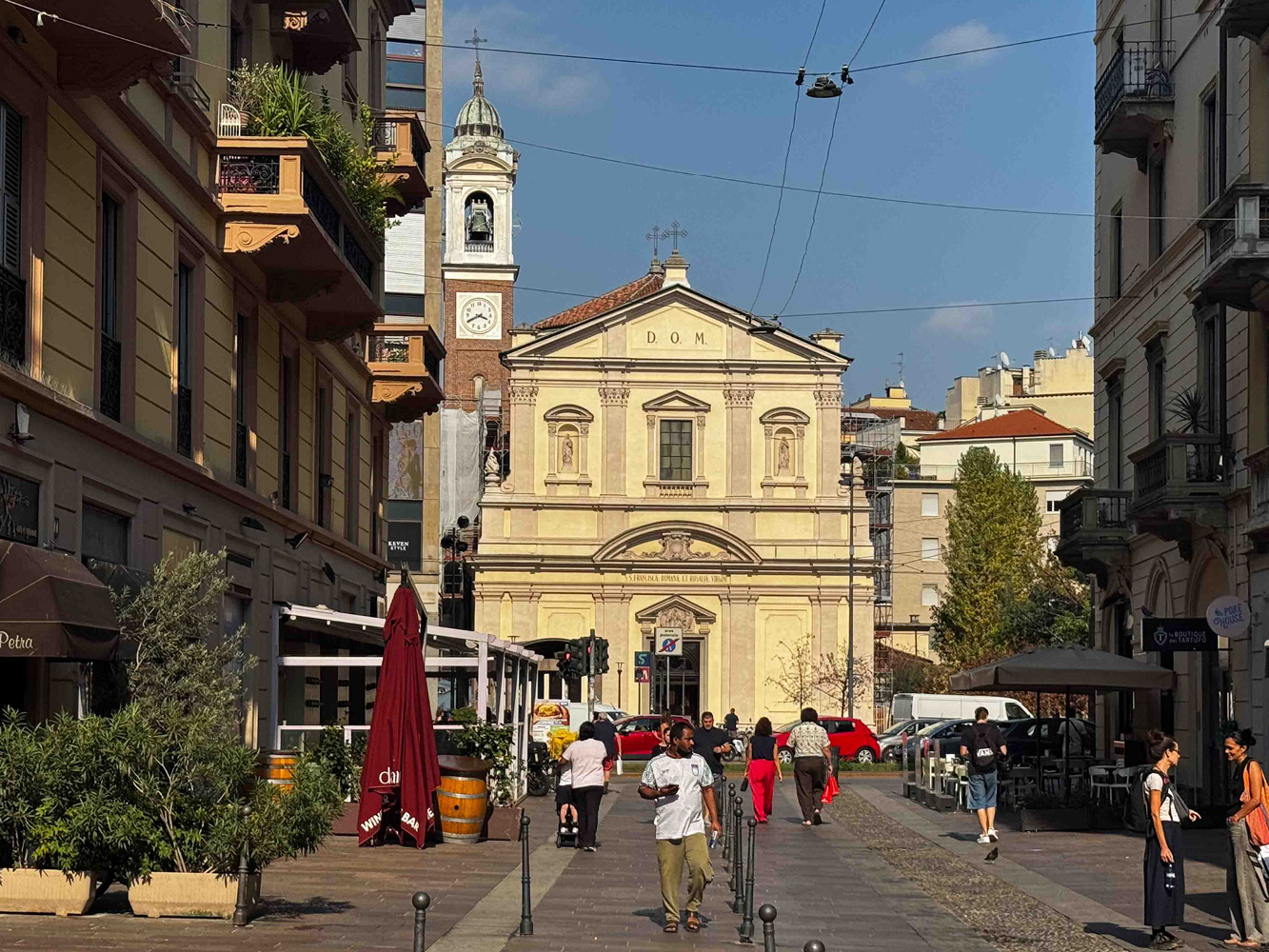
The Milu Milano Hotel on Piazza Guglielmo Oberdan in Milan’s popular Puerto Venezia neighborhood served as our home base. One of the original gates to the ancient city, Puerto Venezia is considered the “coolest and most elegant” of neighborhoods, one writer claims, still home to handsome residential streets that are lined with attractive early 1900s Italian Liberty-style buildings (the Art Nouveau period in the States) and upscale commercial boulevards with an active street life of residents and tourists. Billed as a welcoming community for families, Puerto Venezia is also the center of the city’s LGBT+ population, with commercial and entertainment businesses serving them.
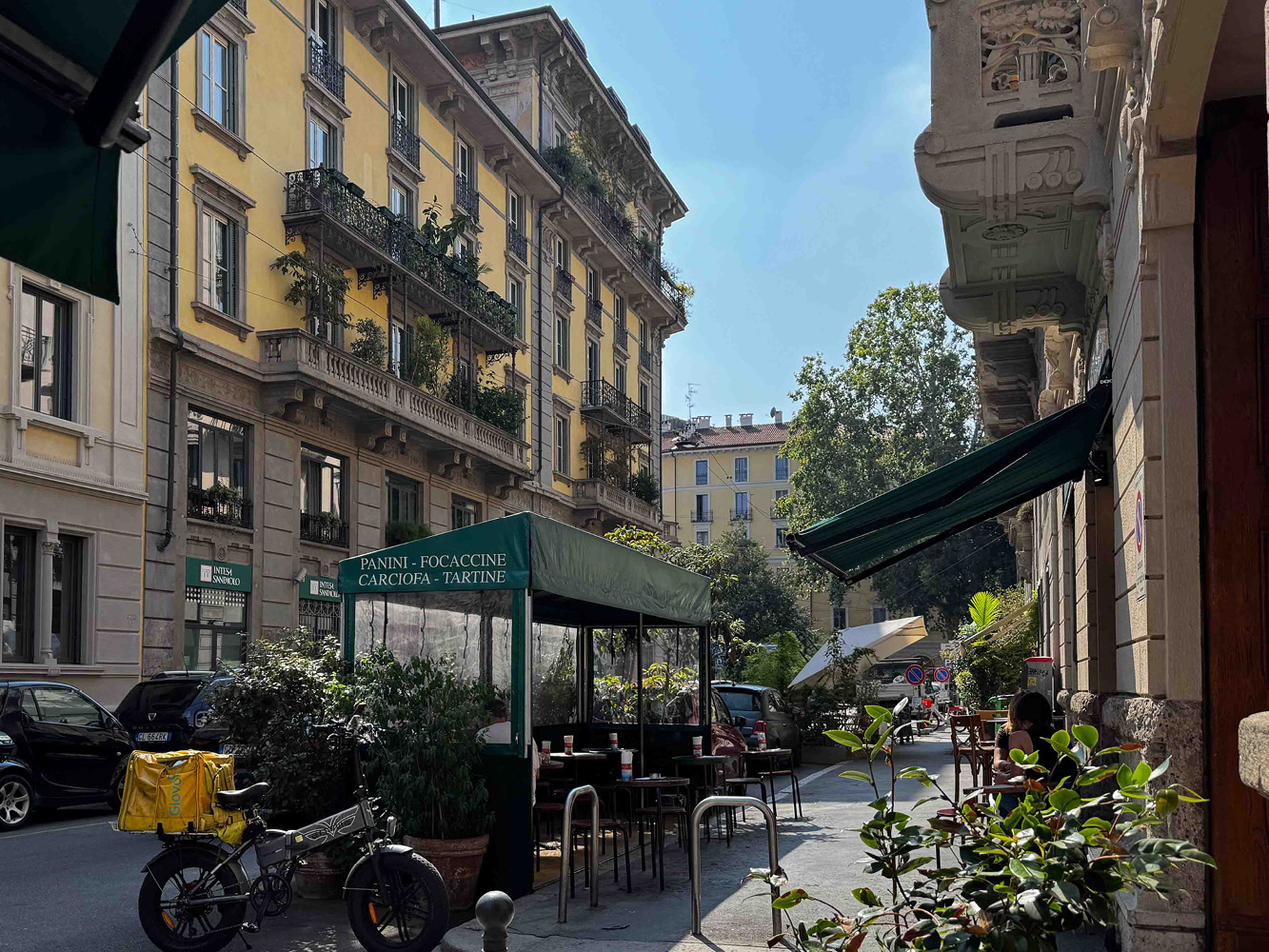
We arrived around lunch time, and the hotel’s concierge directed us to a nearby street lined with inviting sidewalk cafés and those attractive fin de siècle (“end of the century”) buildings from the turn of the twentieth century. The street’s genteel atmosphere and architecture seemed to hark back to a much earlier time. We picked a table in the shade at one café, and our perky college student server quickly brought her two travel-weary, jet-lagged customers each a glass of red wine to help ease our way into the Milanese tempo.
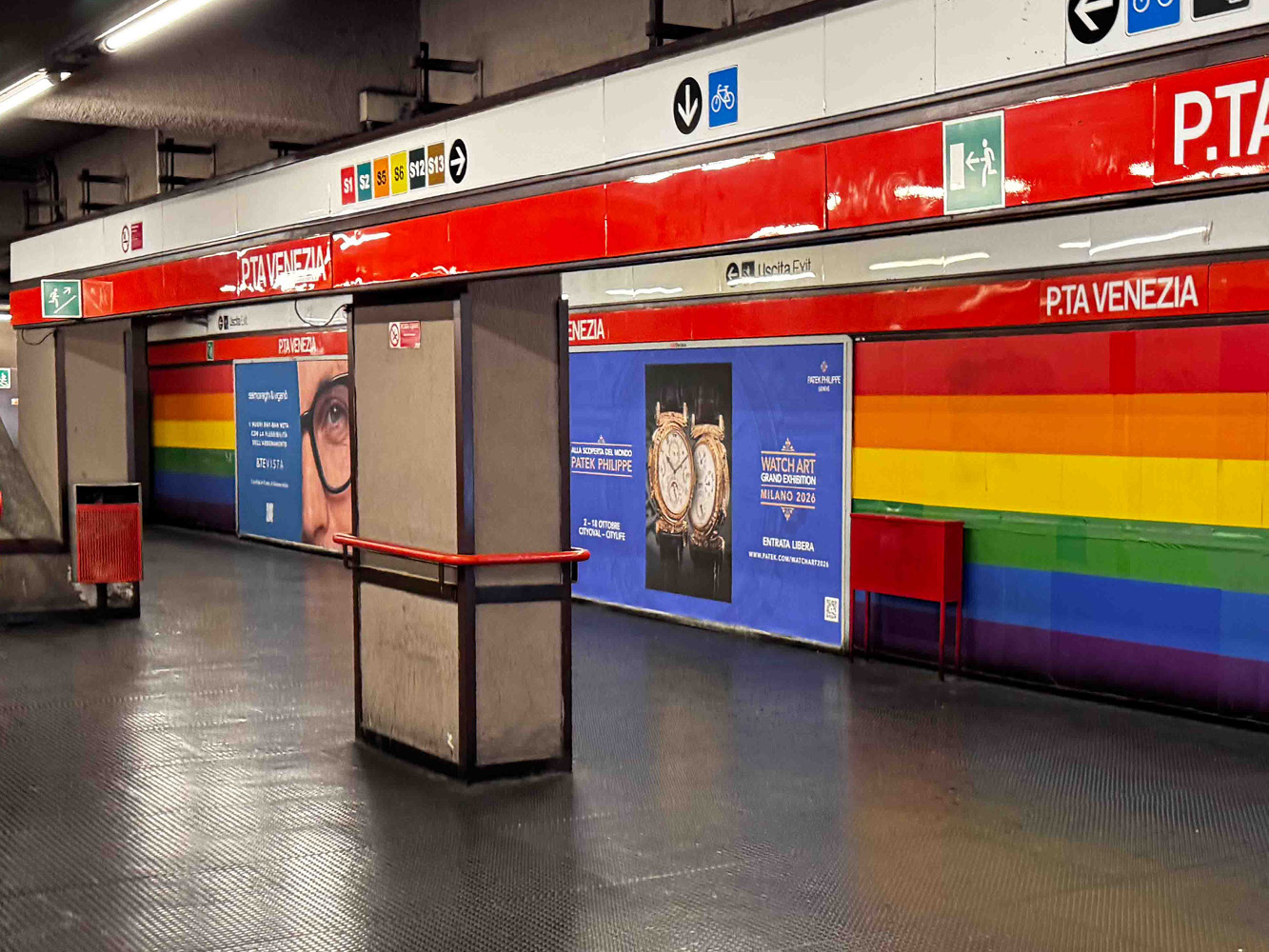
Milan’s extensive transportation system provides quick and easy access to the city’s center and the most recognized and prestigious sites. Practically outside our hotel’s front door and a few dozen steps across the small plaza, the Puerto Venezia Metro station offered us a gateway to everywhere we wanted to go. To our surprise, the rainbow colors of the LGBT+ flag adorn all the station’s walls, thanks to a 2018 installation sponsored by Netflix. In fifteen minutes, we arrived at the Conciliazione station to behold Leonardo da Vinci’s The Last Supper.
Leonardo’s The Last Supper is Fading
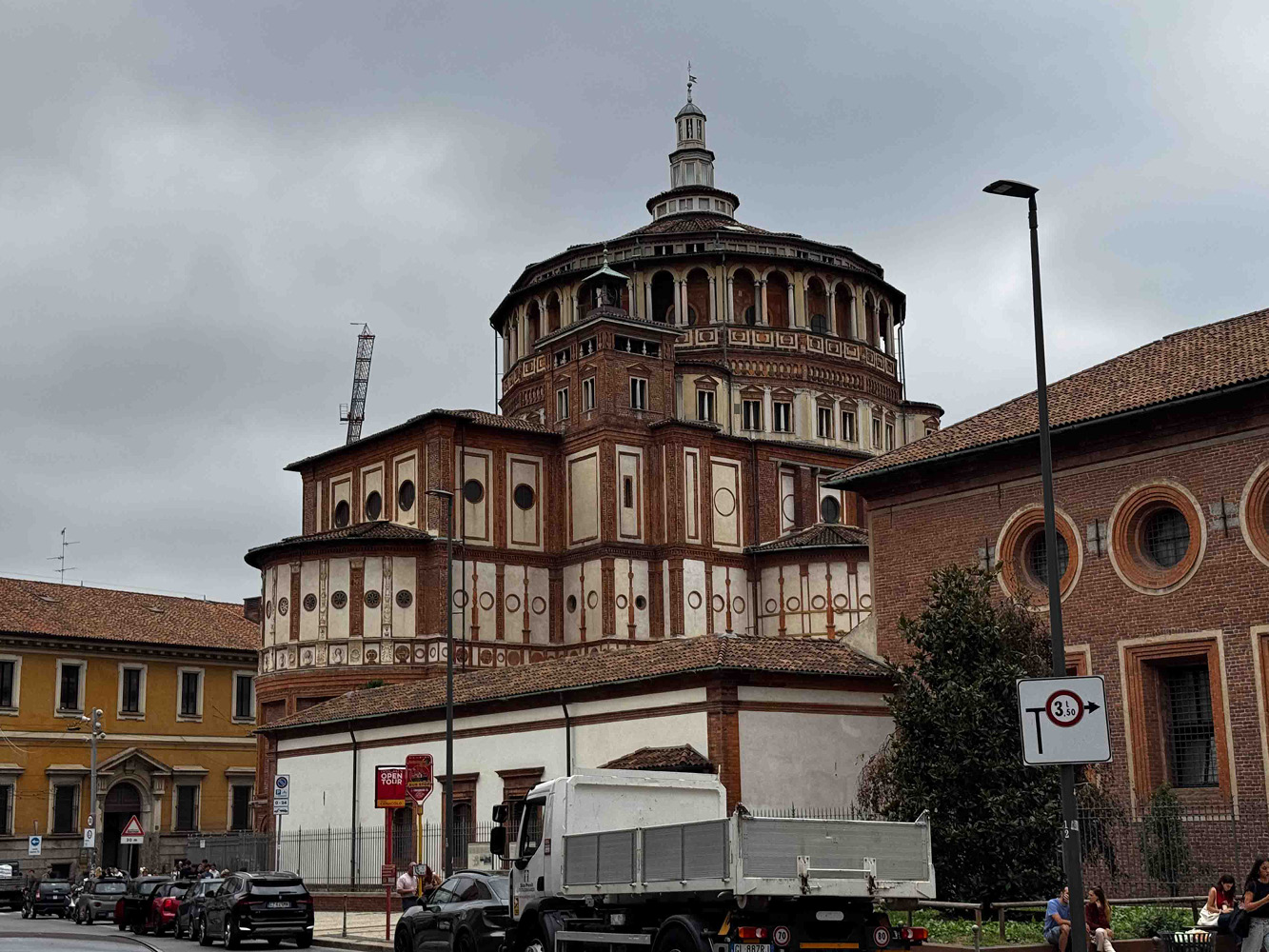
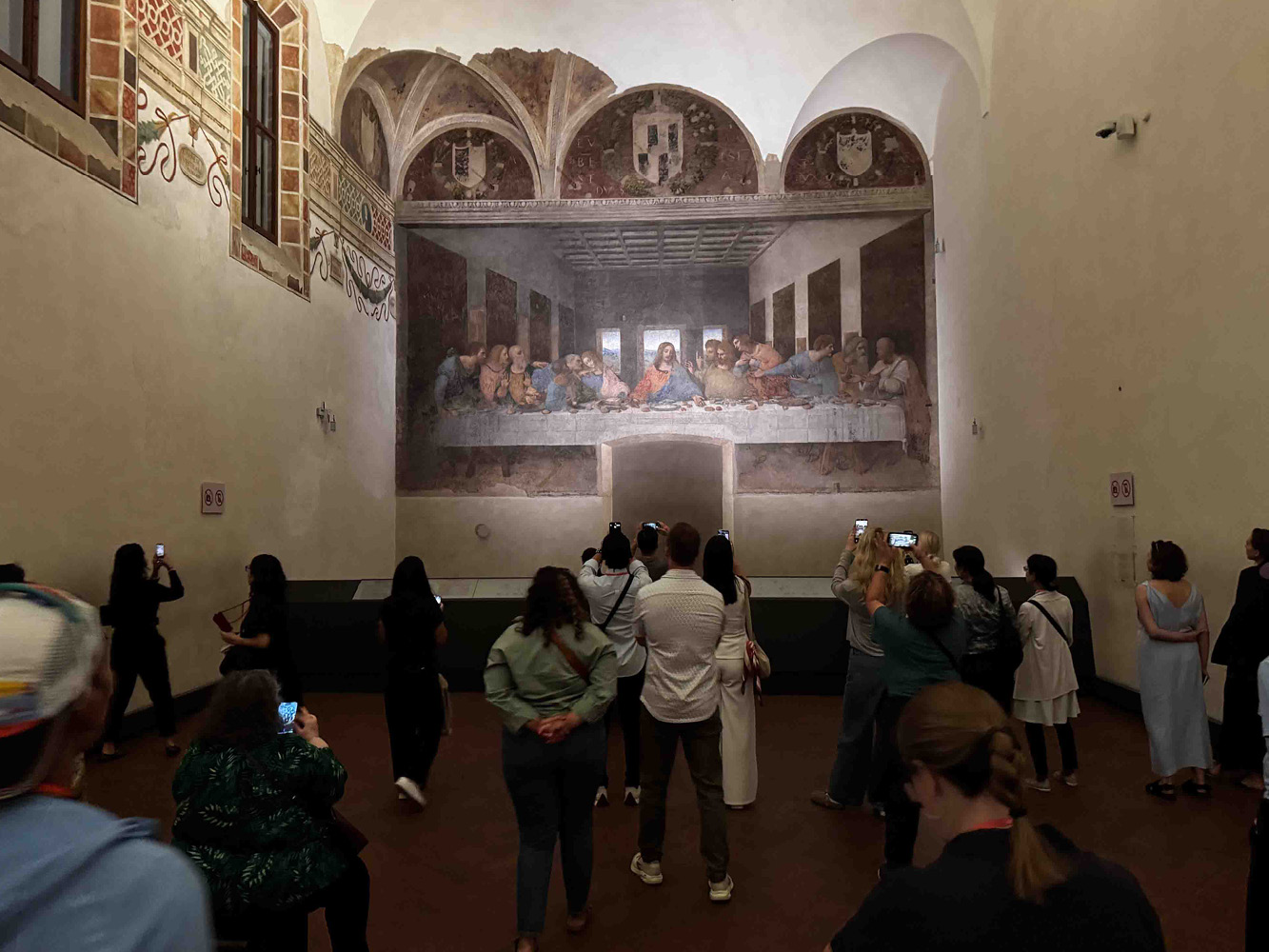
I confess that viewing Leonardo’s The Last Supper wasn’t near the top of my “must-see” list, but our travel agent arranged for the coveted tickets and guided tour, so we went along with the program. We joined a group of 20 people for the timed-entry tour, the maximum allowed for any group. Located in the Basilica di Santa Maria della Grazie, the 525-year-old, 15×28-foot mural (much larger than I expected) is protected by an advanced air conditioning and environmental monitoring system. A two-decade massive restoration project completed in 1999 removed five centuries of dirt and grime and several layers of overpaint left from many poorly executed “restorations,” stabilizing Leonardo’s original pigment layers in the process.
Our guide Lorella (who later led the two of us through Milan the next day) wanted to make sure group members remembered a few fun facts. The Last Supper is a mural, not a fresco. A mural is painted on dry wall and can be modified more easily, while a fresco is painted on wet plaster and becomes “fixed” when it’s dried. While facial and other details remain, only about 15% of the original pigment color is visible. World War II Allied bombing flattened the church roof and surrounding walls, but the mural remained standing. Finally, Leonardo did not have a last name. Born as a bastard child in the small village of Vinci, we know him as Leonardo da Vinci, contrary to traditional Italian naming conventions.
I’m glad I saw it, not so much for its religious significance, more for understanding the complicated preservation process of works of art and the integrity of their conservation.
Sforza Castle is a Grand Art Museum
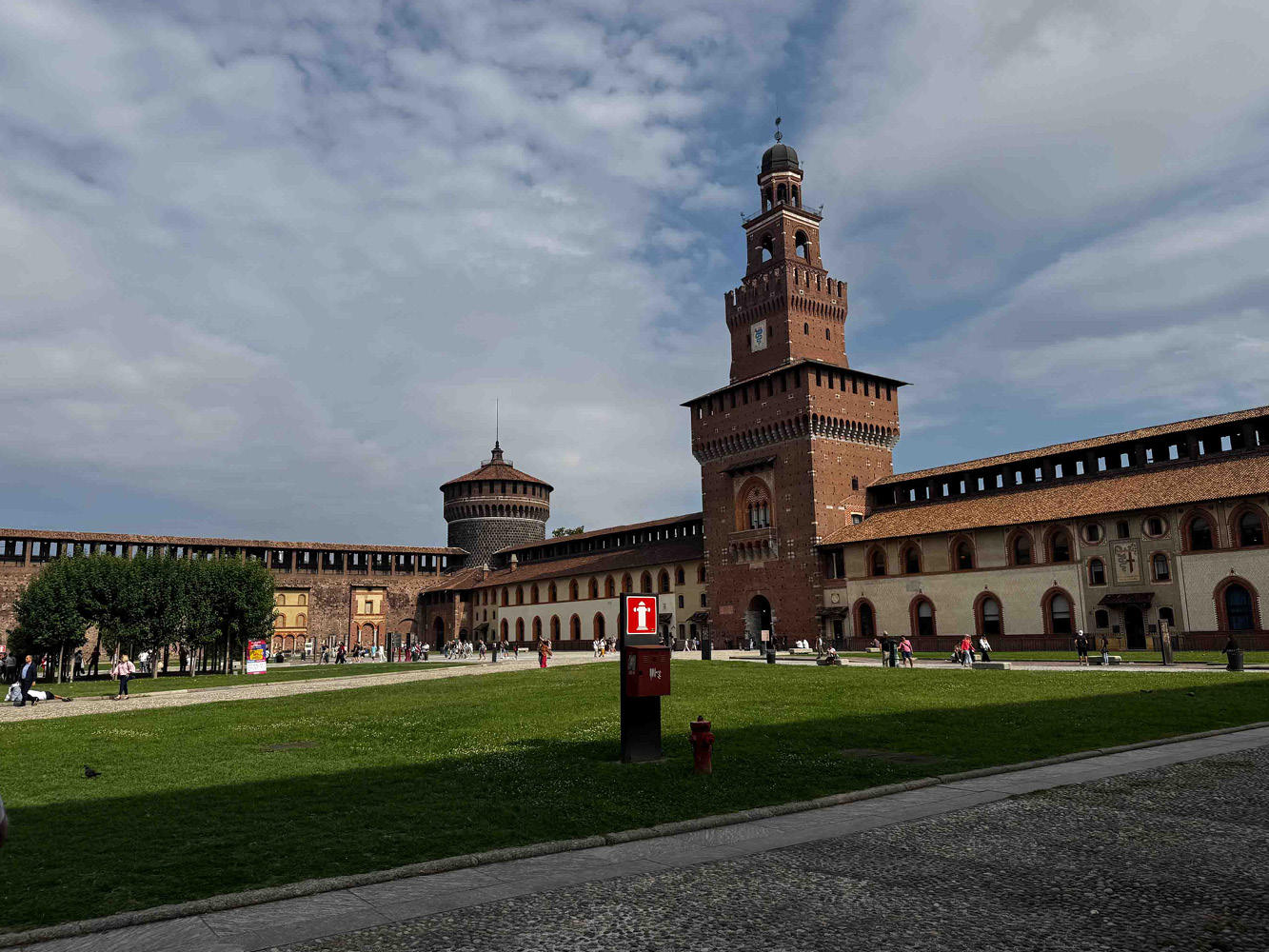
After an outdoor café stop for lunch, Lorello took the two of us to Sforza Castle, a mammoth sixteenth-century medieval and Renaissance fortification that served as a seat of military power, a residence of the powerful Sforza family, and now one of Italy’s premier cultural hubs housing renowned art and historical architecture.
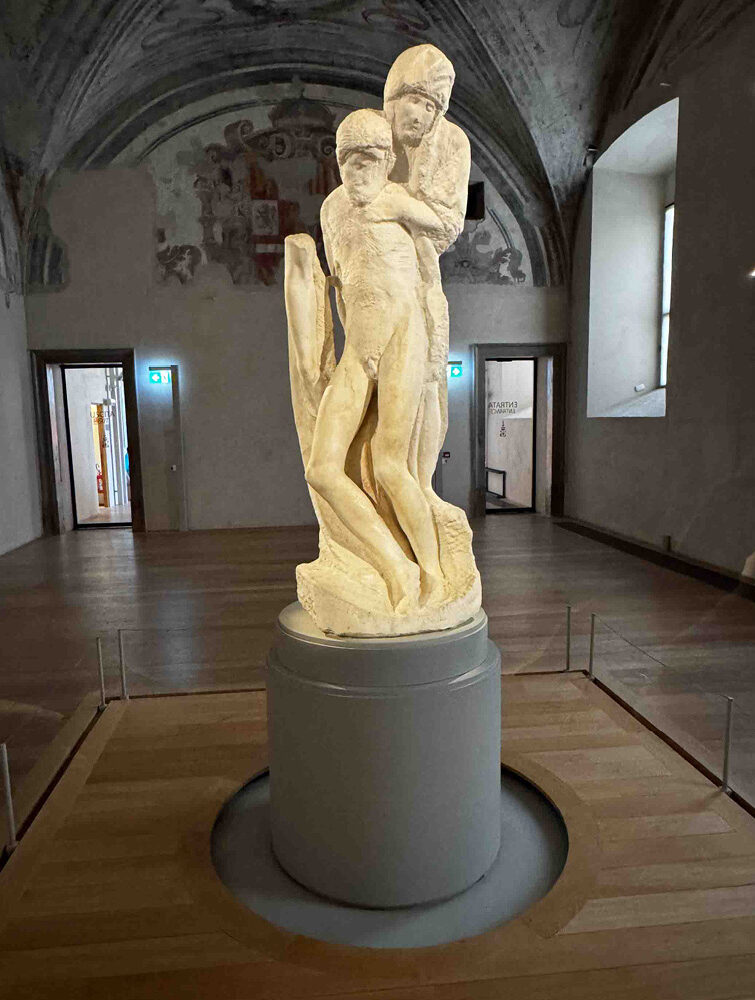
At one point, it was one of the largest fortifications across Europe. Four major museums, including the Museum of Ancient Art, now fill the grand halls. The Duke of the Sforza family hired Leonardo to paint a ceiling fresco of intertwining plants in a room called Sala delle Assi. It also houses Michaelangelo’s last unfinished masterpiece, Ronandini Pietá, a more intimate interpretation of his world-renowned sculpture in Vatican City. Three interconnected courtyards inside the citadel walls, including a huge central green quadrangle where garrisons used to drill, speak to the fortress’s enormous size. On our visit, one courtyard featured a fanciful, temporary art exhibition where visiting youngsters played amongst the displays.
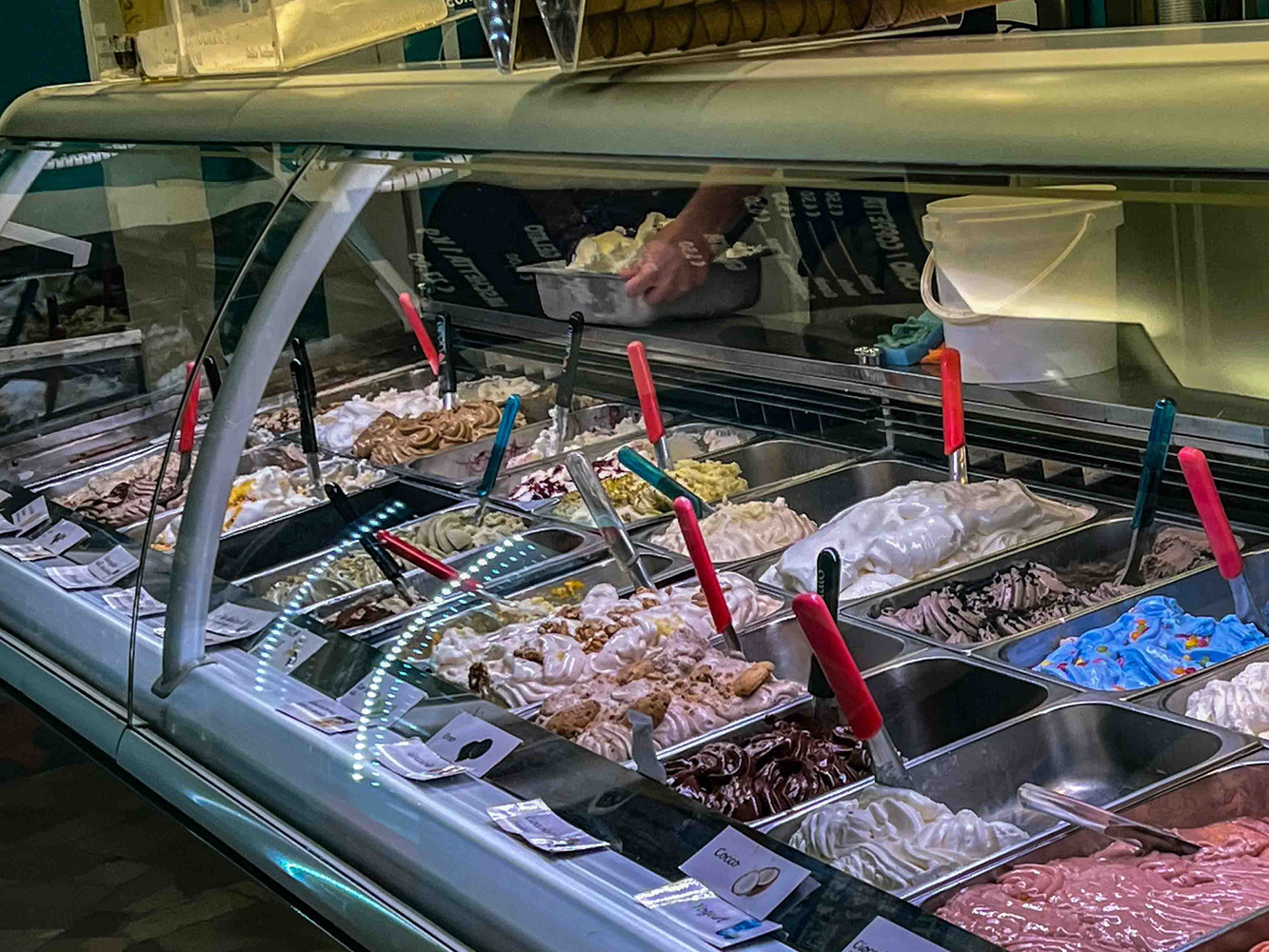
Jet-lag challenged us to appreciate the extensive and beautiful art and historical artifacts exhibitions. Sforza Castle is well worth a visit, and tourists should plan to spend more than the 90 minutes we allotted. Once outside, a gelateria beckoned us to taste its creamy frozen dessert, which became a daily (sometimes twice daily!) ritual. During the three days, melon and super dark chocolate became a favorite two-scoop combination.
Calling All Fashionistas
Before we met Lorello the next afternoon to take in the wonders located in Centro Storico, the historic district at Milan’s center, we headed to Quadrilatero della Moda, Milan’s world-heralded fashion district. With one Metro line change, we arrived at the heart of the district in fifteen minutes. Four streets bound the exclusive district, with elegant lanes of shops running throughout the neighborhood.
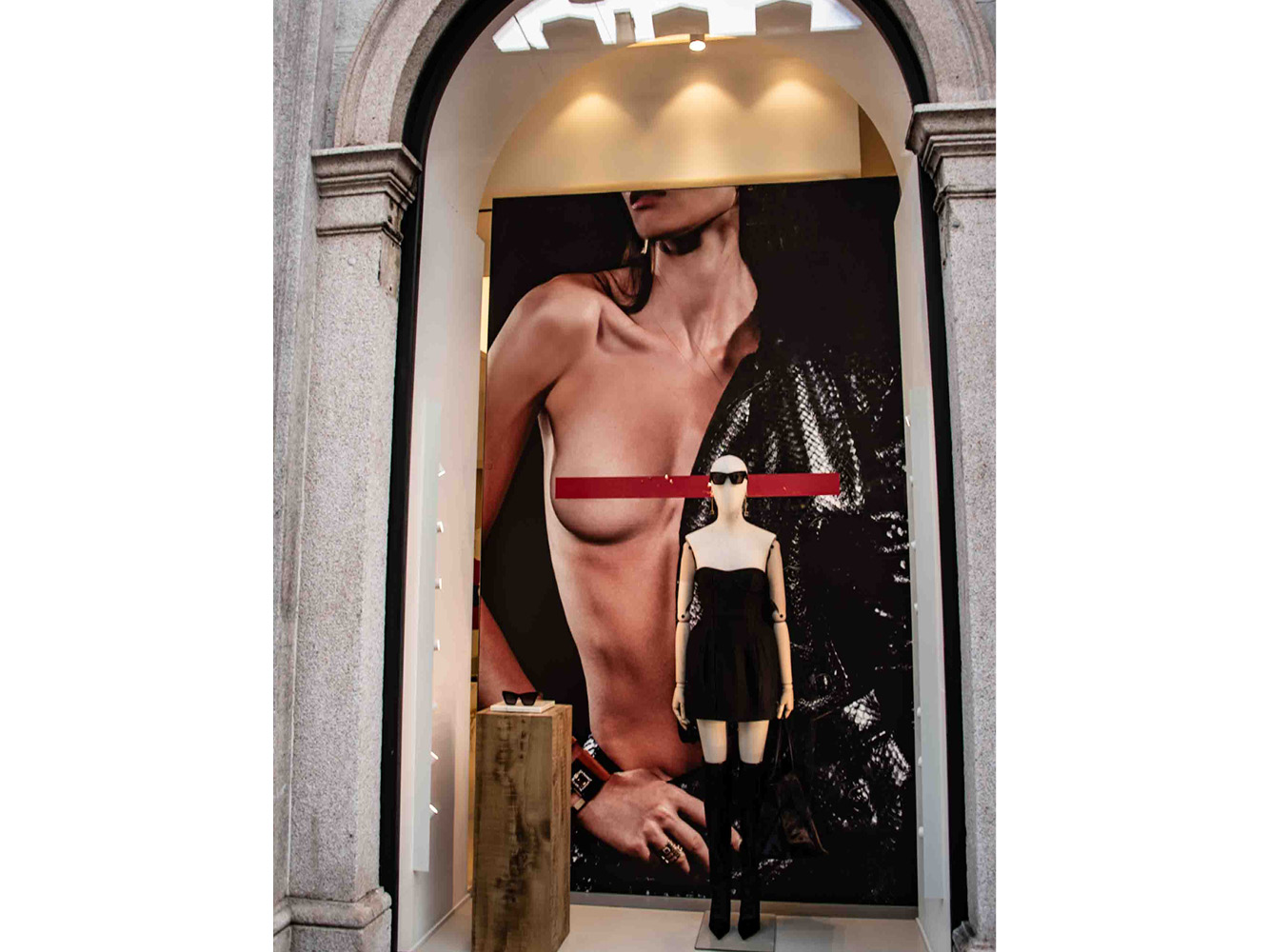
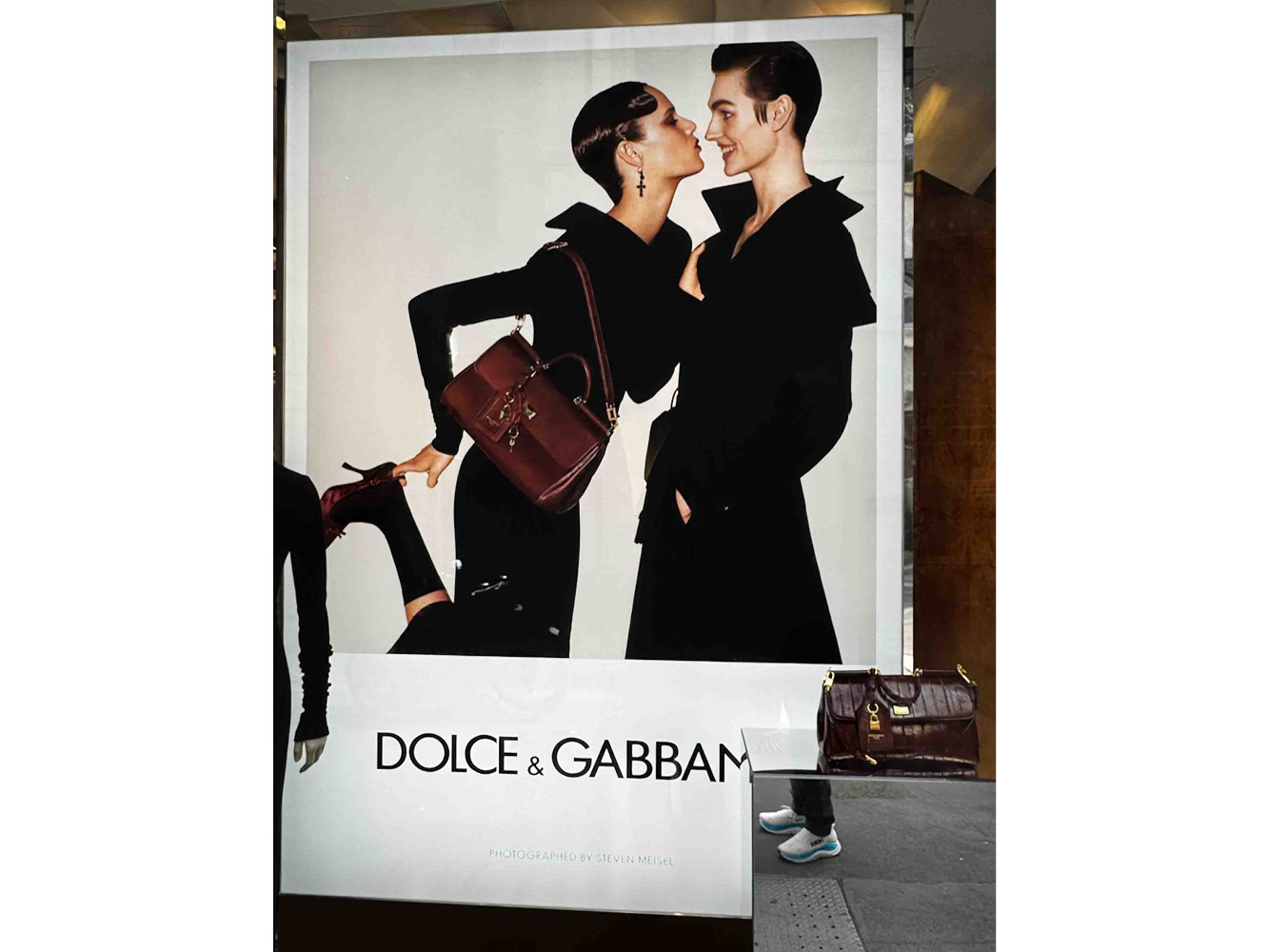
I didn’t expect to spy Donatella Versace hanging out in front of her showroom, but I enthusiastically wanted to view the creatively designed store windows of upscale, exclusive clothing and accessories establishments on Via Montenapoleone, the most elegant luxury shopping street. This tony lane recently eclipsed New York City’s Fifth Avenue as the world’s most expensive retail destination.
With a solid history of silk and textile production, Milan’s high-fashion profile skyrocketed dramatically in the 1980s with the rise of several fashion houses and their flagship stores––Prada, Armani, Versace, Dolce & Gabbana, Gucci, Fendi, and Valentino. Later, international brands like Balenciaga, Louis Vuitton, Hugo Boss, Burberry, and others took up expensive district real estate, too.
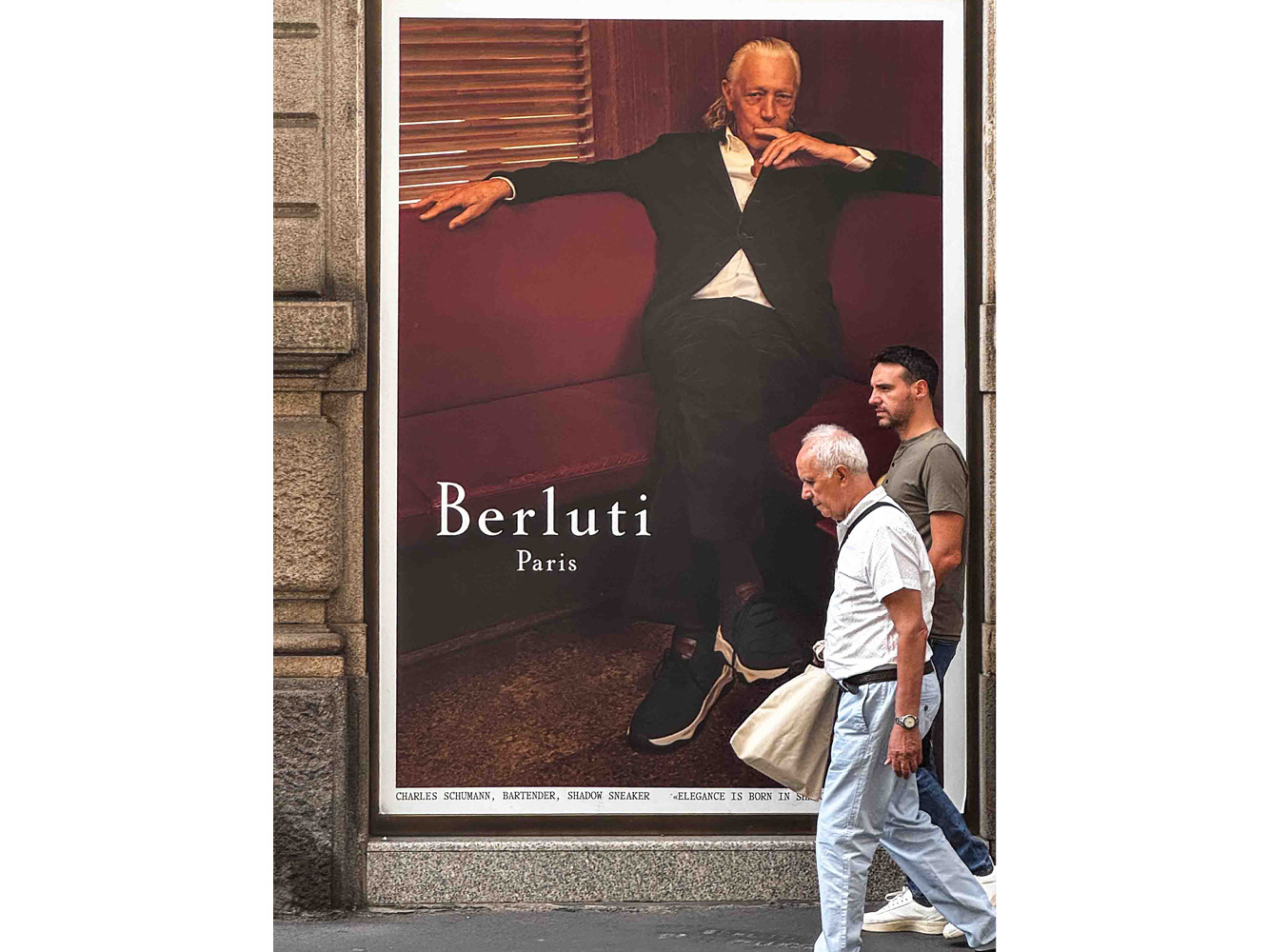
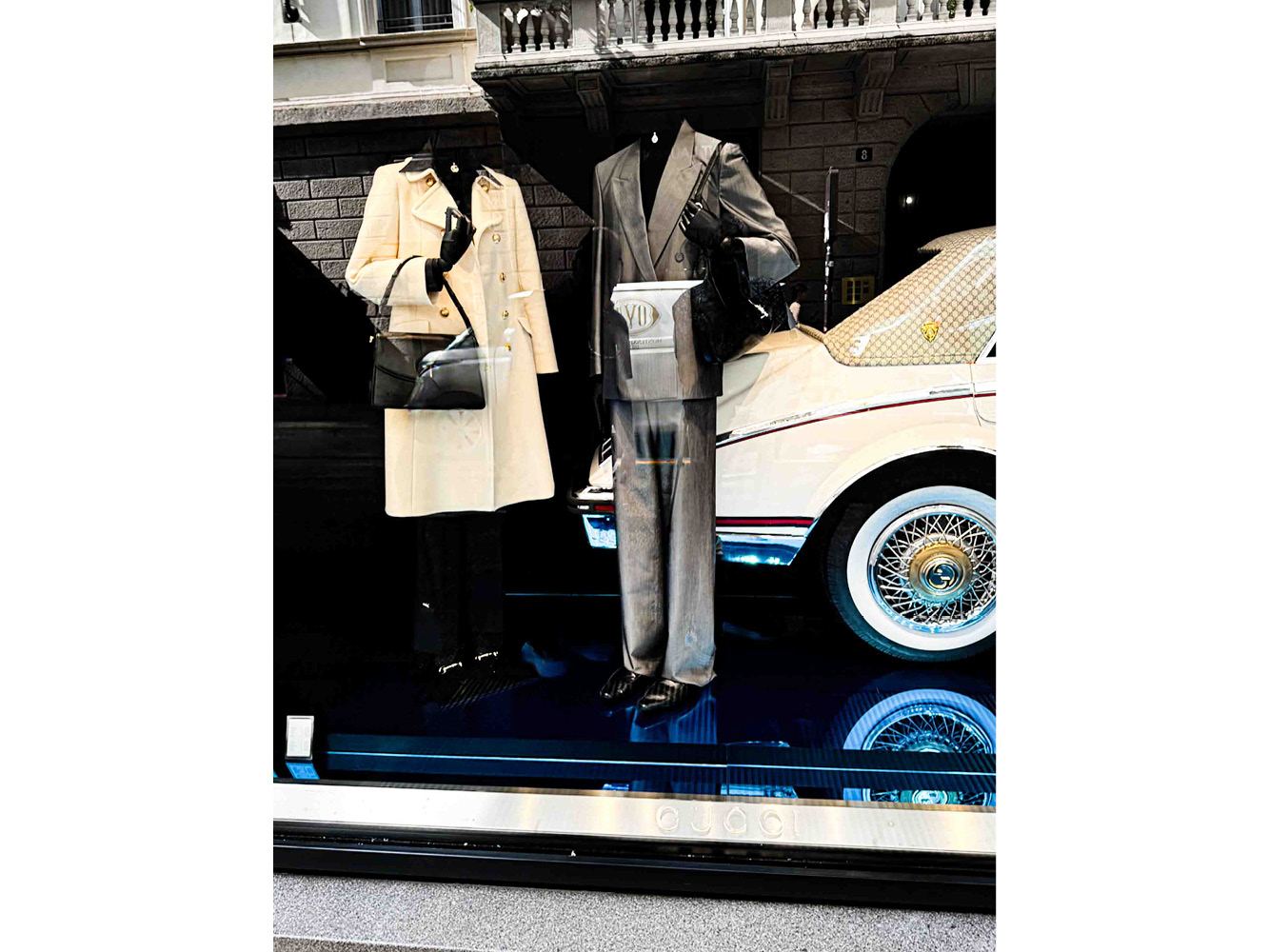
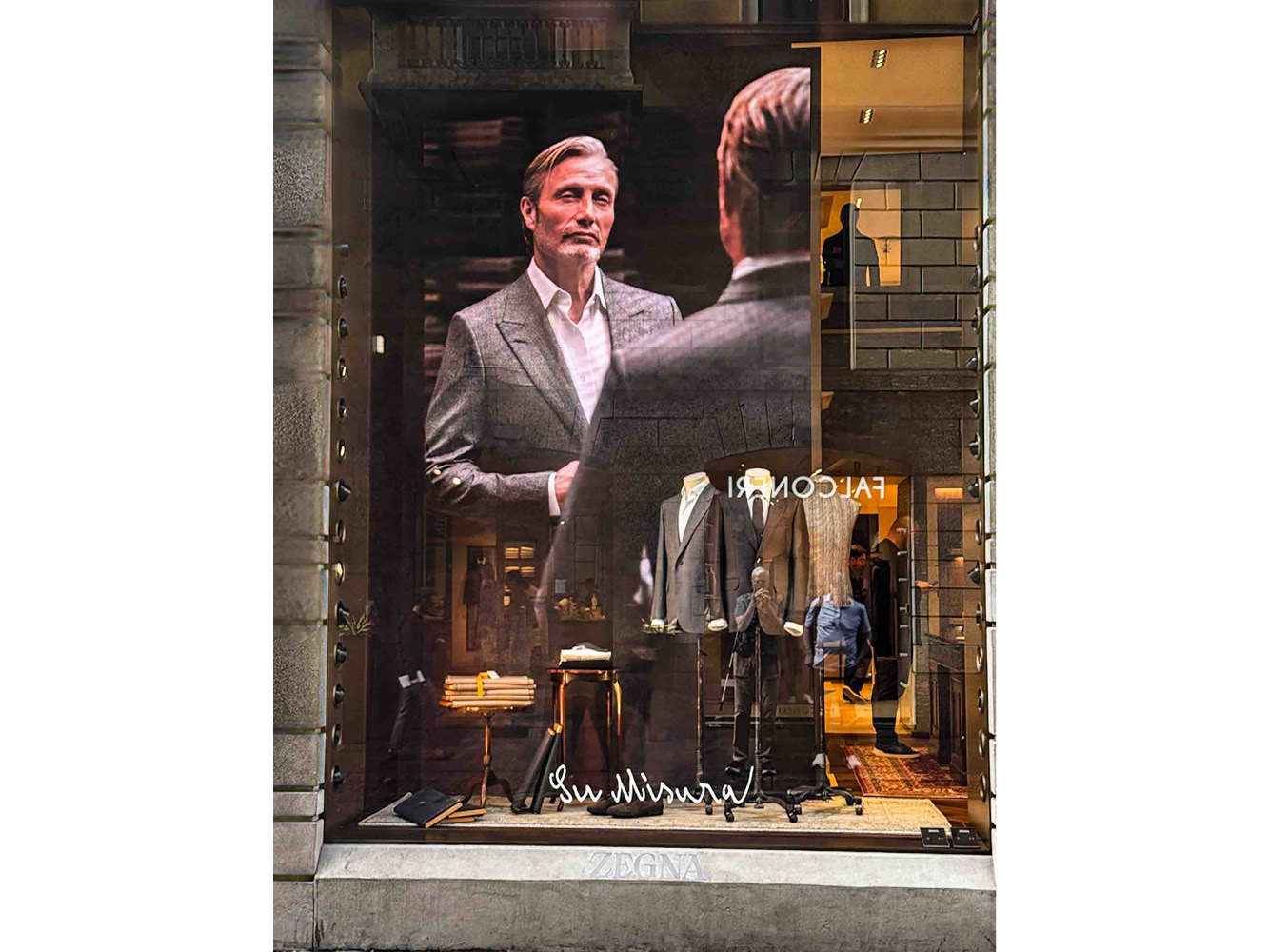
Most of the stores sell women’s clothes and accessories, so shopping for myself wasn’t the focus. The artistic creativity of showroom and storefront windows attracted me. Window displays represent ephemeral works of art, employing unusual props––sections of cars, staircases, whimsical characters, giant zippers, a model of a train dining car, photos of movie stars, videos, and the ubiquitous mannequins––to stage their haute couture wares. (Mannequins have undergone profound design changes over the years, erasing the racial and sometimes gender biases of the past.)
The showrooms themselves serve as art galleries. Organizers hold two fashion weeks a year each for women and men, with events, runway shows, and parties for the glitterati. We missed this fall’s show by a week. In any case, I don’t think my Banana Republic, Gap, or Uniqlo wardrobe would gain me entrance to any events.


Artfully designed store windows of exclusive haute couture shops line the streets of Milan’s Fashion District
Listen To Music, Shop, and Pray in Milan’s Centro Storico
Three of Milan’s lauded and architecturally spectacular sites together occupy over 3.7 square miles located in the city’s heart, called Centro Storico––La Scala Opera House, Vittorio Emanuele II Galleria, and the Duomo di Milano. With a short walk from the Fashion District, we met our guide who took us first to one of the most famous historic music halls worldwide.
La Scala is the Opera World’s Home
Even before a friend and opera maven dragged me to my first opera production, The Magic Flute, several decades ago, I knew Milan’s La Scala to be the “golden temple” of classical music. Presiding over its own piazza, La Scala derives its name from the church on which the historic building now stands (and not named after musical scales or a staircase, our guide Lorella emphasized). Opening in 1778, the neo-classical music hall experienced its first major renovation in 1907 and then again in the early 2000s. The structure sustained heavy World War II bombing, but in two years it was rebuilt and reopened.
The classical music world regards La Scala as one of the leading opera and ballet theaters across the globe. The world’s great opera singers and composers have performed here to experienced opera crowds who famously can reward performances with long standing ovations, as well as boo singers off the stage if they’re not pleased with what they hear.
A Who’s Who list of La Scala’s famed divas includes Maria Callas, Renata Tebaldi, and Edita Gruberova. Among their male counterparts Plácido Domingo, Luciano Pavarotti, and Enrico Caruso have graced the hall with their dulcet tones. Several top composers have debuted their works at La Scala, most famously Giuseppe Verdi, followed by Puccini, Rossini, Bellini, and Donizetti. Imagine La Scala’s walls covered with layers of heavenly voices from absorbing 250 years of music.
Once inside, Lorella took us in a small elevator to one of the 180 private viewing boxes on the third of six levels that form a horseshoe around the main floor. What struck me immediately: red velvet walls and seats, with boxes framed in cream-colored wood paneling trimmed in gold ornamentation. Red and gold symbolize power and wealth, and for many decades, boxes were privately owned by the monied elite. In the 1920s, opera management changed that practice to a tiered subscription basis.
Originally, the main floor contained no seats. Commoners had to stand throughout the performances. Now rows of seats, upholstered in red velvet, fill the floor. We heard stories about well-heeled patrons in the past holding private parties in the boxes during performances, as well as conducting discreet, illicit assignations. Naughty Milanese!
Milan’s Elite Shops Under Glass at the Galleria
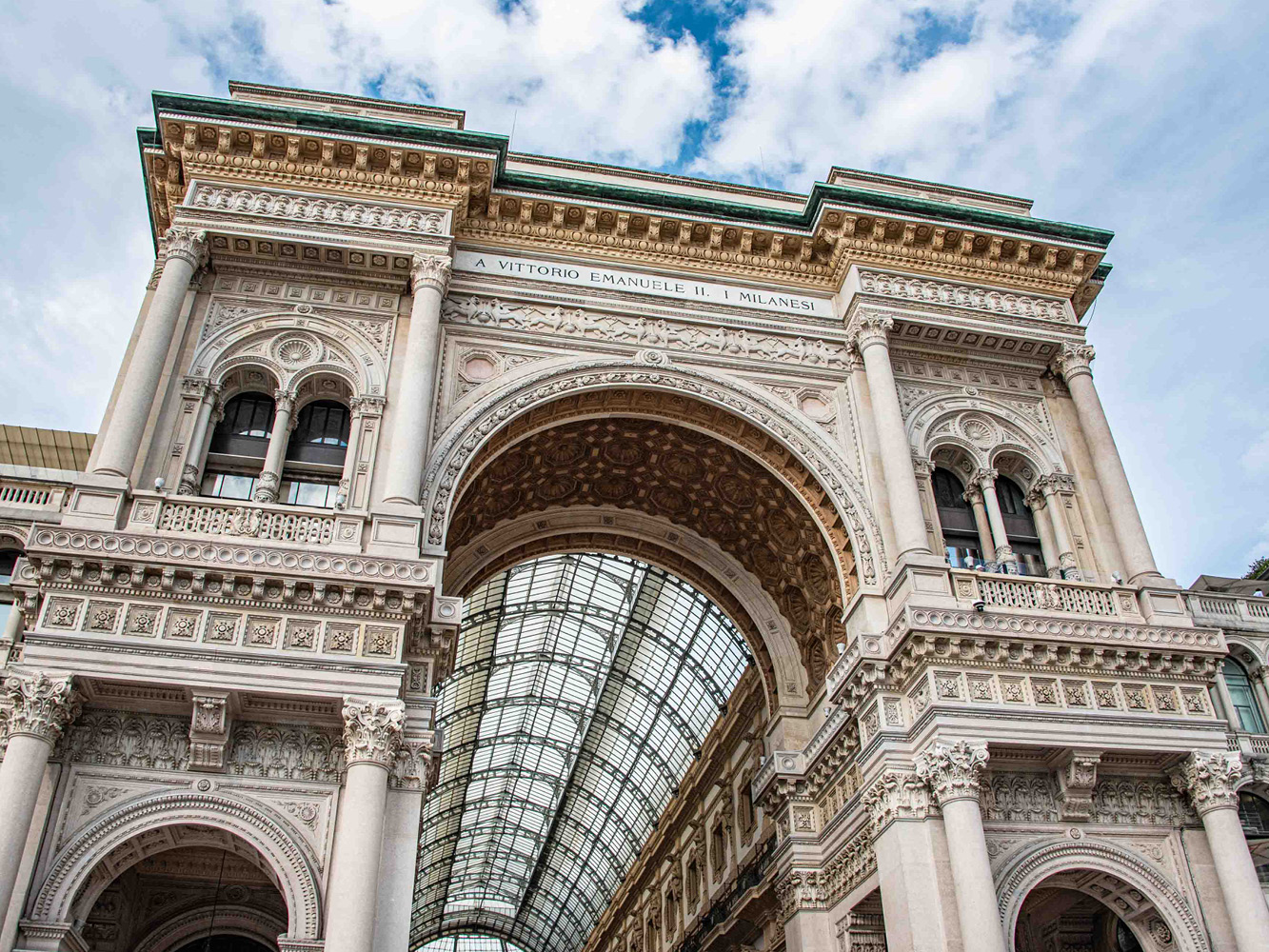
Crossing the Piazza della Scala, we pass through a magnificent arch into Vittorio Emanuele II Galleria, named after the first king of united Italy. The Galleria forms a passage way between the opera house and the Duomo. The shopping complex consists of two streets called arcades that intersect as a cross at a spacious rotunda. An arching glass and iron ceiling, popular nineteenth century design for European arcades, covers the streets and the huge rotunda dome. At first, I experienced a déjà vu moment. Five years ago, I walked into an almost identical grand structure in Southern Italy’s Naples, called the Galleria Umberto I. Certainly modeled after its Milan counterpart, Naples builders broke ground two years after the Milan structure opened in 1877.
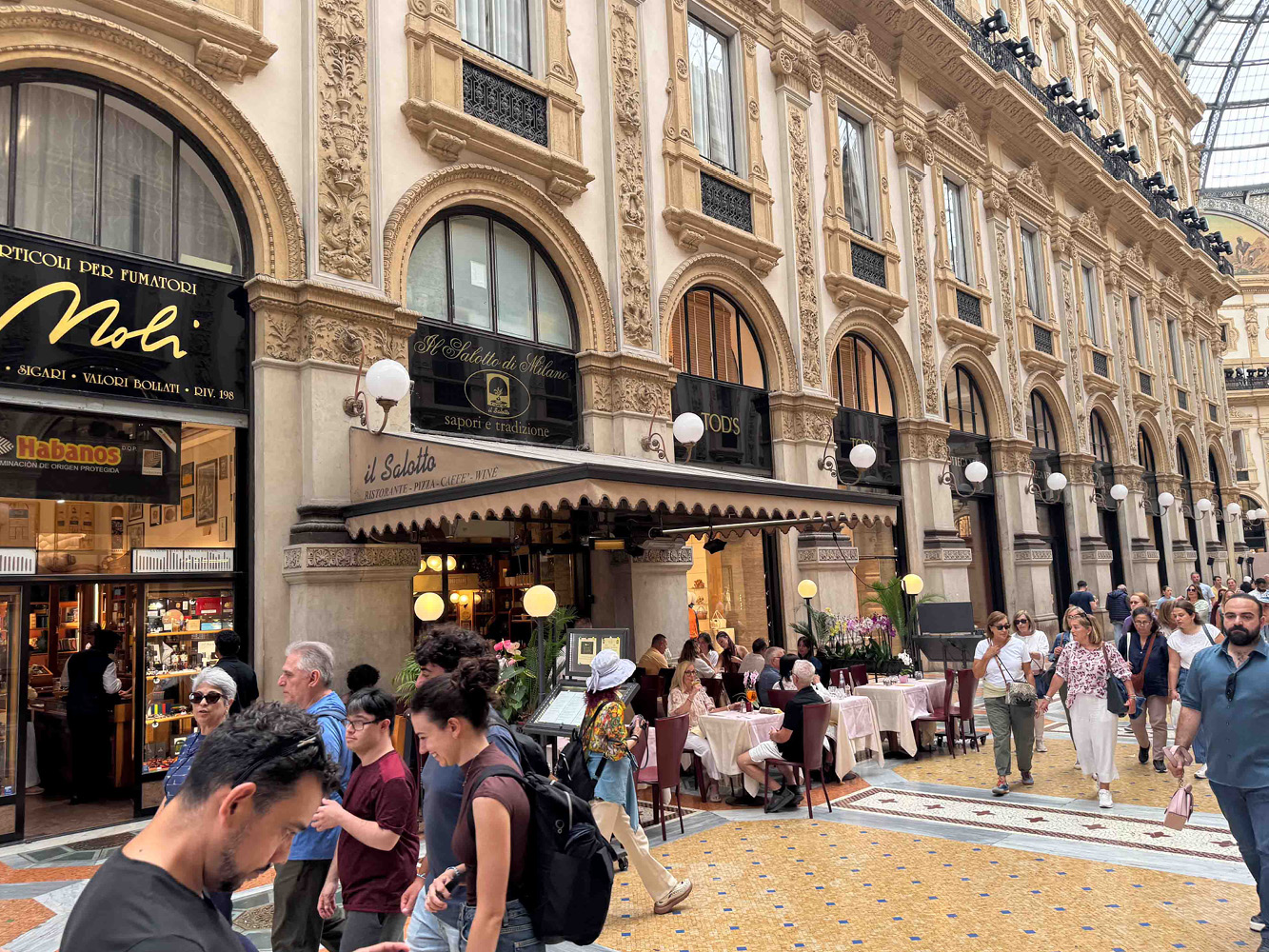
Renaissance Revival architectural style characterizes the four-story ornamented buildings that line the four pedestrian arcade blocks. The Galleria was one of the world’s largest shopping malls of its time, garnering praise for its dynamic design. Luxury retailers fill the commercial real estate, selling haute couture, jewelry, books and paintings, and exclusive items at other unique shops, including longtime businesses founded in the 1800s. Sidewalk cafés, restaurants, bars, and a hotel now fill out the space.
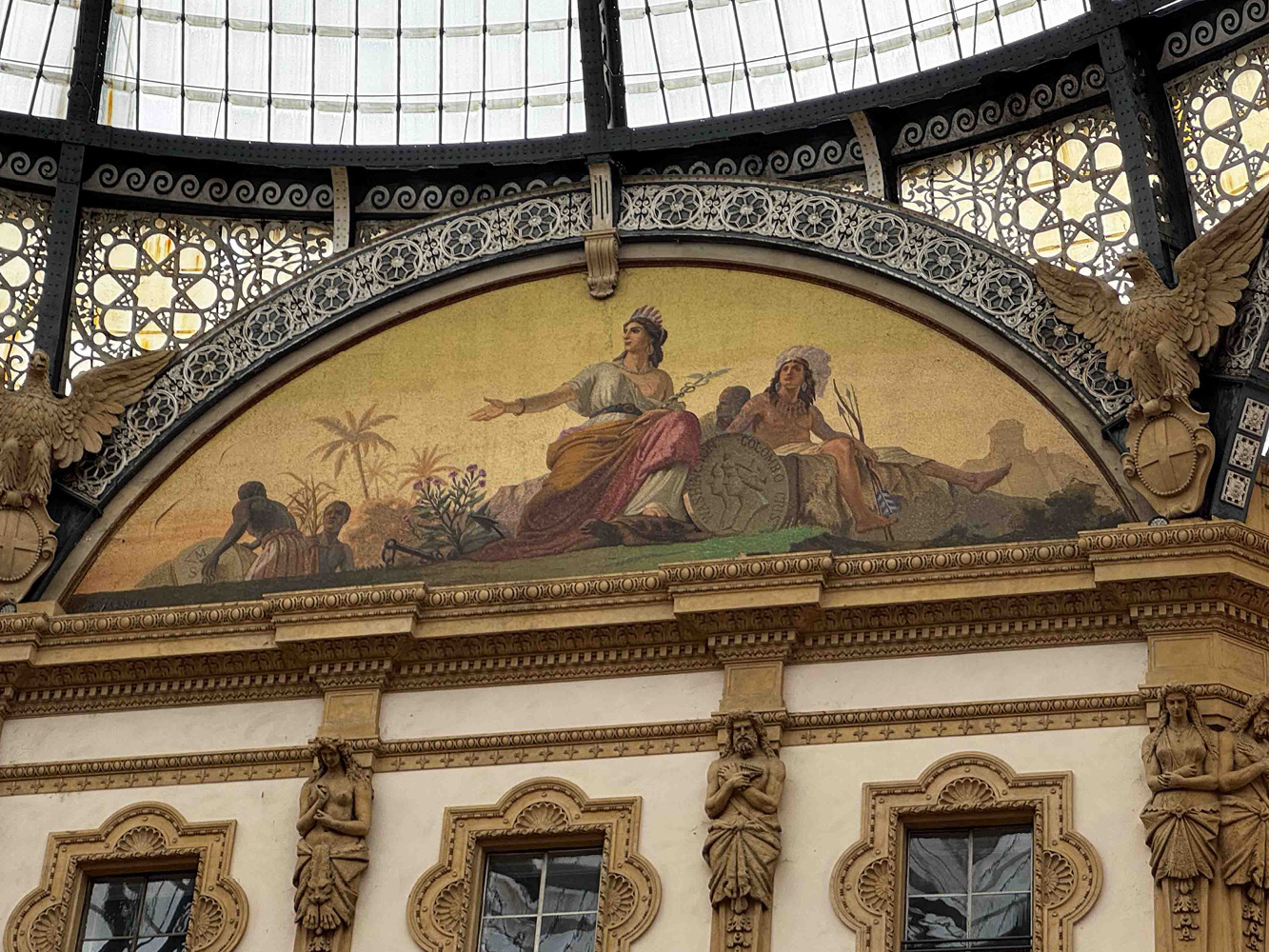
Soaring 150 feet to the dome’s peak, the Galleria’s rotunda provides a 360° view of the four elegant arcade blocks, each terminated with a three-story arch that leads outside. Above the entrance to each arcade at the rotunda, four original frescoes in the shape of half-moons (called lunettes), now illustrated with mosaics, depict four continents: Europe, America, Africa, and Asia. Nineteenth century artists interpreted these scenes through their naïve sensibilities of the time.
For instance, the central figure of the American scene, painted by an Italian artist, features a white woman in Greek toga robes holding a scepter adorned with the international symbol for medicine, accompanied by an Indigenous figure in a war bonnet and Black figures, bare to the waist, engaged in manual labor. Palm trees form the background.
Marble patterns and medallions pave the rotunda’s floor. Near the center, a crowd gathers around one medallion that features a bull from the coat-of-arms of the city of Turin. Following a superstitious tradition, people take turns spinning three times with one heel planted firmly on the bull’s testicles so that good luck will befall them. Women believe twirling on the testicles will help them conceive a child.
Consequently, Galleria management replaced the testicle tiles twice in the last ten years. I found the practice creepy and counterproductive to fertility.
Duomo’s Spires Reach Towards Heaven
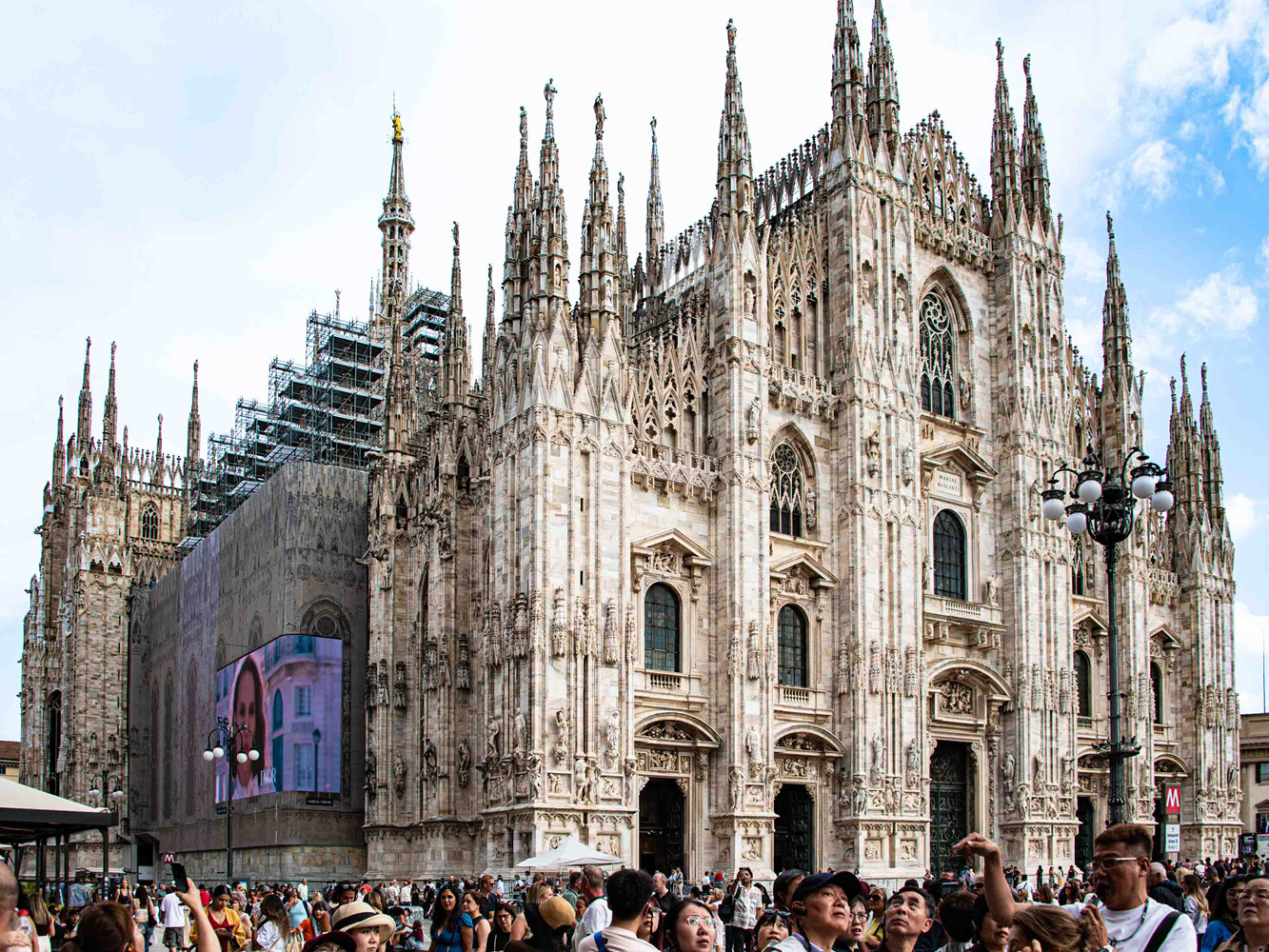
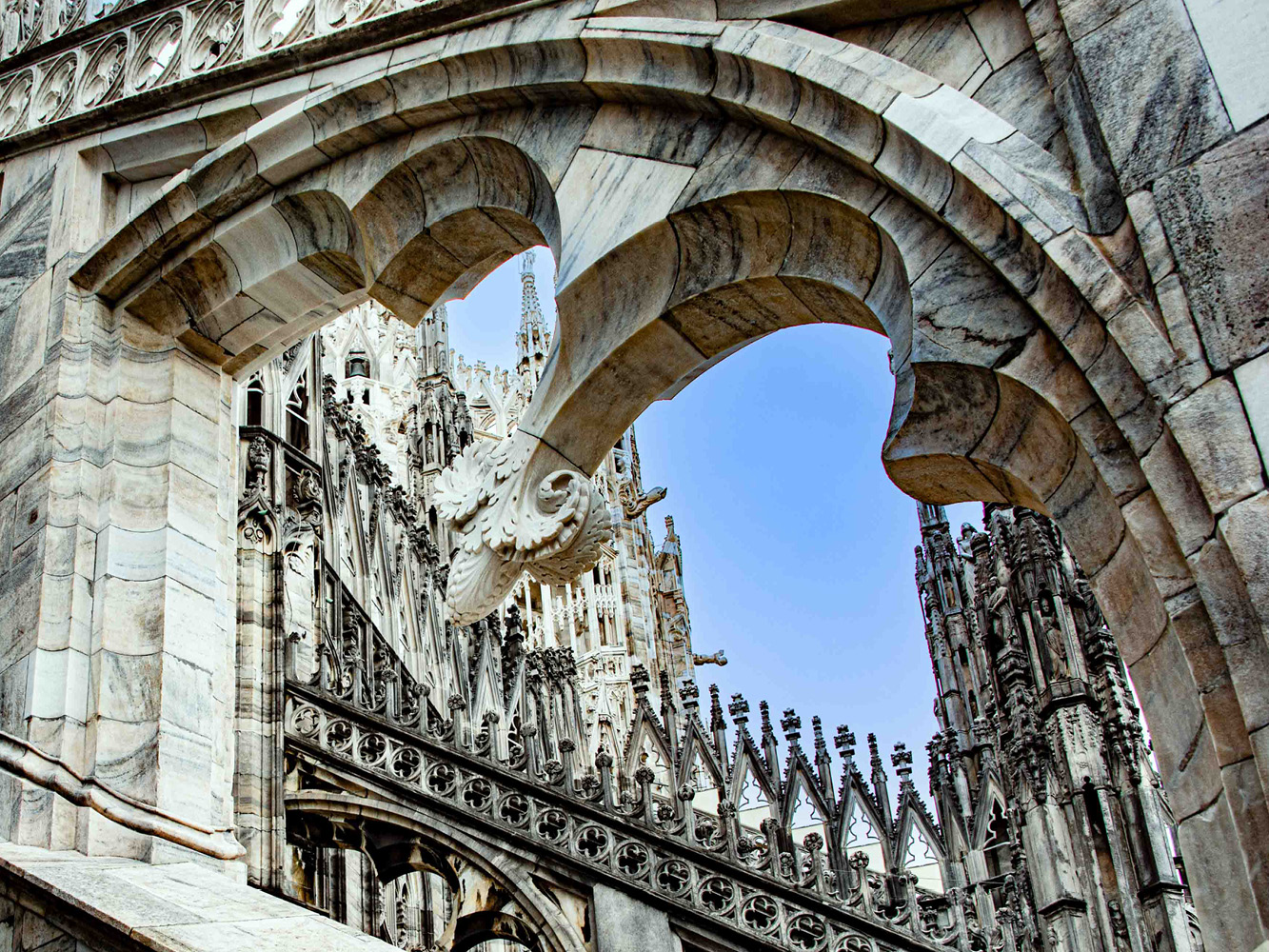
A sprawling square open space greeted us as we exited the Galleria’s southern arcade. At just over four acres, the Piazza del Duomo is Milan’s center geographically and for the city’s artistic and cultural life. Only the bronze statue of Vittorio Emanuele II occupies this vast space. It’s the massive, pink-marbled Duomo di Milano, Europe’s largest Gothic church, that commands the attention of the multitudes of visitors who stare awestruck at this monument to Christianity. Europe’s third largest Catholic church dwarfs me, as its 135 spires soar skywards.
Instead of following a tradition of using darker material for construction, architects opted for the pink-white marble from the village of Candoglia in Italy’s Piedmont region when they began construction in 1386. Builders finally completed the structure in 1965, just shy of 600 years later. Compared to its light marble exterior, a somber darkness dominates the interior. Intricate interlocking patterns that also surprisingly include Zodiac signs cover the marble floor of the cavernous nave, built to hold 40,000 worshippers at a time. Several rows of immense marble columns practically disappear as they reach the ceiling’s darker recesses to line up along a series of ribbed domes marching down the center of the nave towards the altar.
We skirted around the chancel and altar to visit what’s called the ambulatory, itself a distinguished architectural feature that holds several notable elements: three of the world’s tallest stained glass windows depicting the Old Testament, New Testament, and the Apocalypse; cases holding the 13,000 pipes of Italy’s largest organ; and, as I learned later, the Holy Nail Niche, which holds the spike claimed to have come from Christ’s crucifixion.
The statue of St. Batholomew the Apostle caught my eye. Not a devout practitioner, I was ignorant about the tale of woe this man suffered. Punished for preaching Christianity, Pagan leaders flayed him alive. It’s unimaginable that he lived through this barbaric ordeal, but here the poor man stood in front of me in marble, with his skin draped over his shoulder like a shawl. Another gruesome, yet fascinating religious icon.
We ended our visit with an elevator ride that spirited us to the mid-roof of the cathedral. We lost ourselves in a maze of spires and stone lattice work, some pieces under repair. Gothic gargoyles attached to buttresses serve to direct water off the roof.
Back on the ground outside, I was overwhelmed with the richness of the architectural treasures and their stories we experienced that day.
Pictured right: The sculpture of St. Bartholomew the Apostle depicts his gruesome fate for teaching Christianity
We Ate, Drank, and Were Merry
In the evenings we turned our exploration efforts to reviewing menus and wine lists. Spaghetti and meatballs or linguine bolognese? Not typical of Lombardy’s cuisine. You’ll have to head farther south in Italy to indulge in thick, red sauces and pasta.
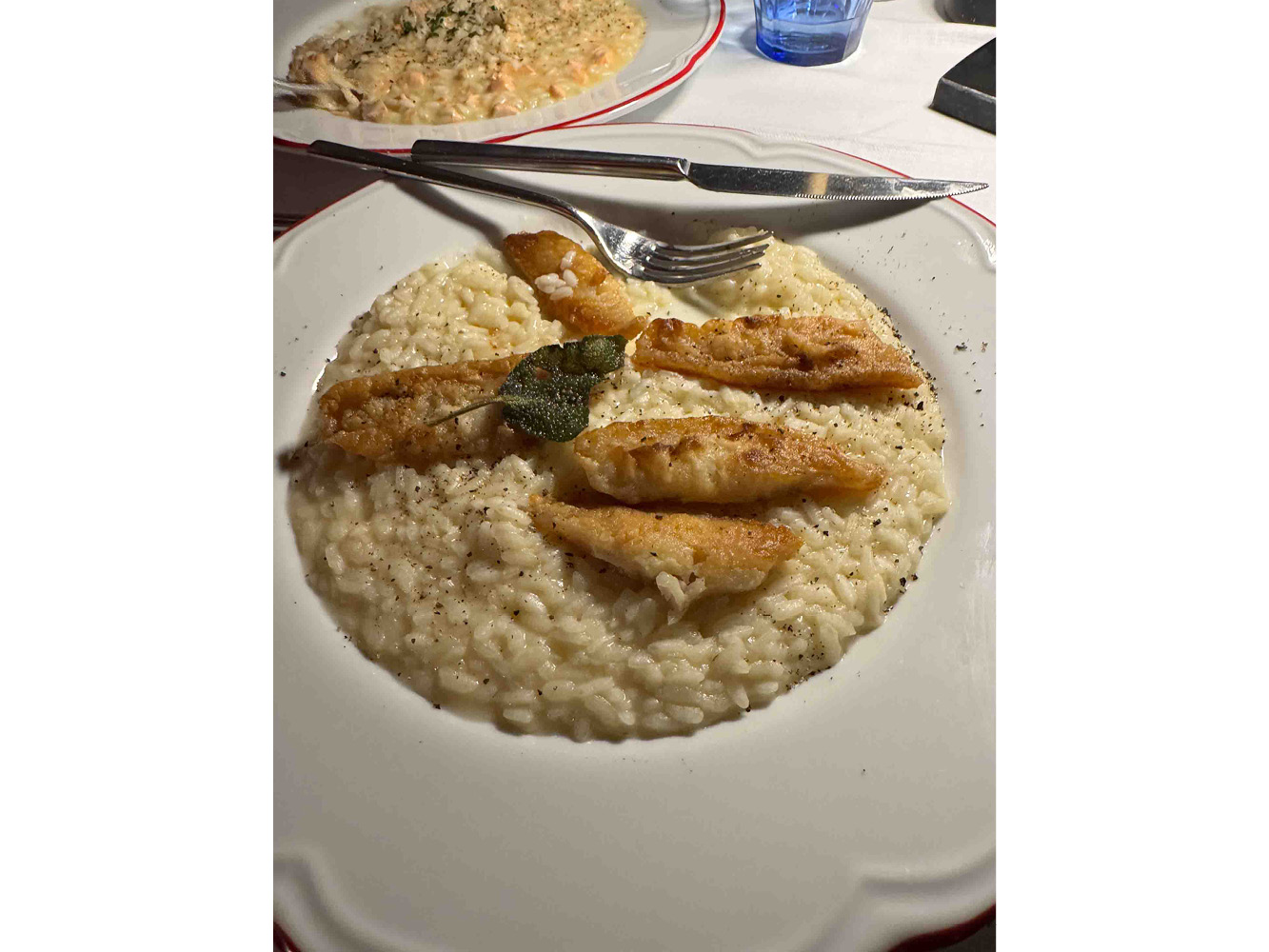
Beef, veal, pork, fish, and dairy are major ingredients for rich butter-and-rice or polenta dishes. One online chef described Lombardy’s signature special, risotto alla Milanese, as “…a vibrant yellow, creamy risotto made with Carnaroli or Arborio rice, butter, Parmesan, and saffron threads.” My dish had pieces of lake perch over a bed of that heavenly rice. Slow-braised veal shanks produced the best ossobuco I’ve tasted. One evening Rick and I each ordered cotoletta Milanese, unfamiliar that each breaded veal chop fried in butter filled the entire dinner plate.
Lombardy region produces our favorite type of white wines––crisp and dry, especially Lugana from Lake Garda. Full- and medium-bodied reds complemented many of the rich meat dishes. While rosés aren’t often my first choice, we discovered a delicious Chiaretto blend that was dry as well. No bad wines were to be found.


But Before You Leave…
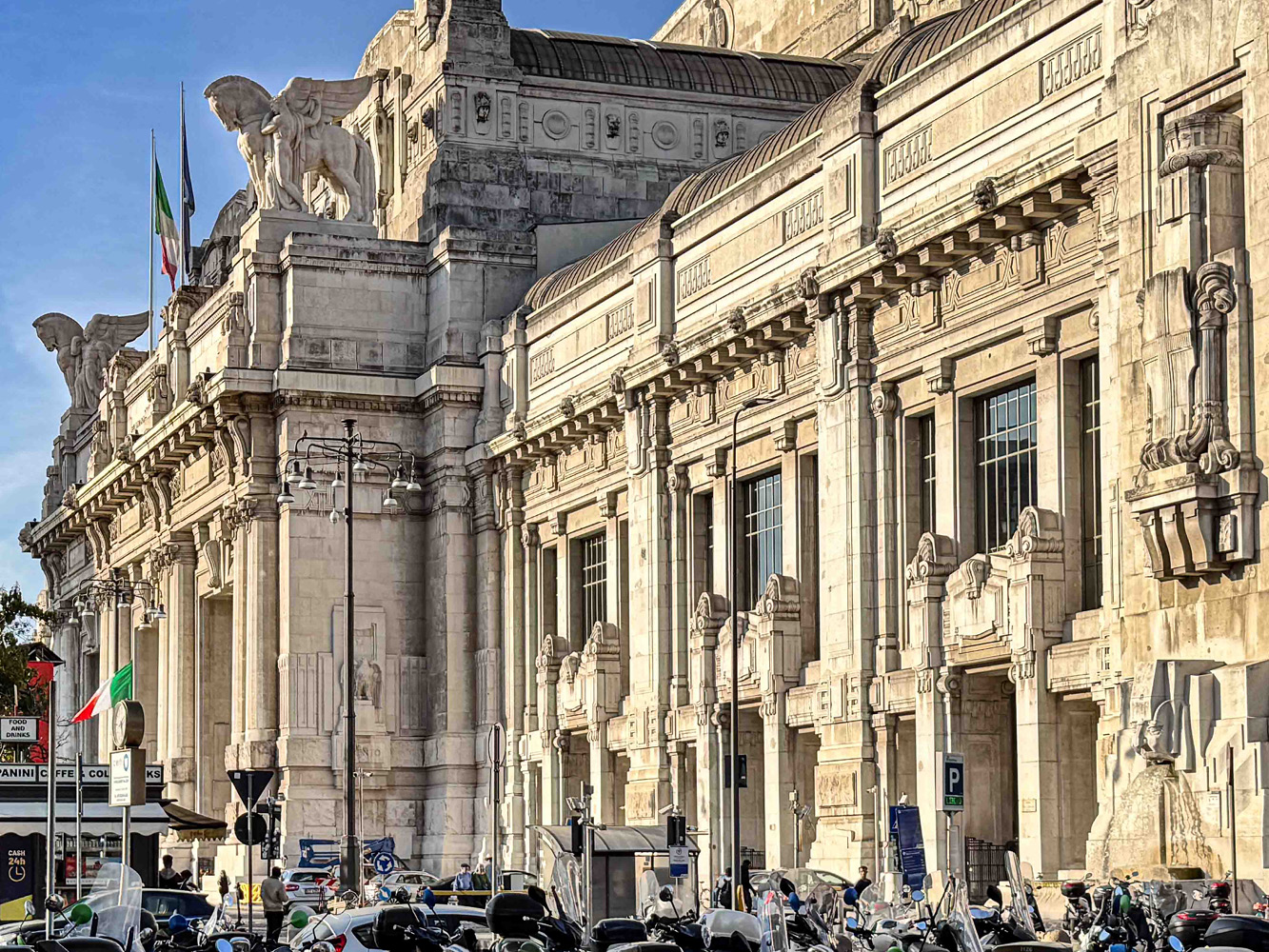
Three days in Milan evaporated, and it was time to continue our Northern Italy adventure. However, Milan had one more treat for us before we left the city behind. Milano Centrale, Europe’s largest train station, is a fascinating architectural and artistic masterpiece of its kind, built with white marble in a blend of many different architectural styles, especially Liberty (Art Nouveau) and Art Deco.
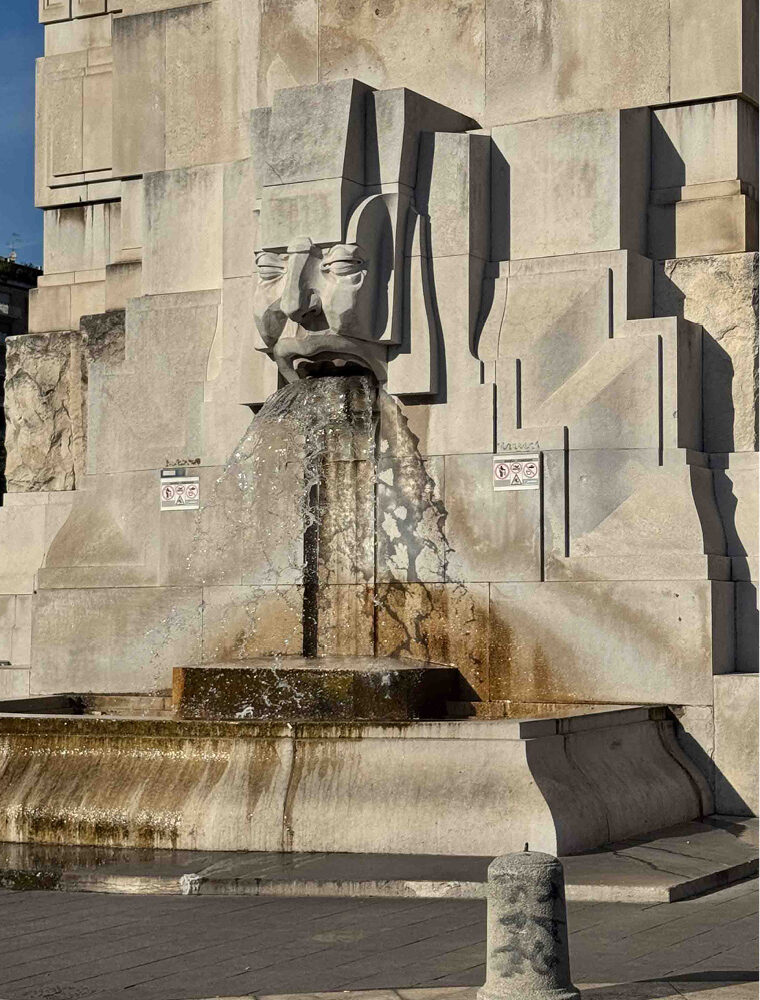
The Station opened in 1932, during the heyday of Mussolini and the reign of Italian fascism, and the muscular building evokes that sense of power and might. With its soaring reception area and three levels filled with retail, the station’s glass and steel canopy roof covers 24 tracks, a total area that could fit ten football fields. Winged horses and Roman soldiers stand near the top of the façade, while a fountain featuring a marble face with mouth agape gushes with water. Fanciful mythological horses, lions, bulls, and eagles, along with colorful mosaics, adorn the interior, as huge columns support the celling. Waiting for our train gave us time to explore this incredible public facility.
We boarded the train to Lévanto, the gateway to Cinque Terre on the Italian Riviera. Five charming villages cascade down cliffs to the Ligurian Sea, the next destination on this seventeen-day Italian holiday. Milan kicked this adventure off, a high energy and stimulating introduction to Northern Italy. Yet I could have stayed another day in this exciting, buzzy metropolis.