Is That a UFO on top of a Bulgarian Mountain? No, It’s Buzludzha!
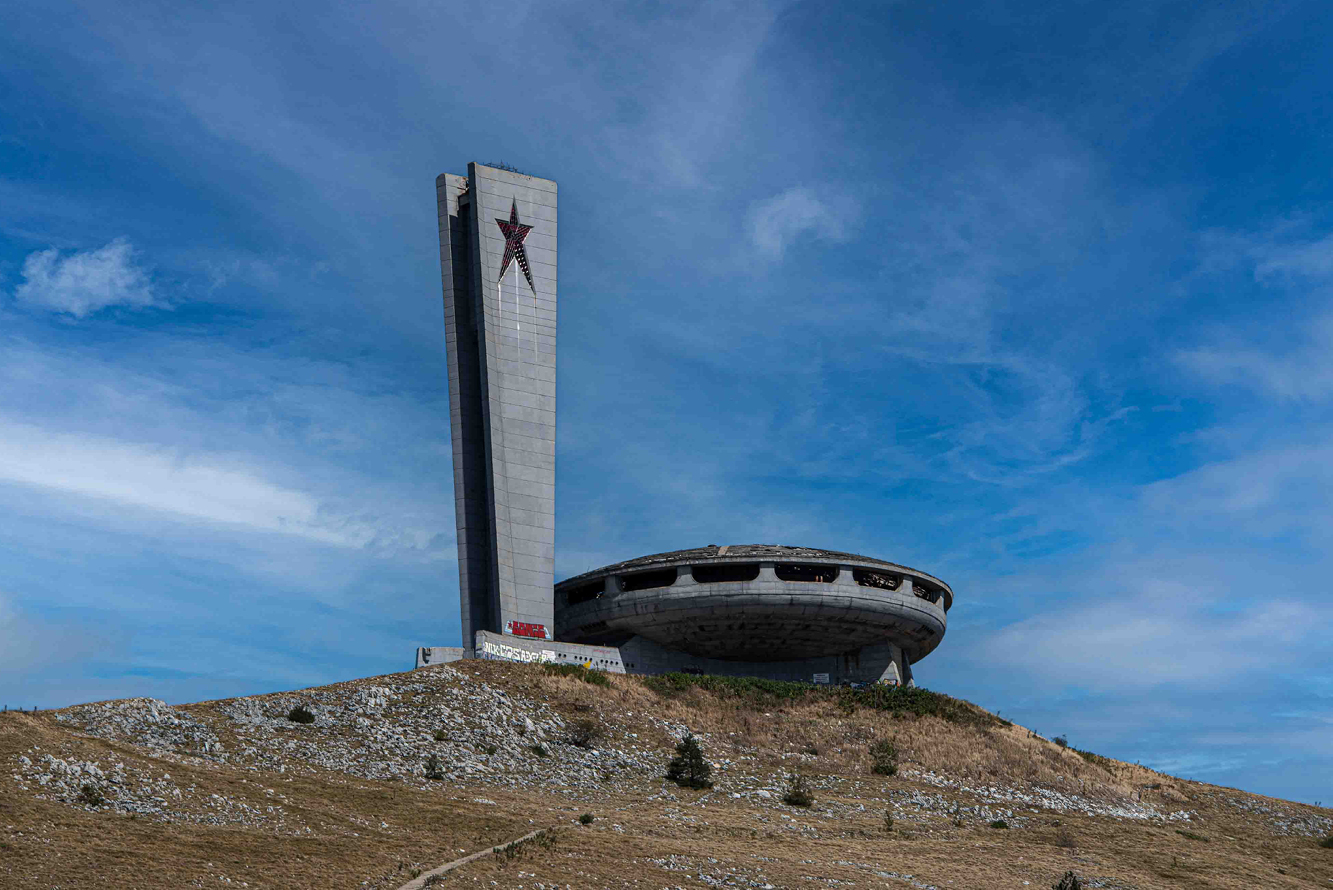
An unknowing traveler might momentarily imagine an alien space ship that when the flying saucer-shaped structure appears at the crest of a barren hill.
Named for the mountain on which it “landed,” Buzludzha (buzz-lud’-ja) served as a grand and lavishly appointed ceremonial headquarters for communist leaders from throughout Bulgaria and the Soviet Union for a brief period of time. Of the six core Eastern European countries comprising the USSR’s “satellite countries” (politically independent, but closely aligned), Bulgaria was considered the closest to the Soviet regime in Moscow. The Soviets opened Buzludzha’s doors in 1980; the building fulfilled its function for only nine years. When the USSR collapsed in 1989, the Soviets locked the doors and abandoned the building. For almost thirty years, harsh winters and constant mountaintop winds tried to rip the building’s exterior and interior apart.
I was familiar with Buzludzha before we embarked on a month-long adventure in Southeast Europe’s Balkan countries. Built in the Brutalist architectural style popular after World War II throughout Western Europe, Great Britain, and especially in Soviet-influenced Eastern Europe, Buzludzha is an internationally-noted, unique abandoned structure among historians and architects. This monumental forsaken Cold War relic topped my “must-see” list.
Join me on this personal “discovery” of this historic site.
Buzludzha dominates the barren top of the mountain by the same name
The Buzludzha site is home to a herd of semi-wild horses
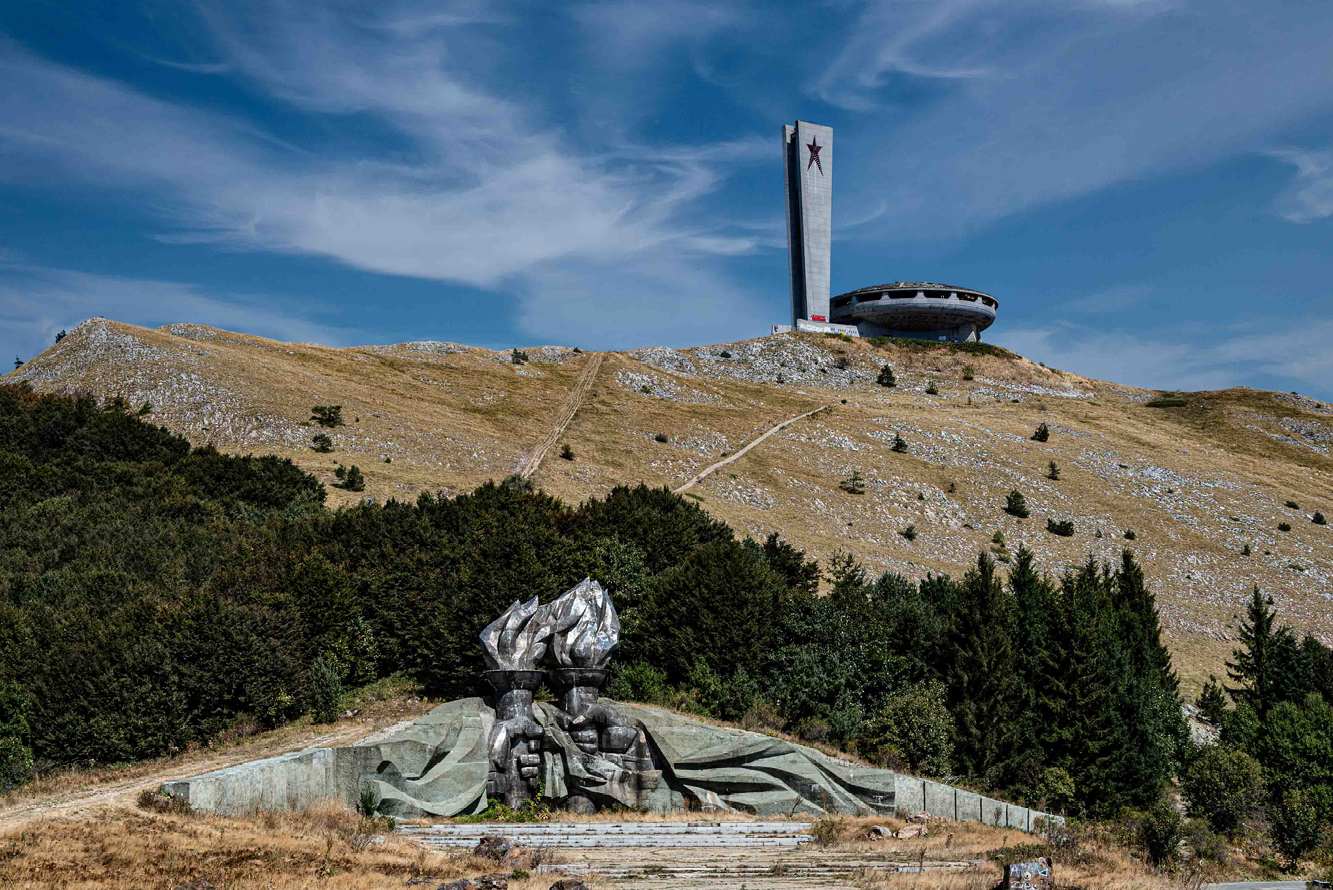
The two-fisted sculpture holding torches provides a strategic vantage point for viewing the foreboding structure
Is That a Flying Saucer?
After crossing the Danube River from Romania, we descend the southern slopes of the Balkan Mountains and travel south onto a broad , featureless valley. To our left at a distance stands a lone barren hill (elevation 4700 feet)with a saucer-shaped object at its top that looks like it could have been dropped from the sky by an extraterrestrial race. Our guide Volen turns left onto a two-lane road, past a fifteen-foot tall, austere bronze statue of an early Bulgarian Communist leader aside a concrete pillar, and heads up the hill.
For ten miles, the road zigzags and winds around the mountain through scrubby expanses and occasional copses of evergreen trees; Buzludzha flirts with our attempts to keep it in our sight as it grows larger. We encounter a roundabout near a lower parking lot, whose center holds a large bronze sculpture of two fists, each holding a shining torch. Its vantage point allows a view of both the fists and Buzludzha far up the hill; together, they project power and dominance. Past a small cluster of cottages, the road turns and steepens, suddenly ending next to the behemoth. We share the otherwise deserted parking area with a van of Japanese visitors and a small herd of semi-wild horses that regularly graze the scrub around the monument.
Two visitors walking around the building provide a relative perspective
Buzludzha is Magnificence in Ruin
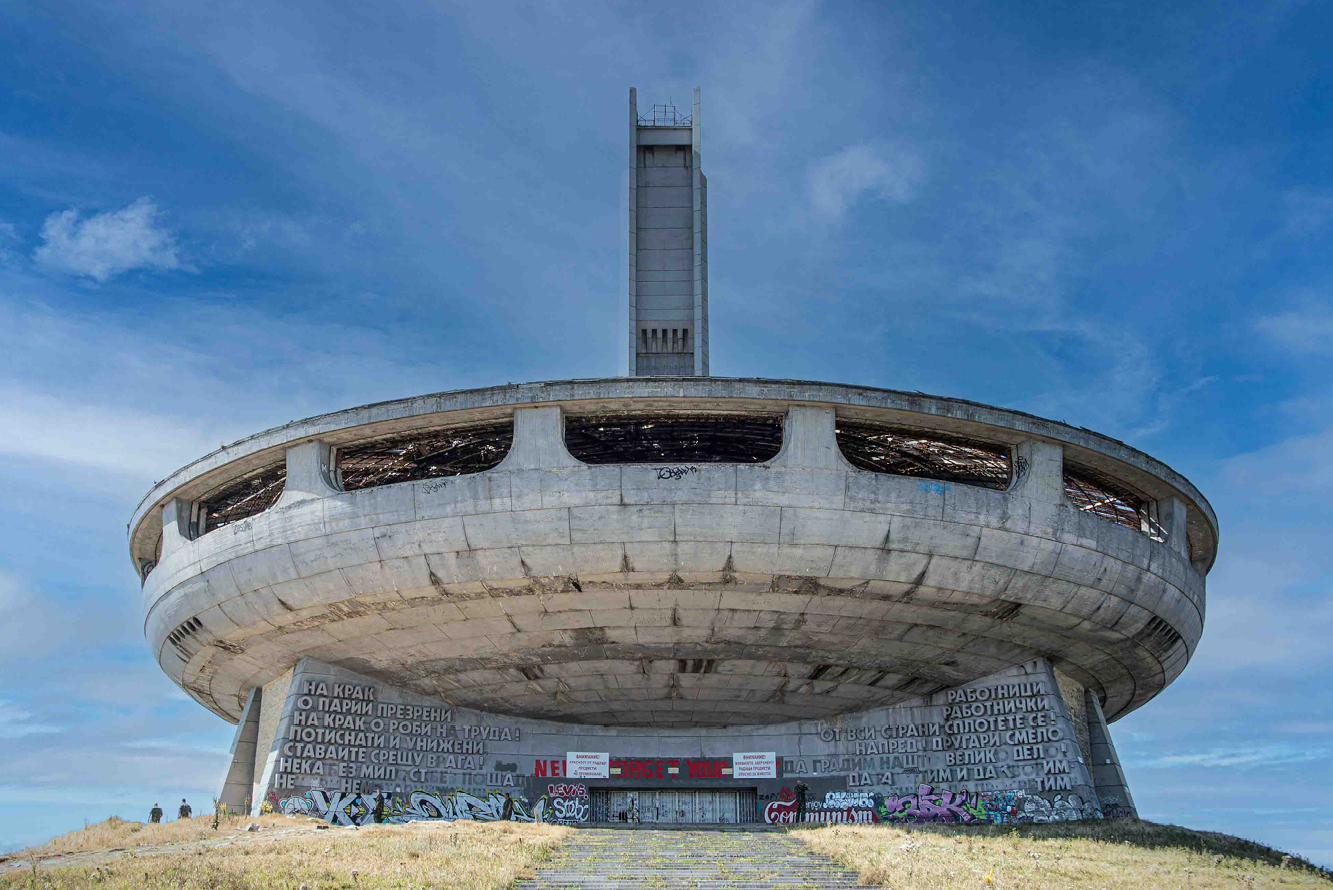
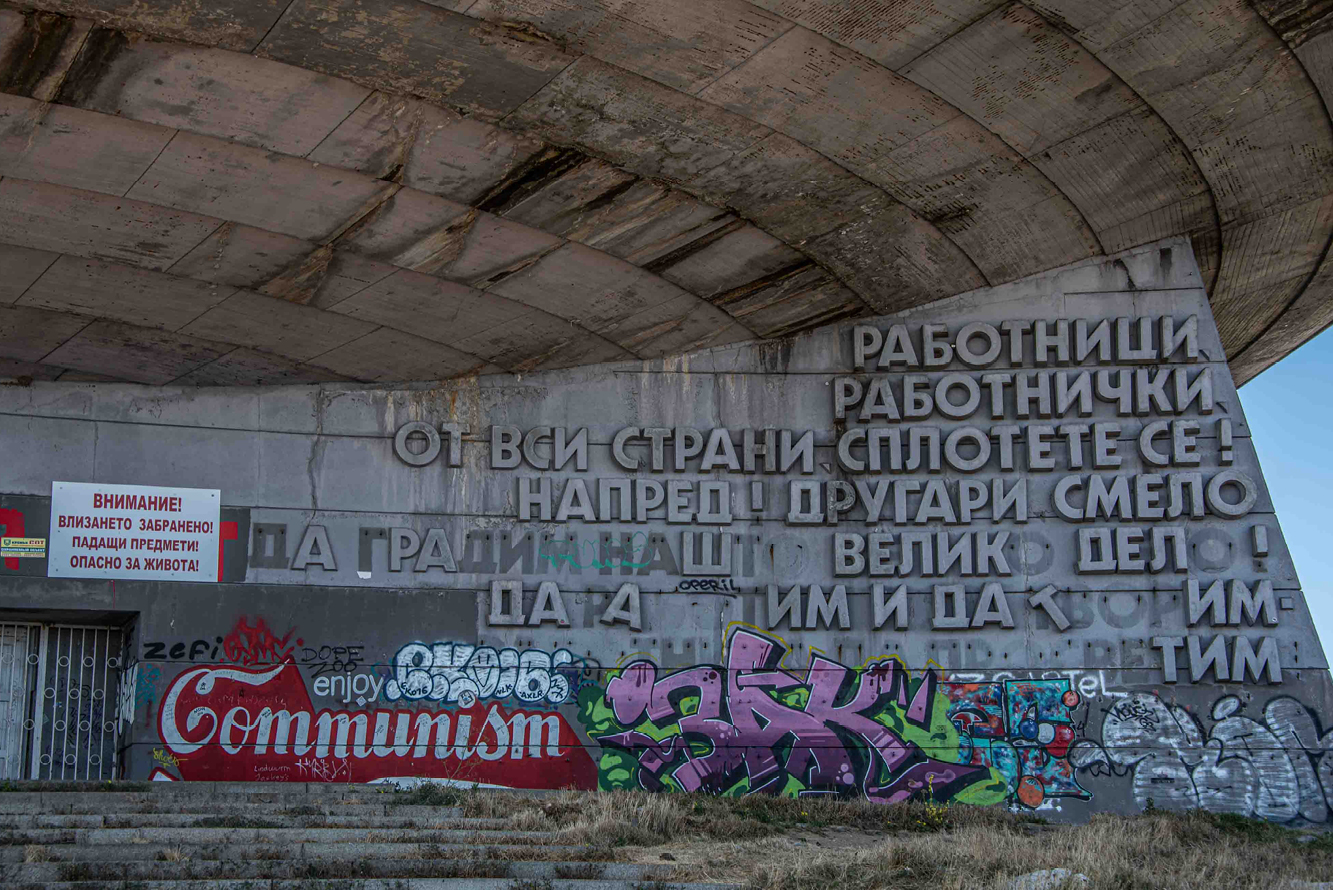
Facing the structure, I take a deep breath to gaze upon this massive, otherworldly edifice. At almost 200 feet in diameter and 50 feet tall, the main hall rests on a substantial base. I climb a broad set of steps to the edge of the monument’s platform, facing the building’s support base and the former public entrance. Large stone Cyrillic letters applied to the surface form phrases, now missing a few letters, praising communist political philosophy and urging the working class to rise up against their oppressors.
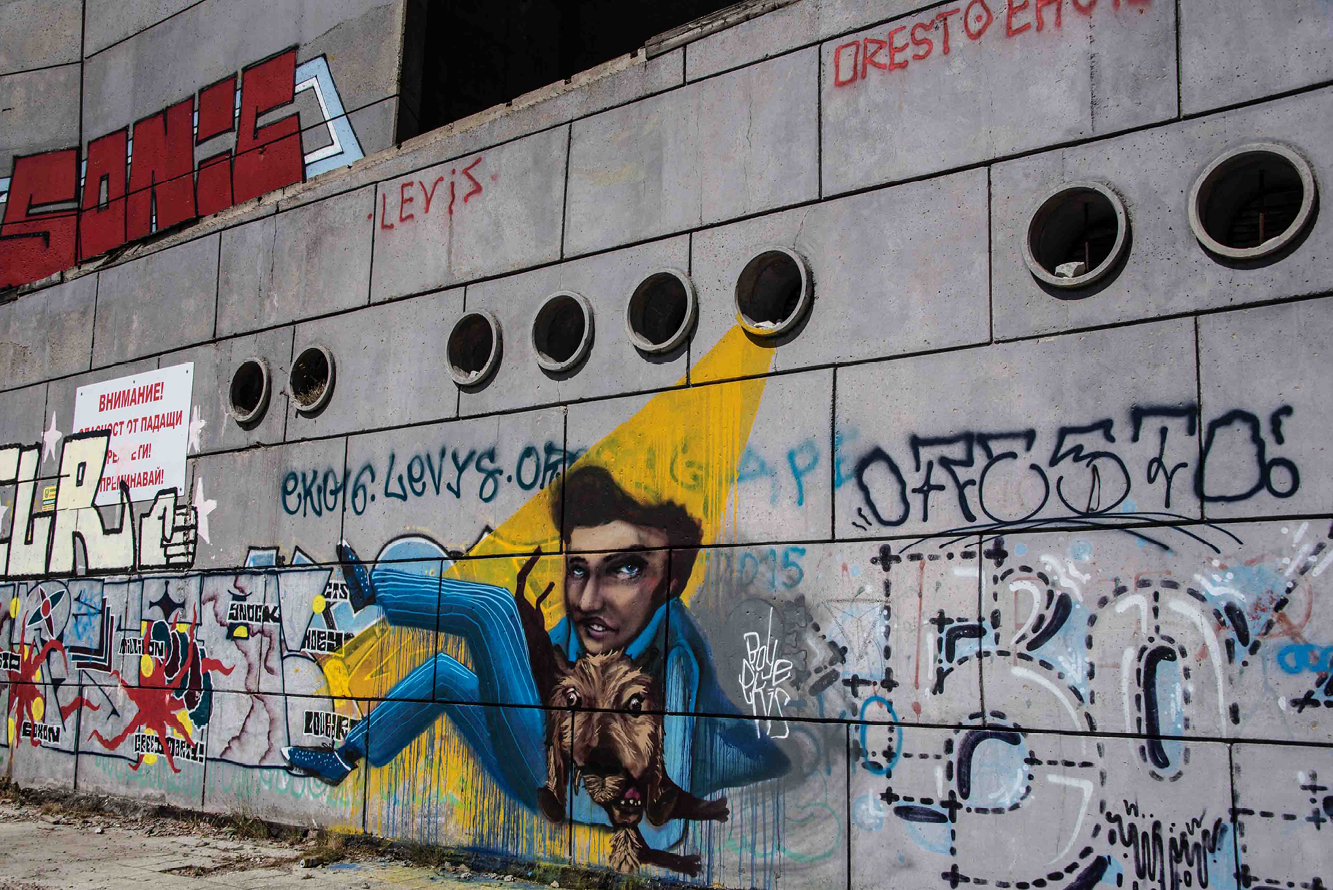
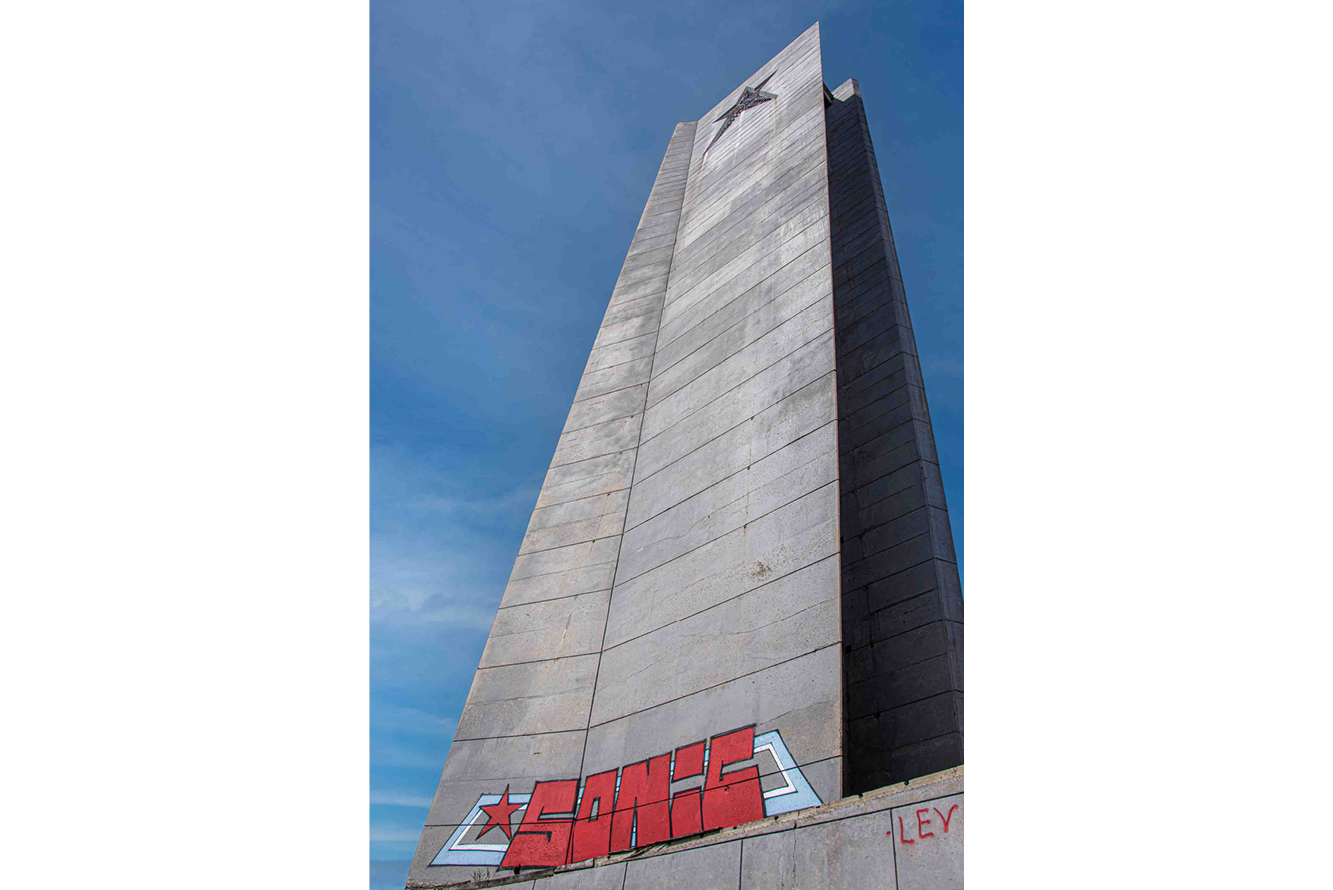
Colorful graffiti defacing the base’s façade tell another story. Irreverent scribbles decry the solemn epitaphs. Cartoon figures decorate the walls. A suited man and his wolf/dog float out of a portal window. One clever artist adopted the Coca Cola logo to create a tongue-in-cheek “Enjoy Communism” tag. Adjacent to the main hall stands a 250-foot inverted obelisk that displays at its top the remains of a grand mosaic red star, chief symbol of the Soviet Union, cut into the stone face.
The building’s decrepit condition shocks me. Flakes of the saucer’s exterior shell litter the ground. Through semi-circular vents near the top of the saucer, I can see the sky, as parts of the roof have collapsed. Over the decades since its 1989 abandonment, severe winter storms and frigid weather ate away at the exterior and interior. Vandals robbed and destroyed much of the mechanical systems before the structure was secured in the early 2000s.
I think It’s Possible to Sneak Inside
Before the trip, I learned that “explorers” of abandoned sites had surreptitiously created an illegal entrance, concealed by piles of stones, and read two personal accounts of successful trespassers. I wanted to find this secret hole to crawl into the main hall. An extravagant amphitheater seated hundreds when originally built, with three gigantic mosaic murals of Friedrich Engels, Vladamir Lenin, and Karl Marx and walls lined with bold, socialist art depicting industrial workers, political leaders, and outer space aspirations. Although thieves and weather had destroyed much of the interior, I still wanted to have a peek.
I search the building’s perimeter for a suspicious-looking stone pile. Our guide Volen discourages my ambitions. These illegal entry points are now permanently sealed, he says, to prevent curious visitors (like me) from serious injuries from falling roof tiles. I had to be satisfied with exterior shots and viewing historic photographs online.
Colorful graffiti serves as a counterpoint to the communist philosophy espoused in the formal quotes
Buzludzha’s lower walls provide a canvas for artistic expression
The outline of the Soviet red star tops the 250-foot obelisk
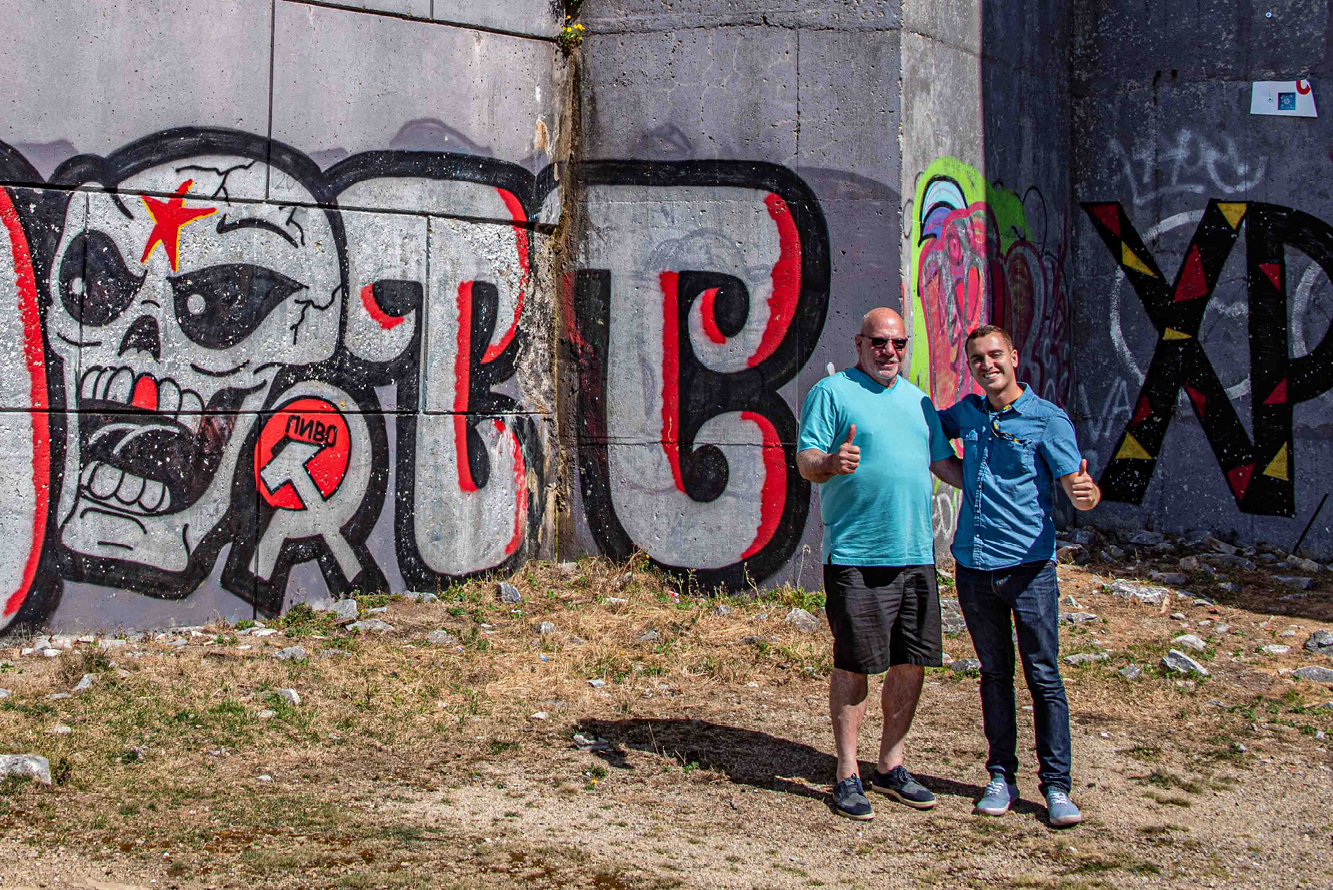
Our guide Volen poses with Rick at the base of the tower near a graffiti skull complete with the red star and Soviet hammer and sickle
Historic Preservationists and Government Come to the Rescue
In the decade since my visit, Buzludzha’s fate has made a U-turn. Recognized by the Bulgarian government as a national (and international) treasure, a group of preservationists applied for and received significant grants from the Getty Foundation to fully seal the site, develop a conservation plan, and bring architects and heritage consultants from across Europe to assess the degradation. Not-for-profit organization Europa Nostra named Buzludzha one of the seven most endangered historical sites on the continent. The aim of this work is conservation, not restoration: stabilize and clean the site, make it safe for visitors, and help them appreciate its role in Eastern European history while understand the consequences of a collapsed political system.
Bulgaria Holds More Tourist-worthy Soviet-era Treasures
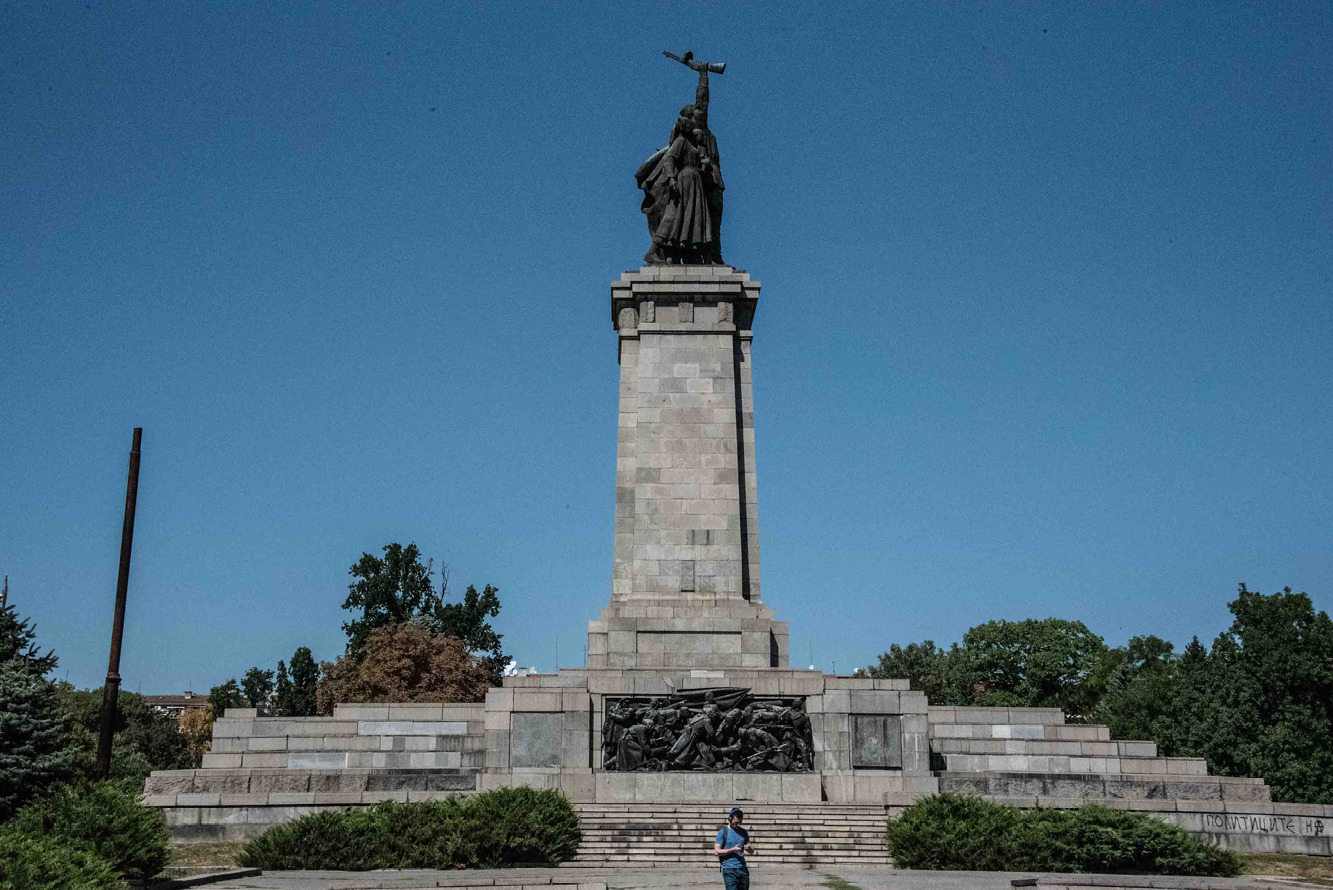
The monument to the Soviet Army remains a controversial memorial in Sofia, Bulgaria
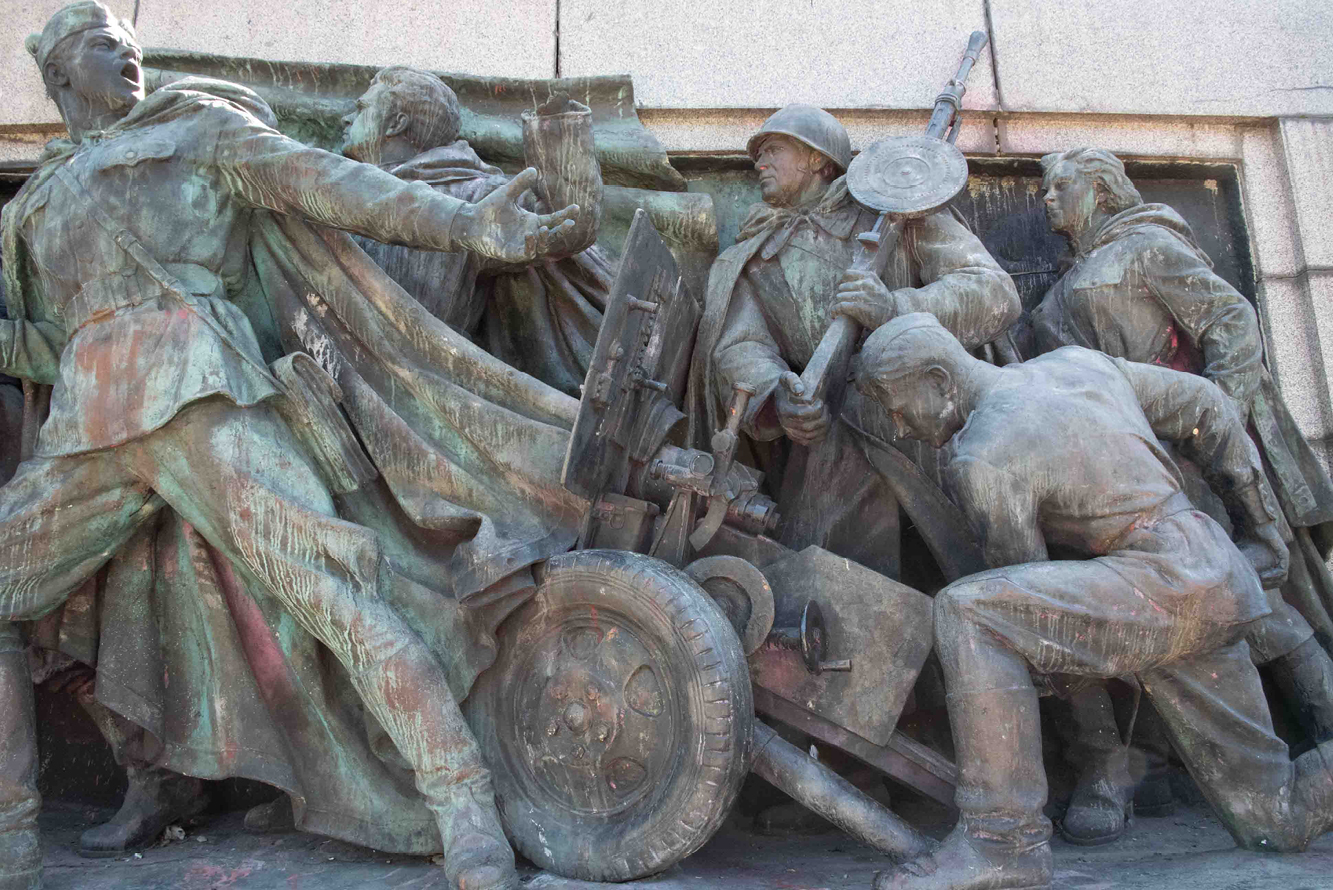
One of four detailed friezes surrounding the base of the monument depicts working people battling the enemy bourgeoisie
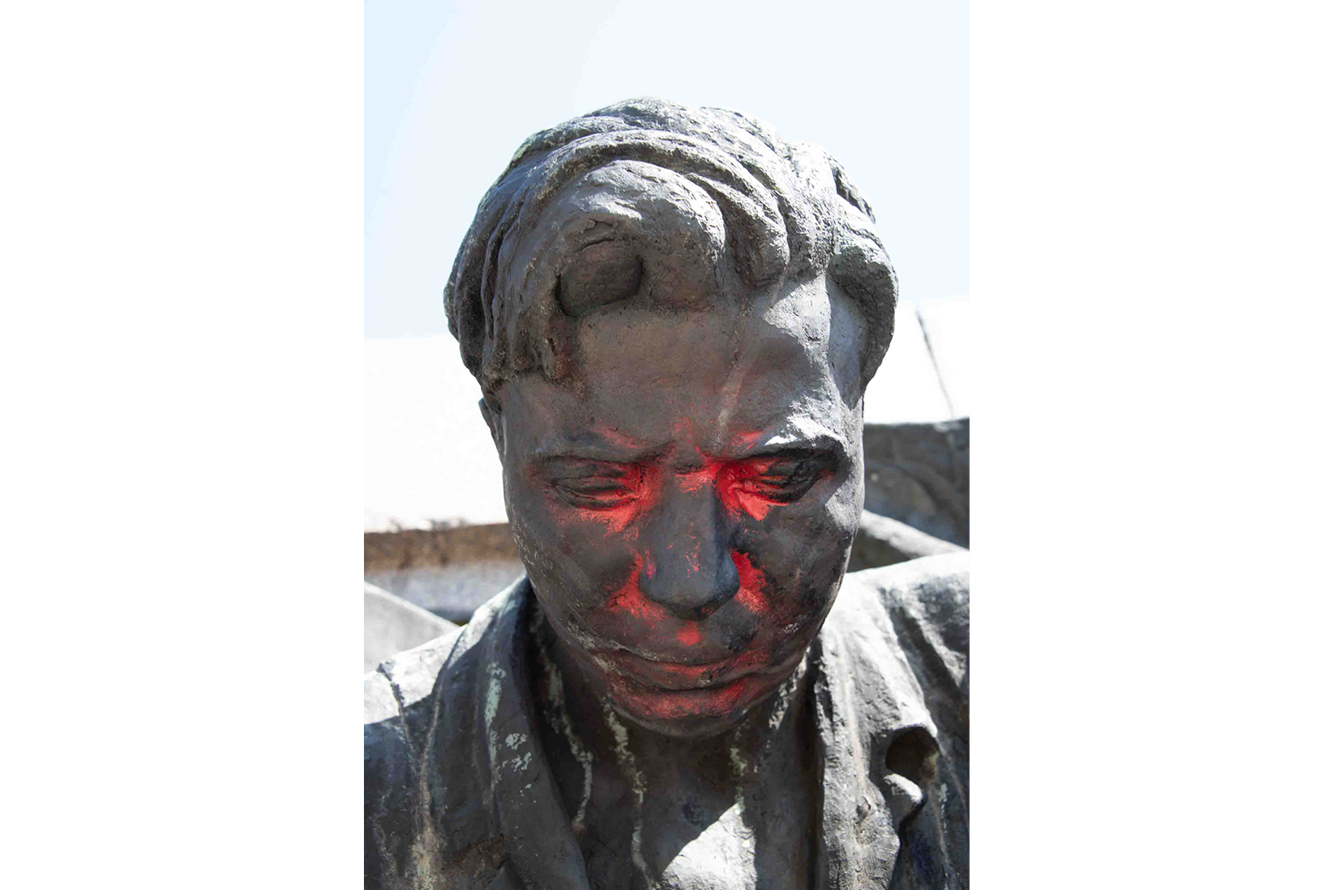
A young leader calling people forward to fight, his tunic showing remnants of paint removed by government officials
Color from the graffiti artist who painted the frieze figures as American pop culture heroes remains, despite officials’ removal efforts
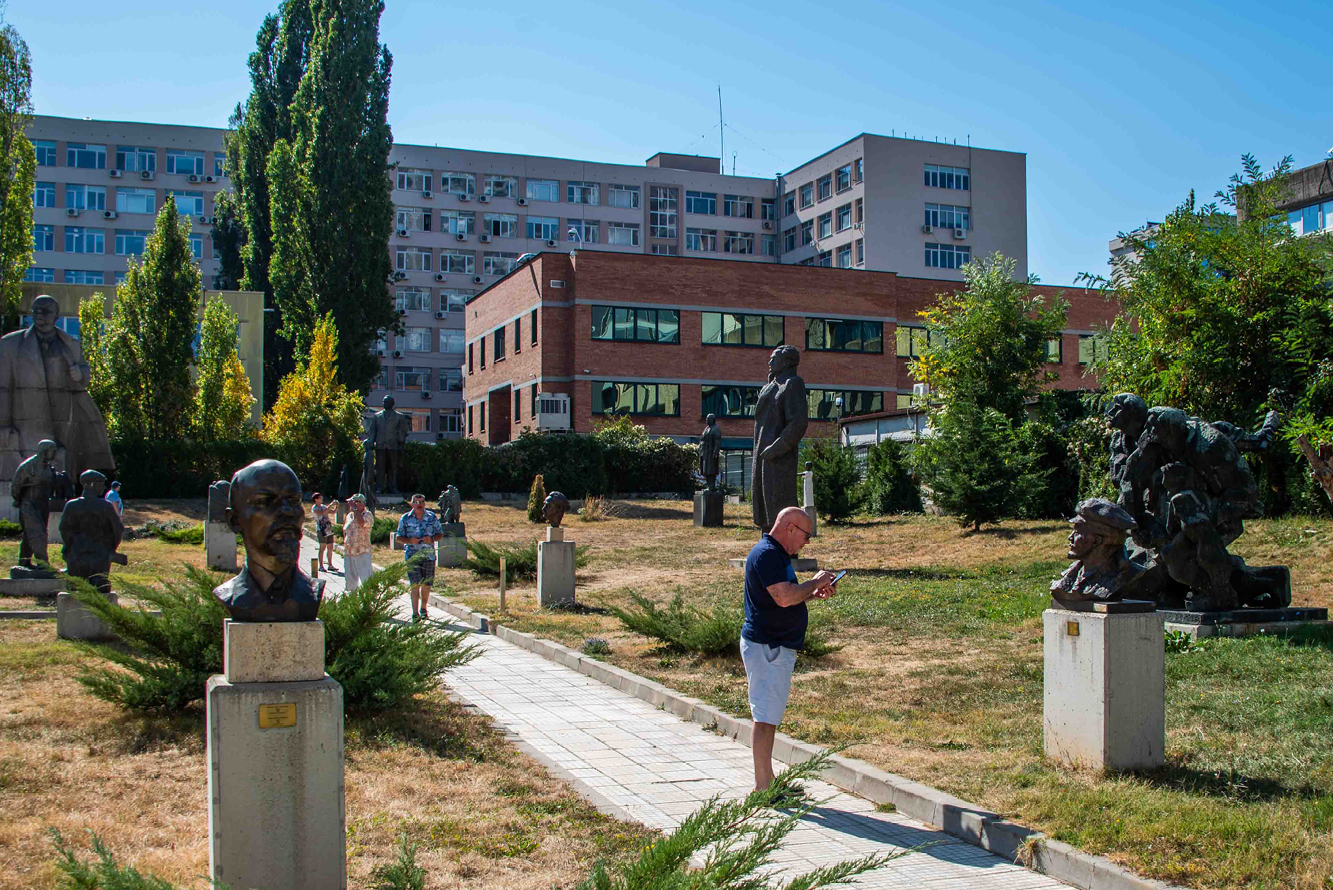
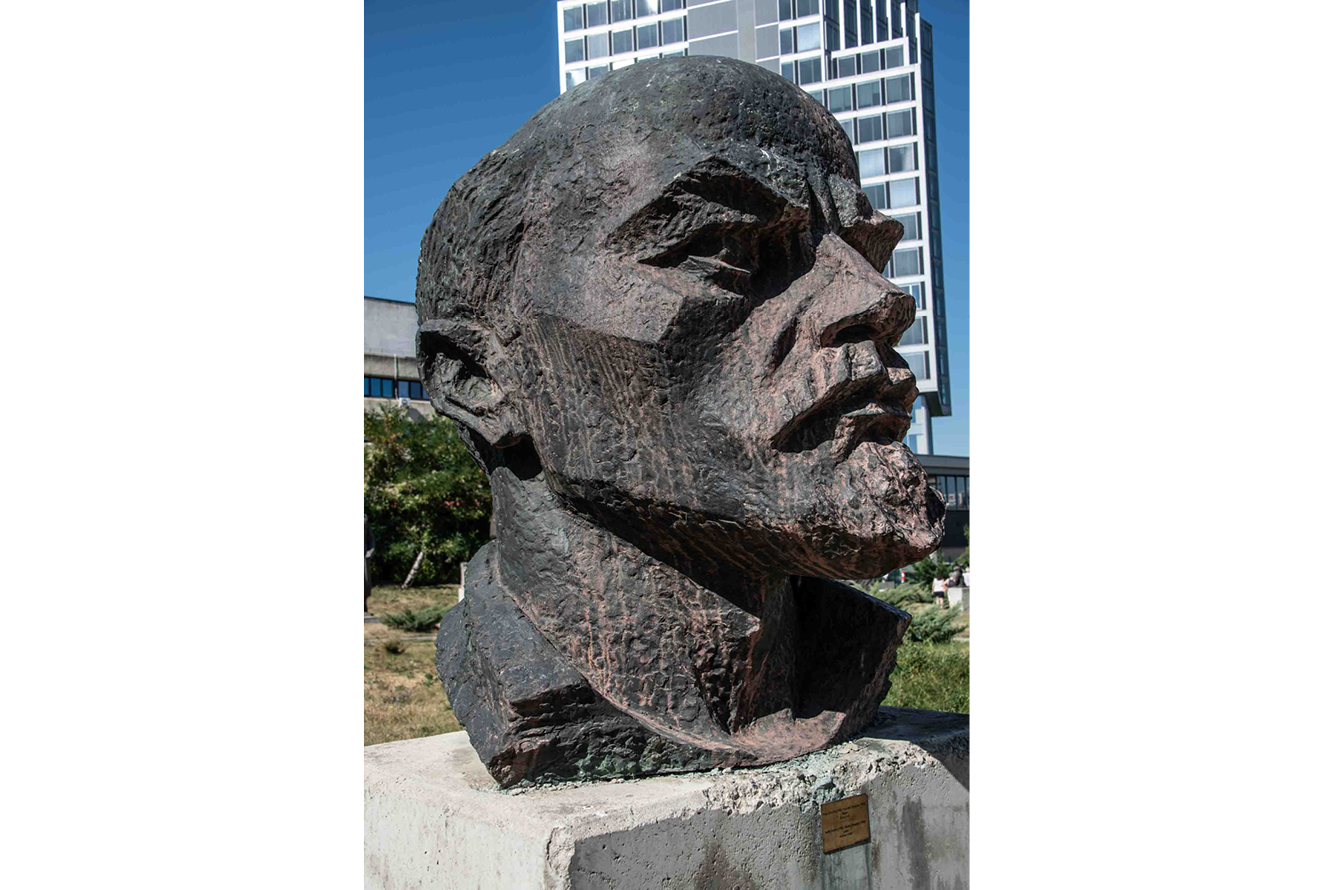
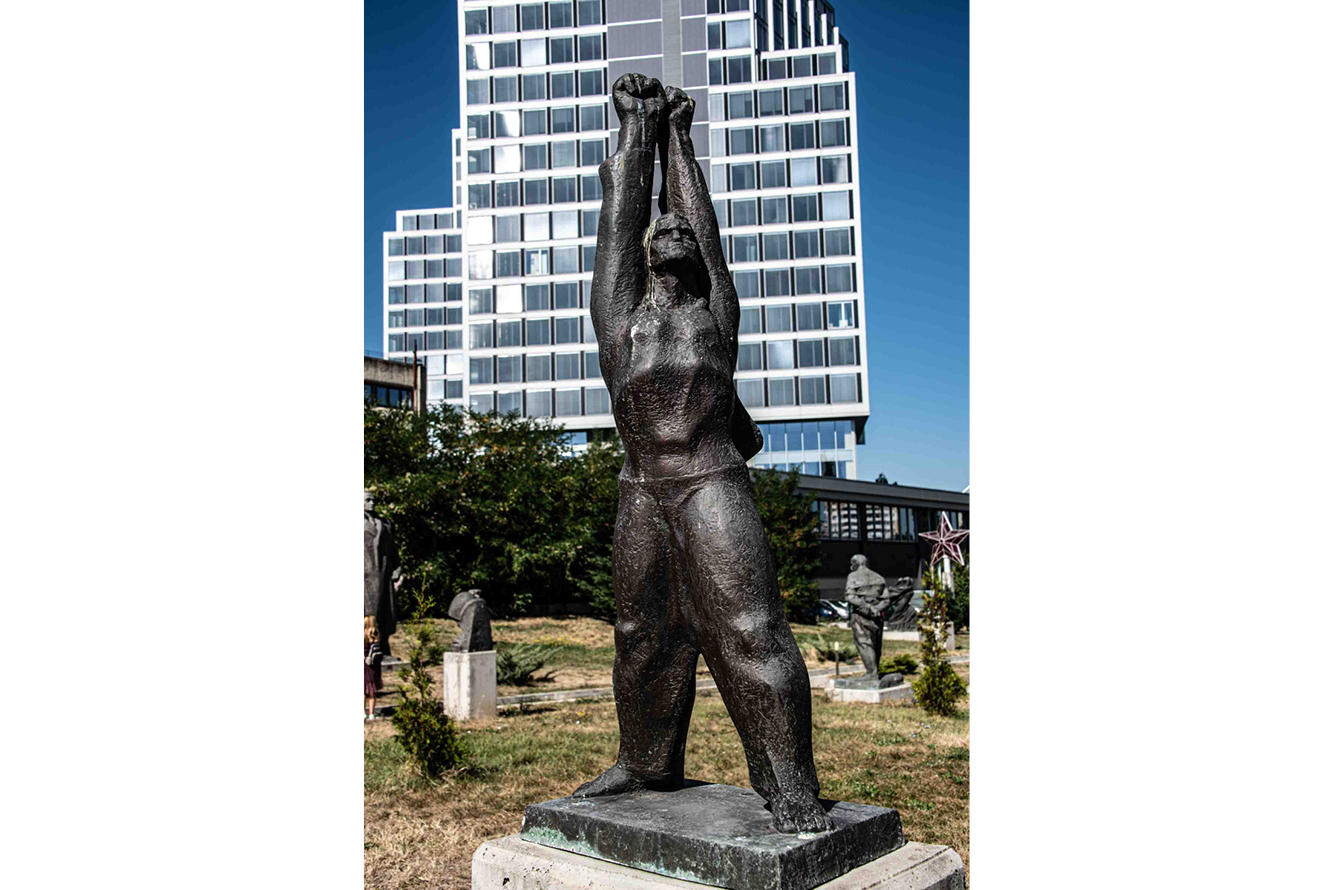
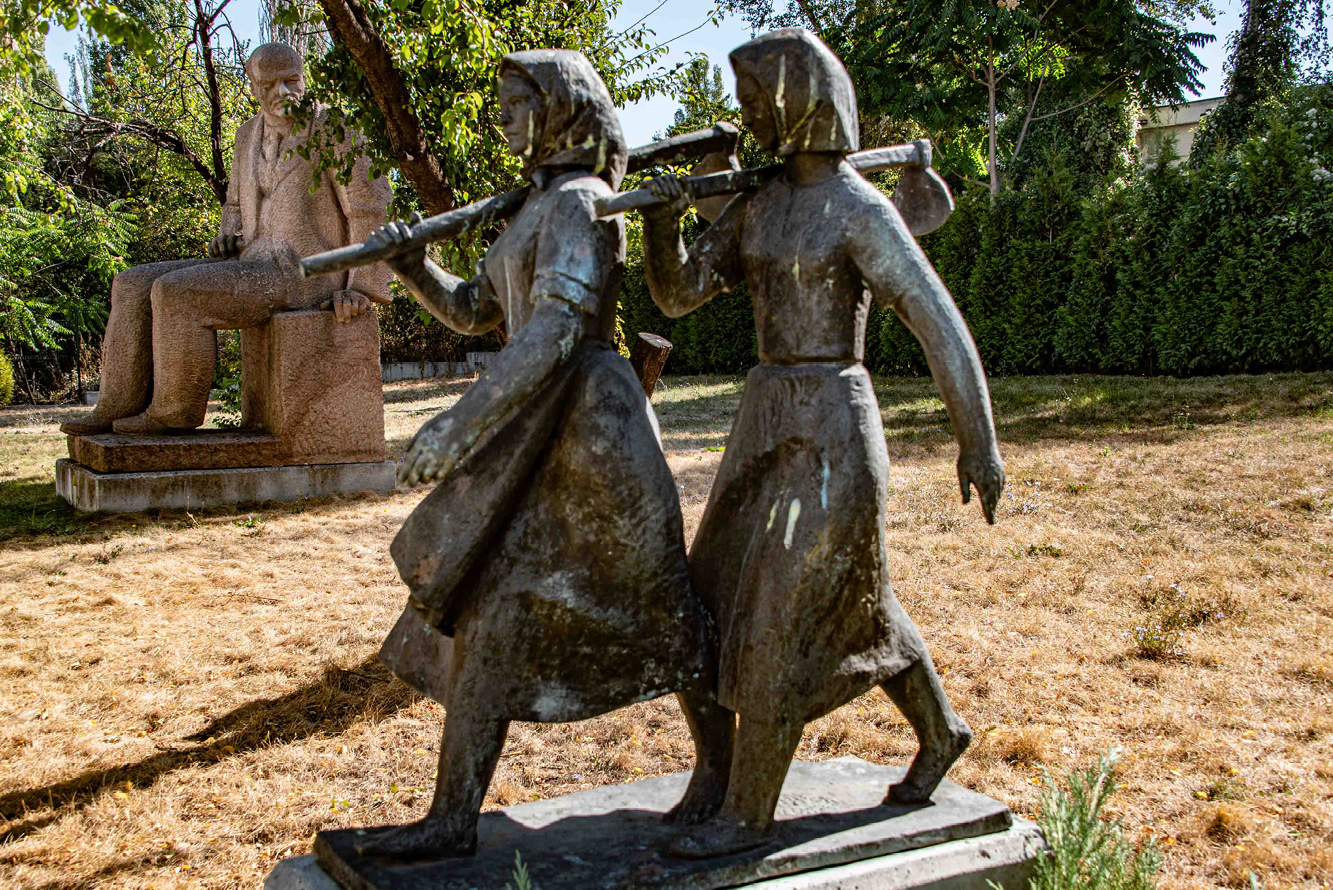
The two-acre Museum of Soviet Art displays monuments of famous leaders and statues of working class and poor people fighting the communist revolution
A peasant family struggles against all odds
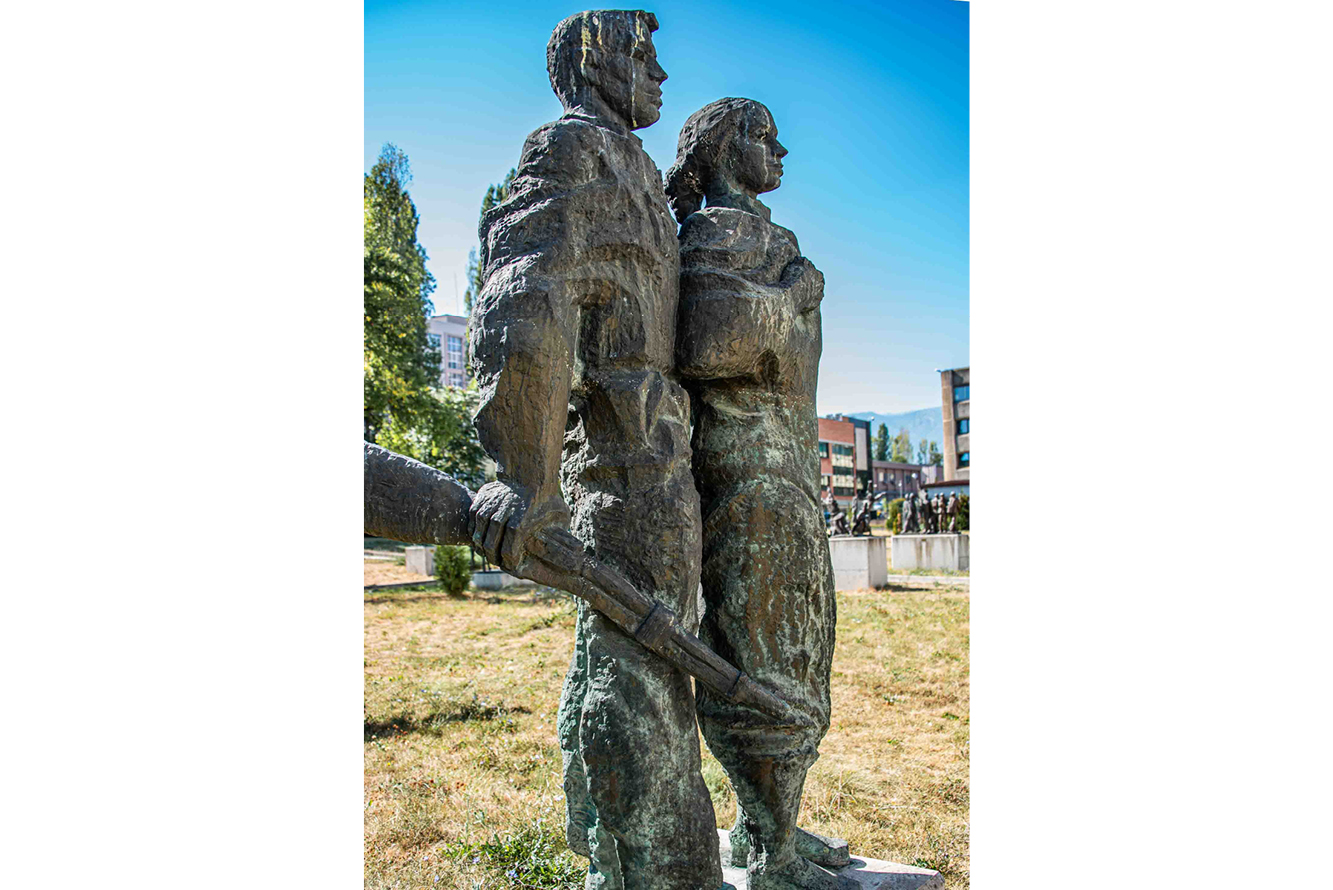
A couple valiantly takes up arms to fight the bourgeoisie class
Vladimir Lenin’s images were removed from public spaces around the country after the 1989 dissolution of the Soviet Union
A Brutalist-style sculpture depicts a man raising his fists in defiance
Two peasant women, hoes slung over their shoulders, stride forward to join the revolution
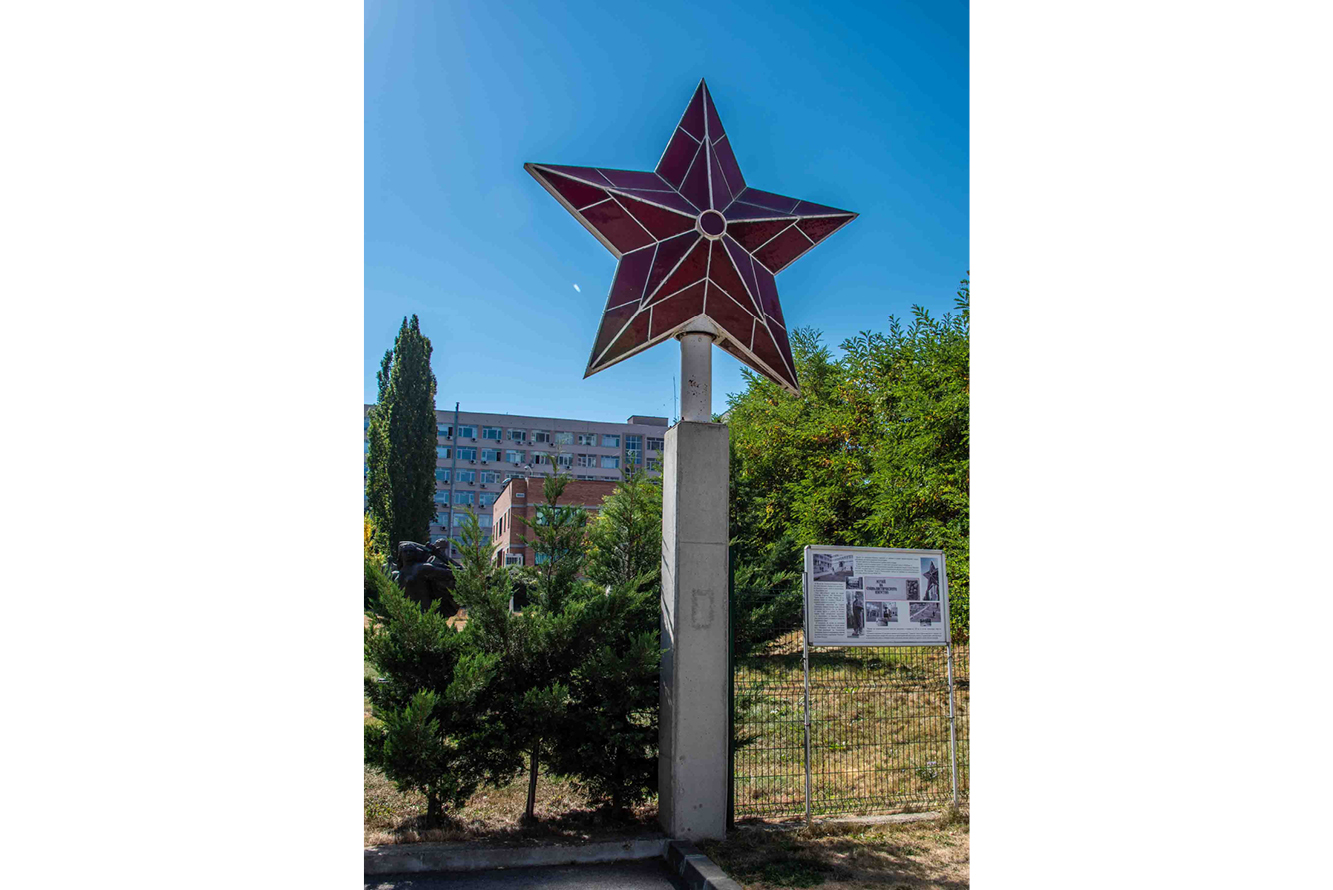
The emblematic Soviet red star welcomes visitors to the museum
If you travel to Eastern Europe, put Buzludzha on your itinerary. And as long as you’re in Bulgaria, visit capital city Sofia and its Museum of Socialist Art. A fascinating collection of 70 Soviet-era statues from around the country were brought to this almost two-acre site after communism fell, including bronze statues of Lenin and everyday farmers and other workers rising up against the enemy. An indoor exhibit of Soviet art depicts many scenes of rebellion and victory.
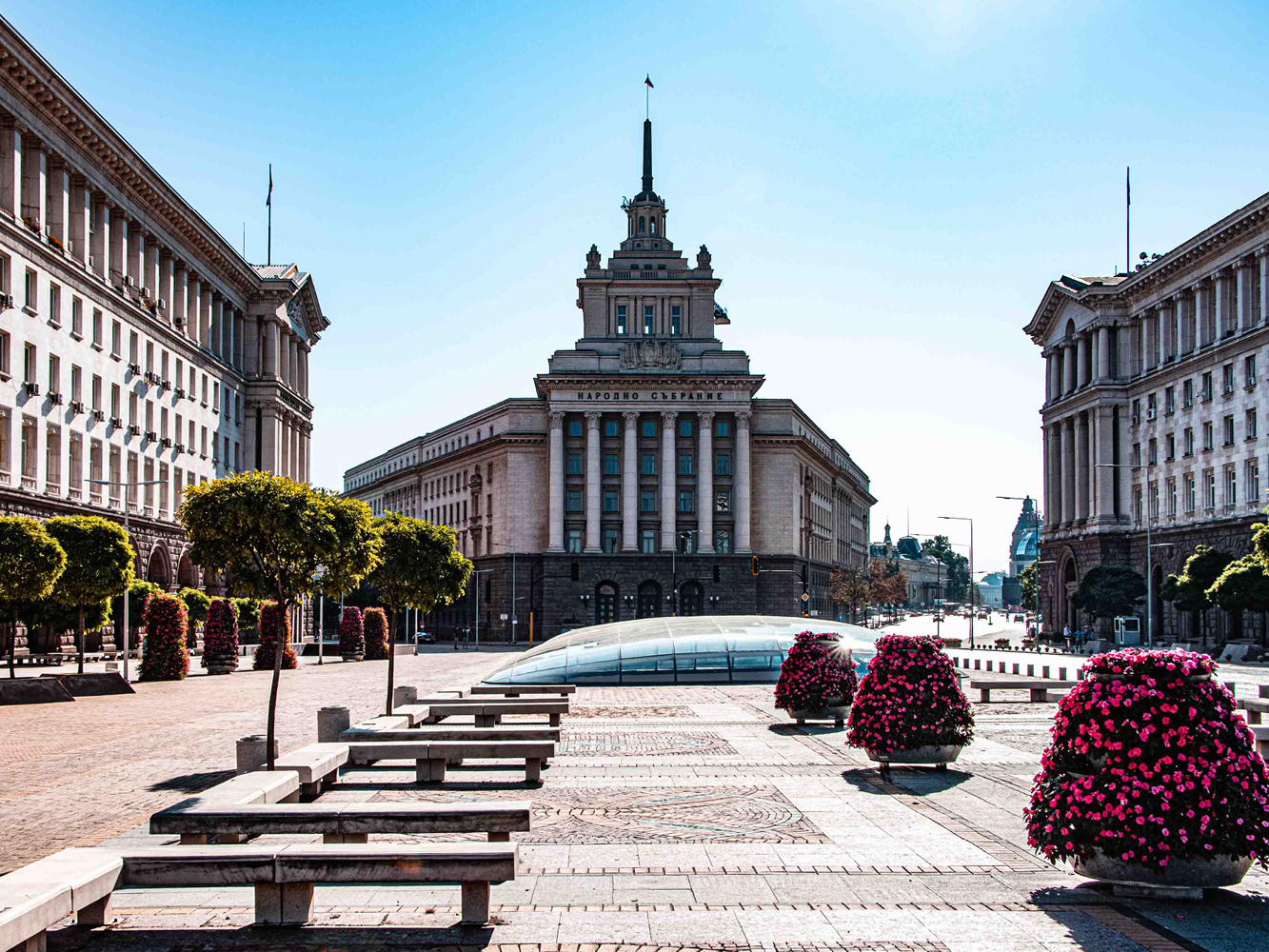
Downtown Sofia’s Soviet-built Largo Complex contains three monumental buildings that housed the Communist Party headquarters and a former sprawling shopping center
The controversial war memorial––Monument to the Soviet Army––has been targeted many times by anonymous street artists, who paint the bronze friezes of battles between workers and “the enemy” as American pop culture heroes––Superman, Captain America, Ronald McDonald, Santa Claus, and Wonder Woman, among others. Government constantly removes the paints, but I could see traces of color in the crevices of the figures. The monument was partially dismantled in 2023 despite protests, although sections of the detailed friezes remain.
In central Sofia, the architectural ensemble, the Largo Complex, built by the Soviets in the Stalinist Empire-style, used to contain the Communist Party House and the once-grand TZUM Central Department Store. While their uses have changed, their monumentality makes an impressive impact on the downtown area.