The Netherlands’ Keukenhof Gardens Dazzles with Acres of Spring Blooms
Ribbons of colorful tulips create a striking scene from the train
If over-the-top visual sensations thrill you, join me in a visit to the Netherlands’ Keukenhof Gardens, dubbed “the Garden of Europe.”
Amsterdam Central Station is a ten-minute walk from Dam Square, the city’s center plaza. Built in 1889, the stately Gothic and Renaissance Revival structure suggests a medieval cathedral, according to civic architects. About 180,000 passengers daily rush through its doors and off to other destinations in the Netherlands and to cities throughout Europe.
The last time I visited the Amsterdam station in the mid-2000s, I found it easy to find the train to Lisse, the closest station at the time to Keukenhof Gardens, our destination. We waited on the platform for the train to arrive under the unusual and impressive glass-covered cast-iron roof. (Nowadays, the Lisse train station is a popular restaurant, so visitors reach the Garden by other routes, described below under If You Go.)
Tulips have the starring role at Keukenhof Gardens
Amsterdam is the Perfect Starting Point to Visit Keukenhof
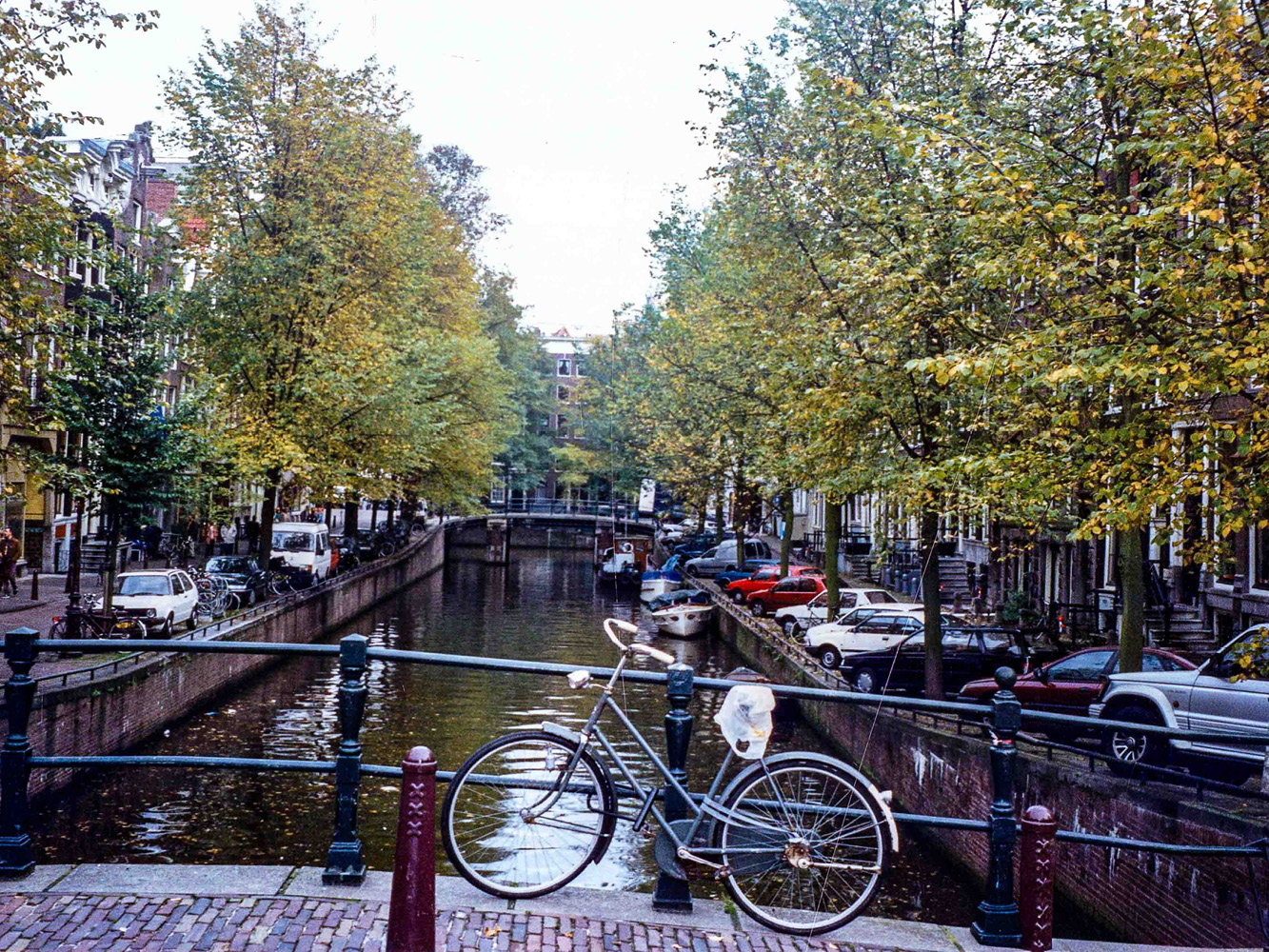
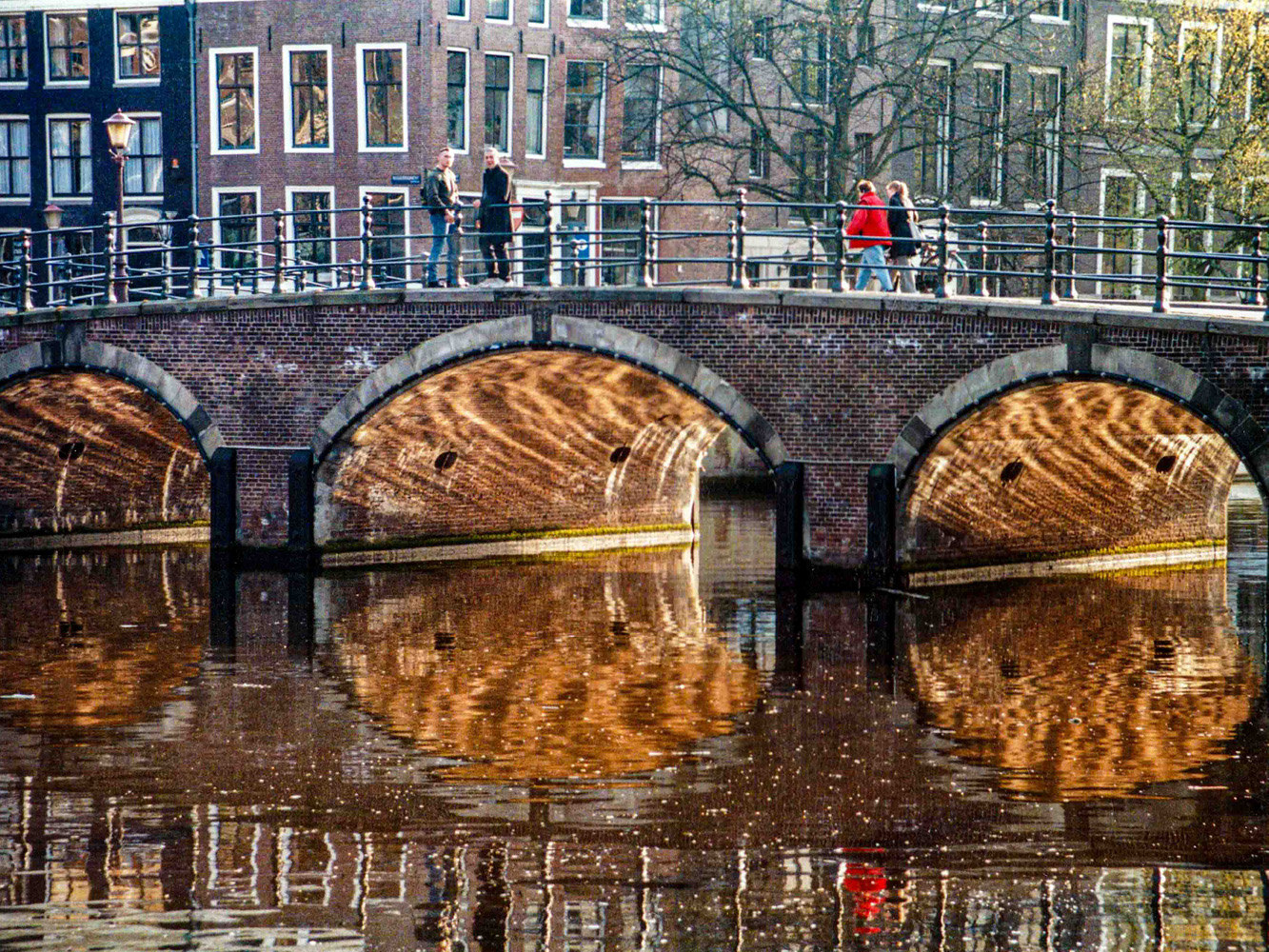
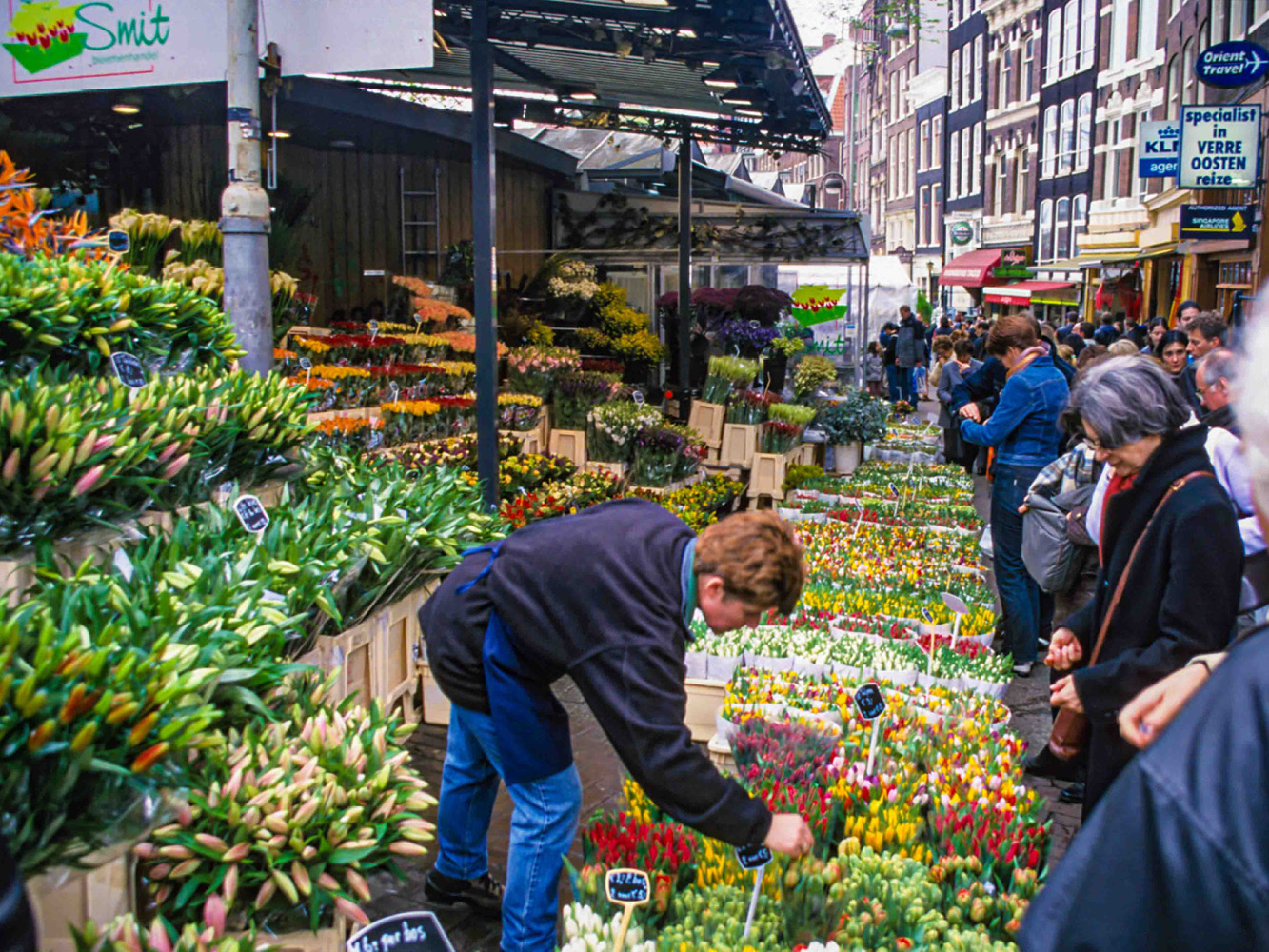
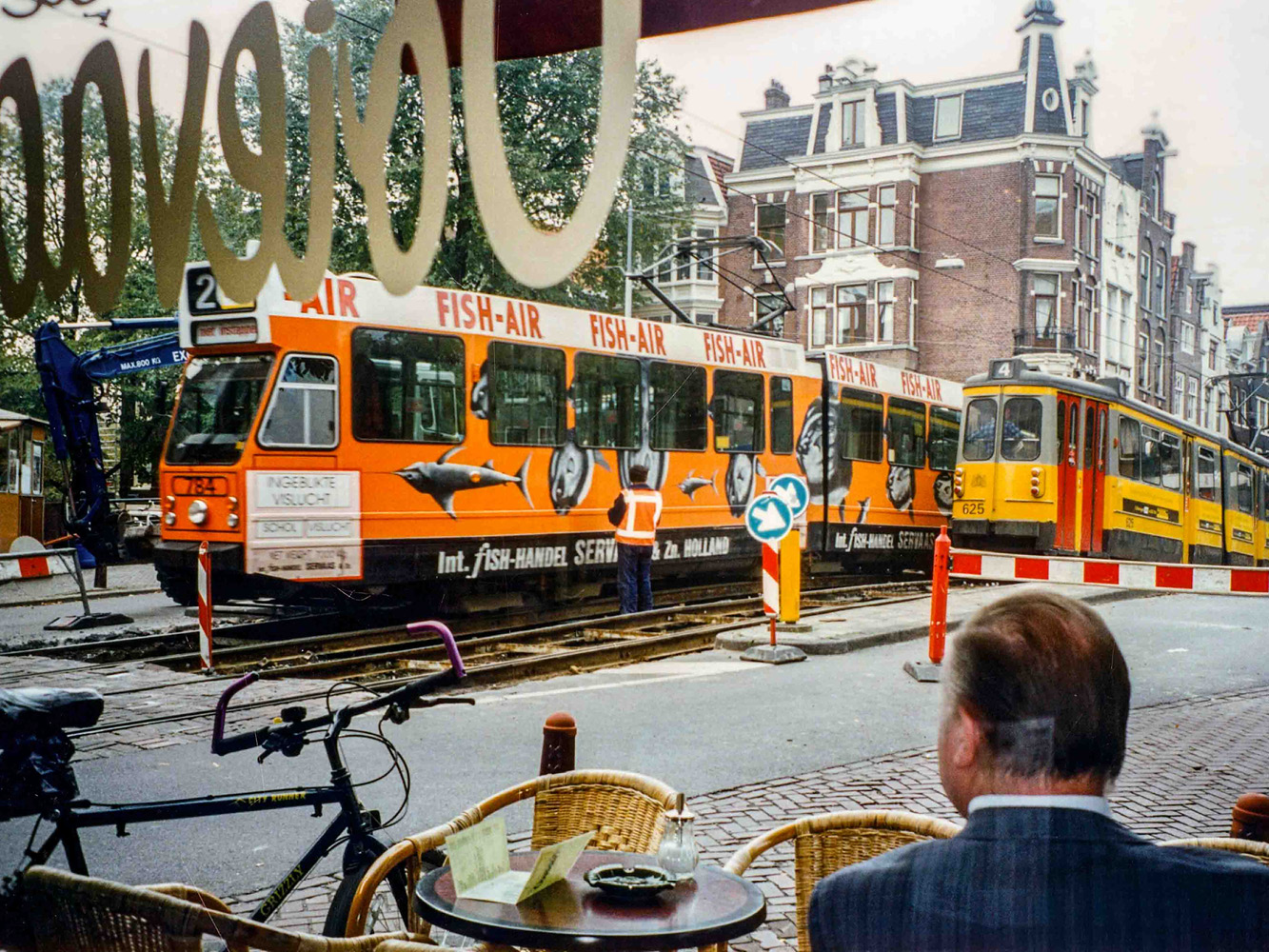
I’ve enjoyed the beauty and pleasures of attractive Amsterdam a few times. Rows of stately quintessential seventeenth-century four- and five-story narrow residences and former merchants’ houses, many with stepped gable façades, line the three concentric main canals of the 165-canal waterway system. Amsterdam enjoys a UNESCO World Heritage Canal Belt designation. Electric trams, some colorfully wrapped in theme images, crisscross the city. More bicycles than you’ve ever seen on streets before dominate the transportation system. (As a pedestrian, I’ve experienced several near collisions with cyclists, who obviously own the road.) Museums, markets, shops, parks, and entertainment districts all share the charming streets of this compact city, ranked as one of the top 10 safest cities worldwide. What a sublime experience to sit in the window of a corner coffee shop and people-watch as trams roll past, clanging their bells.
Amsterdam Central Station is a short walk from the city’s center, Dam Square
On this April visit, spring Dutch flower displays headed our travel itinerary. Once on board the train to Lisse, picturesque views of the very flat Dutch landscape slid by, punctuated by neat, unadorned housing developments in gray and green pastel shades. (A quarter of the Netherlands lies below sea level, so the horizon is remarkably level.) “Look at that!” Rick pointed to miles of fields banded in vivid stripes of color––all tulips being grown to attract tourists, then later to be cut down to redirect the plants’ growth back into the bulbs and produce larger specimens for future exports to bulb-hungry world markets.
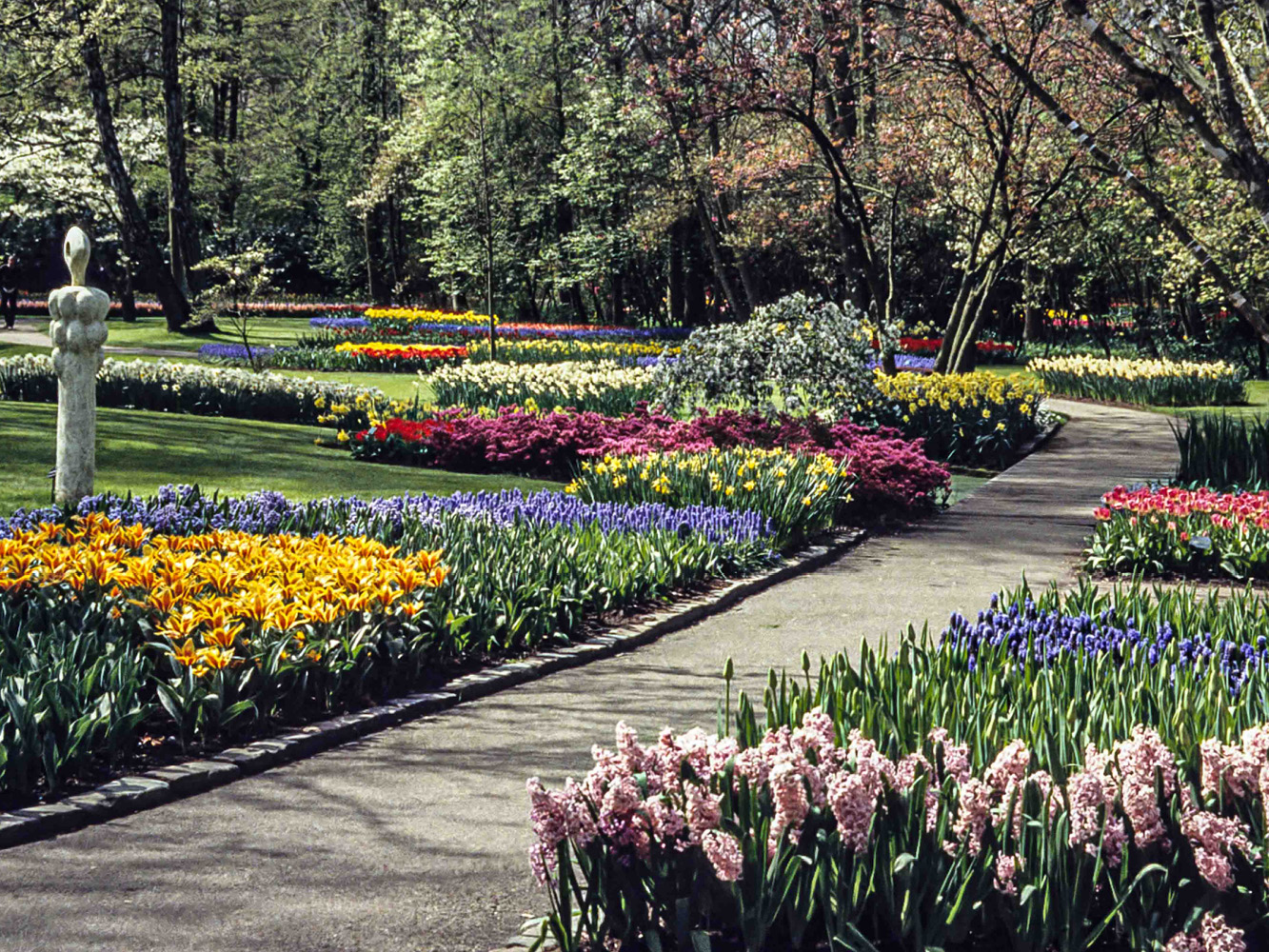
Once we disembarked from the train, we boarded Keukenhof’s waiting shuttle bus for the short ride to the main garden gate. (Buying your ticket online ahead of time saves you several dollars.) Stepping through the gate, true shock and awe grabbed me, and I gasped. I was familiar with spectacular flower and landscape displays, having worked for years at the Pennsylvania Horticultural Society’s incomparable Philadelphia Flower Show, held each March. Yet, 79 acres of continuous floral displays took my breath away, a dense explosion of color, with tulips taking center stage. A real-time kaleidoscope fanned out before us. Walkways and waterways led in several directions. Which yellow brick road to follow?! Let’s check the map.
Seventeenth-century houses line either side of the canals
Bridges cross the canals throughout the city
Customers crowd the daily flower market to buy spring bouquets
Outdoor restaurants line elegant buildings sporting Amsterdam’s trademark roof gables
Houseboats line a row of stately residences
Relaxing in a corner coffee shop watching life on an Amsterdam street
Before Flowers, the Lands Were Hunting Grounds for a Castle
That was its fifteenth century use for Teylingen Castle, where a countess foraged for herbs in her kitchen garden (“keukenhof” in Dutch). In the mid-nineteenth century, 100 years after the Keukenhof Castle was built, Jan David Zocher and his son redesigned the grounds in the English landscape style; that plan remains the basic layout of the gardens today. In 1949, twenty bulb growers developed a scheme to use the estate to exhibit their spring-flowering bulbs. A year later, the “garden gate” officially opened to massive crowds and rave reviews, establishing Keukenhof Gardens as the world knows it today.
79 Acres of Flowers Fill the Senses
These days, from mid-March to mid-May, Keukenhof showcases a hundred bulb growers and 500 cut- and potted-flower growers displaying their best quality blooms. The Garden’s landscape designer works with each exhibitor to create a design that highlights their flowers’ color palette, plant height, and bloom period.
Water provides a perfect reflection of this striking floral bed
Pink hyacinths in the foreground add variety to the spring flower collections
The woodlands’ spring-flowering trees complement the vibrant floral beds
We meandered pathways for a few hours, discovering evocative vignettes of flowers, shrubs, trees, and water features. At the Garden’s center, we wandered into the massive, heated Willem-Alexander Pavillion that hosts rotating floral exhibits in pots and vases. Outside again, a brightly painted children’s playground and viewing area for animals in a pasture provided a space for kids to run around and have fun. For lunch, we stopped at one of the many restaurants, this one located near the Garden’s windmill (open to visitors), and next to one of several gift shops, while a calliope loudly serenaded us.
Our senses fully stimulated and feet screaming for a good rest after three hours walking the grounds, we returned to the front gate and boarded the shuttle for the train station. I was convinced I had witnessed one of the manmade Wonders of the World.
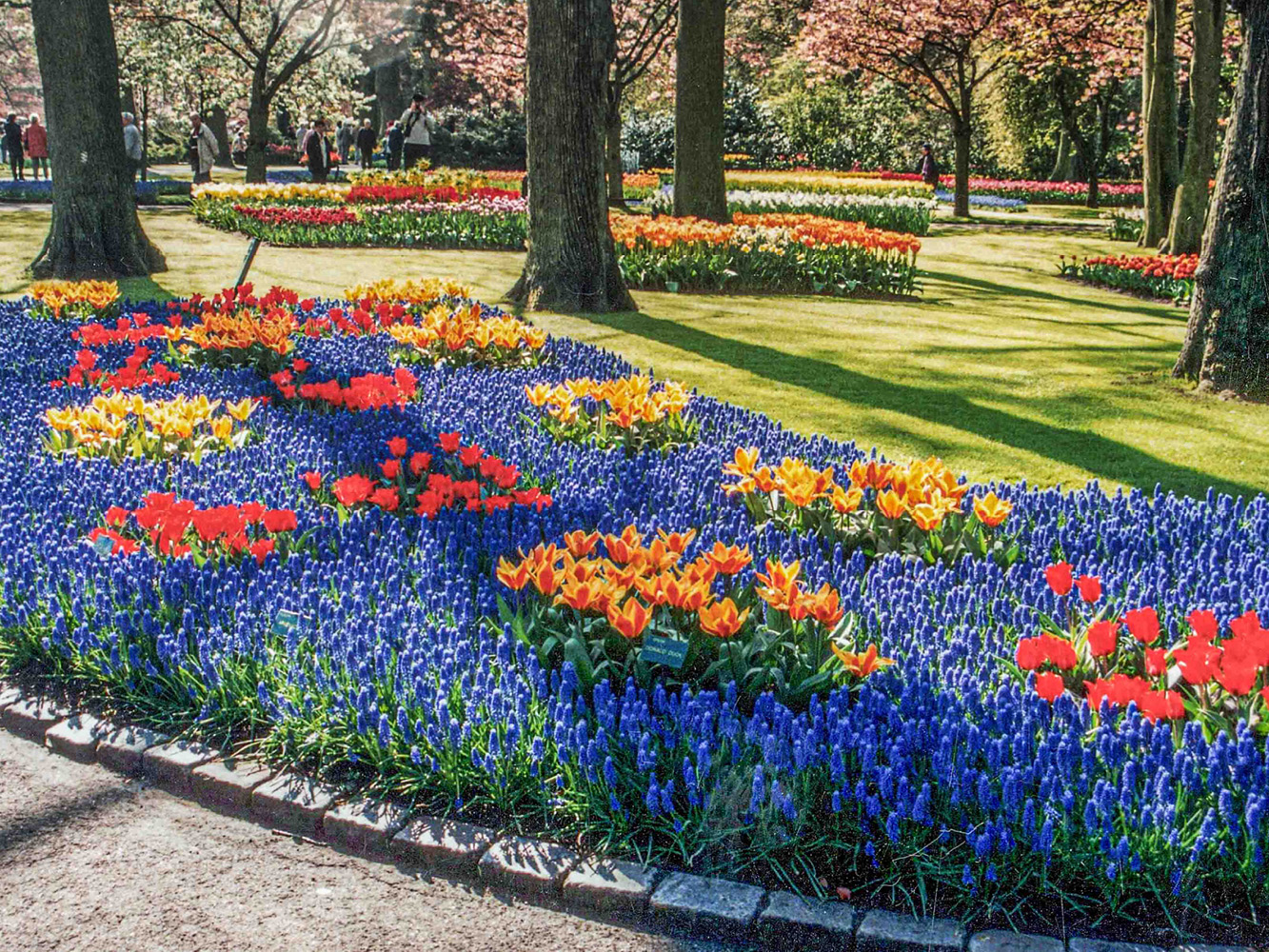
A “river” of muscari (grape hyacinths) flows around tulip beds
Water features and statuary enhance the formal sections of the Garden
“Bouquets” of tulips dazzle among the muscari
A meandering stream enhances the bucolic feel of this colorful forest landscape
Strike Up the Band for the Annual Dutch Flower Parade
I wasn’t finished, though, looking at posies on this trip. The Netherlands holds its annual Dutch Flower Parade (Bloemencorso Bollenstreek) mid-April, with fantastic floats showing off over a million full-bloom flowers. The parade begins in Noordwijkerhout, weaving its way through towns and villages for 25 miles and finally pulling into its destination city, Haarlem.
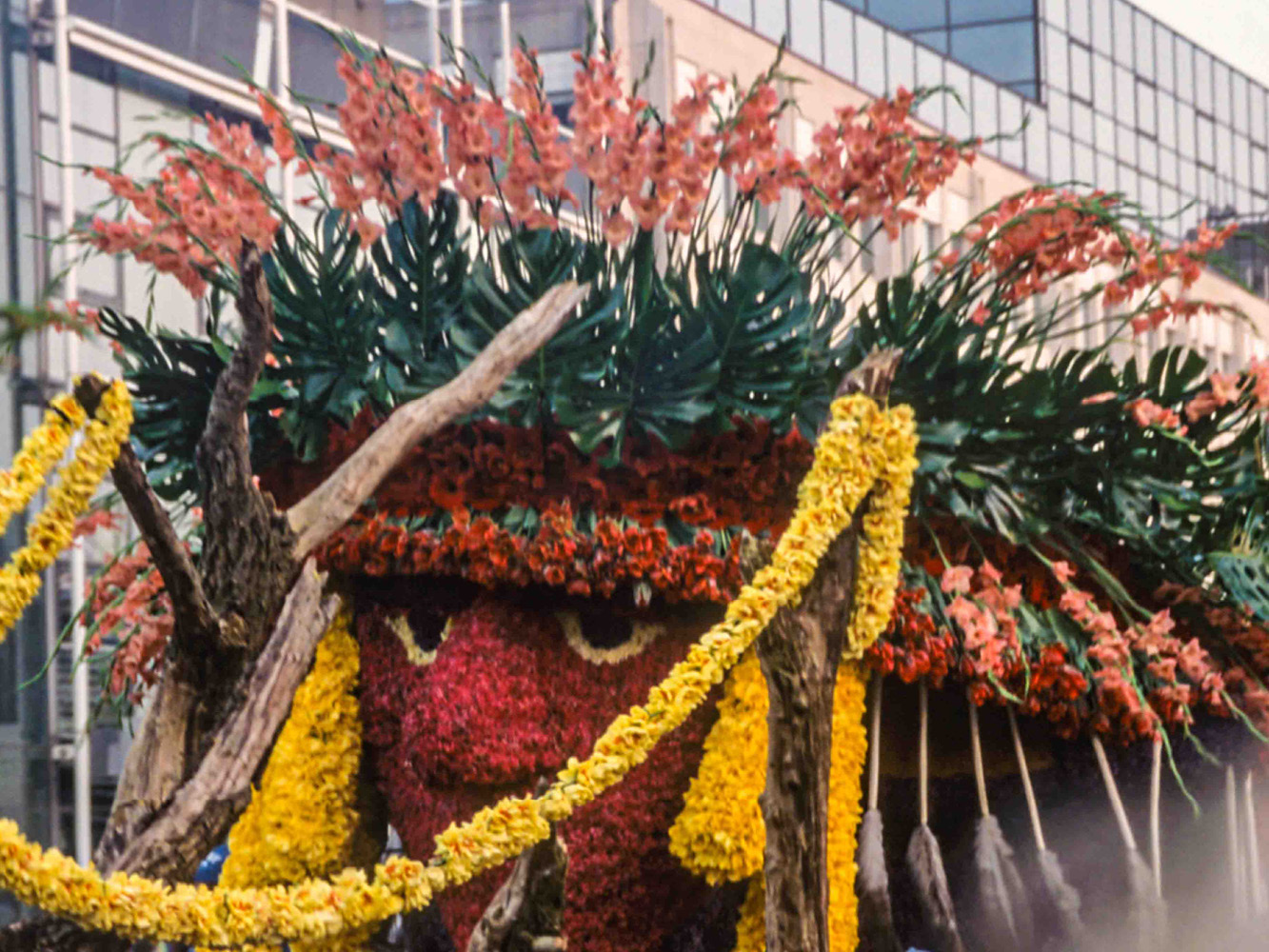
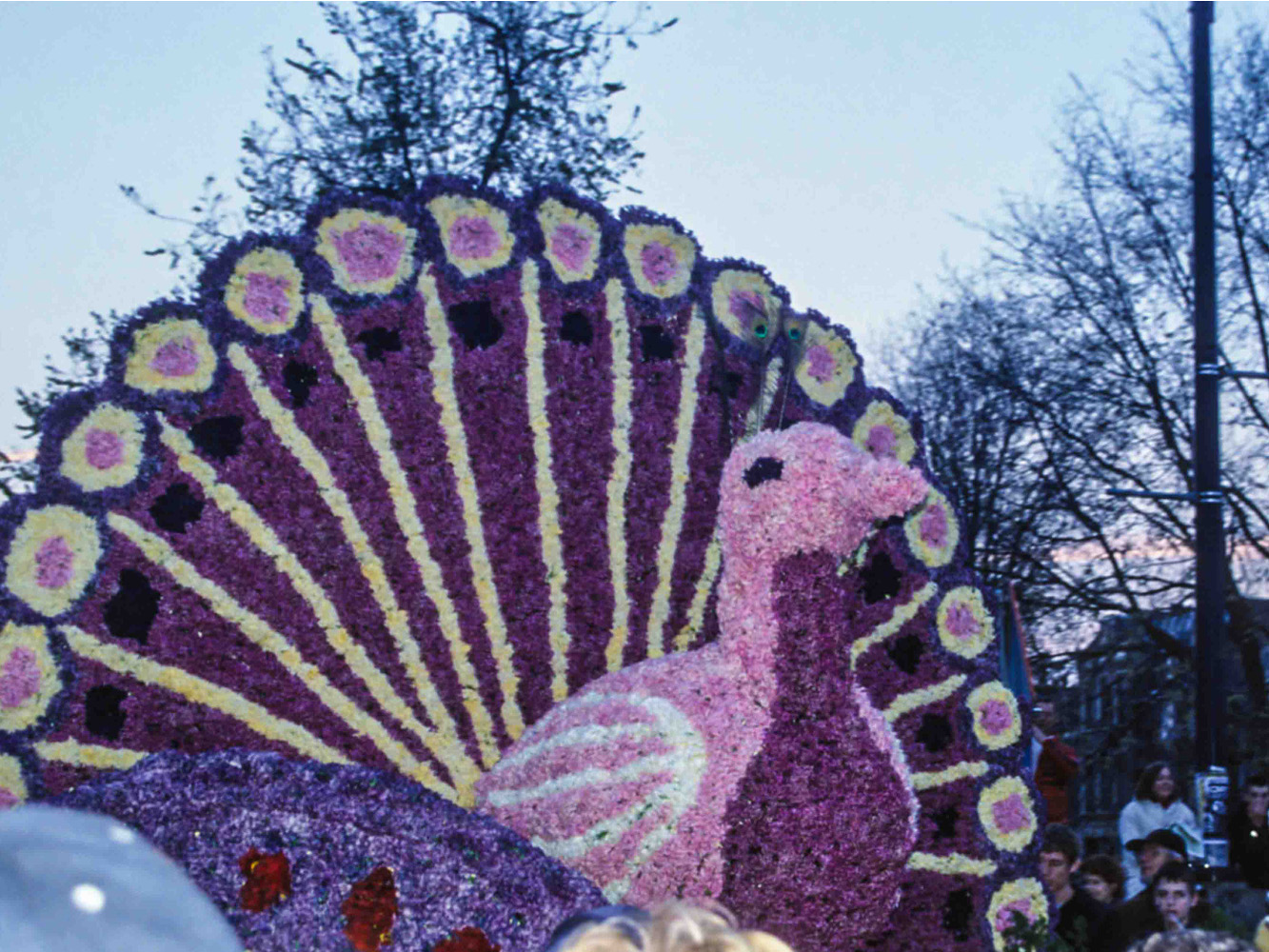
We hopped on a Haarlem-bound train for the 17-minute ride from Central Station and joined a cheering crowd shortly after to welcome the enchanting procession of fifteen floats and dozens of decorated cars featuring fanciful imaginary creatures, cartoon figures, and iconic Dutch scenes, all bejeweled with blooms.
If you visit the Netherlands to experience Keukenhof, time your travels to mid-April and enjoy the Dutch Flower Parade as it finishes its day-long procession in Haarlem.
Now I’m ready to plan a return trip to Keukenhof and Bloemencorso Bollenstreek next year. Will I see you there?
Thousands of blooms on each float bring vibrant creatures to life in the Dutch Flower Parade
If You Go
BY AIR:
Frequent non-stops to Amsterdam from most major airlines to Schiphol International Airport.
Getting to Keukenhof from Amsterdam:
By Train/Bus—
Take the train to Schiphol Airport or Leiden Station;
Then take the Keukenhof Express (#852, 854, 858) to garden entrance (20 minutes)
By Combiticket––
Round trip by bus plus entrance fee;
Purchase online at the official Keukenhof site (keukenhof.nl);
From $36
GARDEN ENTRANCE FEE:
€21 online (~$25); €25 (~$30) at ticket office
GARDEN HOURS:
Open mid-March to mid-May, 8:00 a.m. – 7 p.m. (19.00)
Allow three hours to tour
Least crowded/best time for photos—before 10:30 a.m.; after 4:00 p.m. (16:00)