We scheduled our nineteen-day journey to the far-off lands of the fabled Silk Road countries in Central Asia six months before our departure with Bestway Tours and Safaris. But I always begin planning way before that, and this journey required more thoughtfulness about the possible destinations. Part of embarking on any exotic expedition involves researching the internet; reading fiction books, non-fiction articles and guide books; and studying maps to set priorities for sight-seeing. Of course, I learn so much more once I’m on the ground submersed in the local culture. Yet understanding the history of a place and the dynamic influences that shaped it gives context for the real time experiences. Let’s look at what happened there over the centuries.
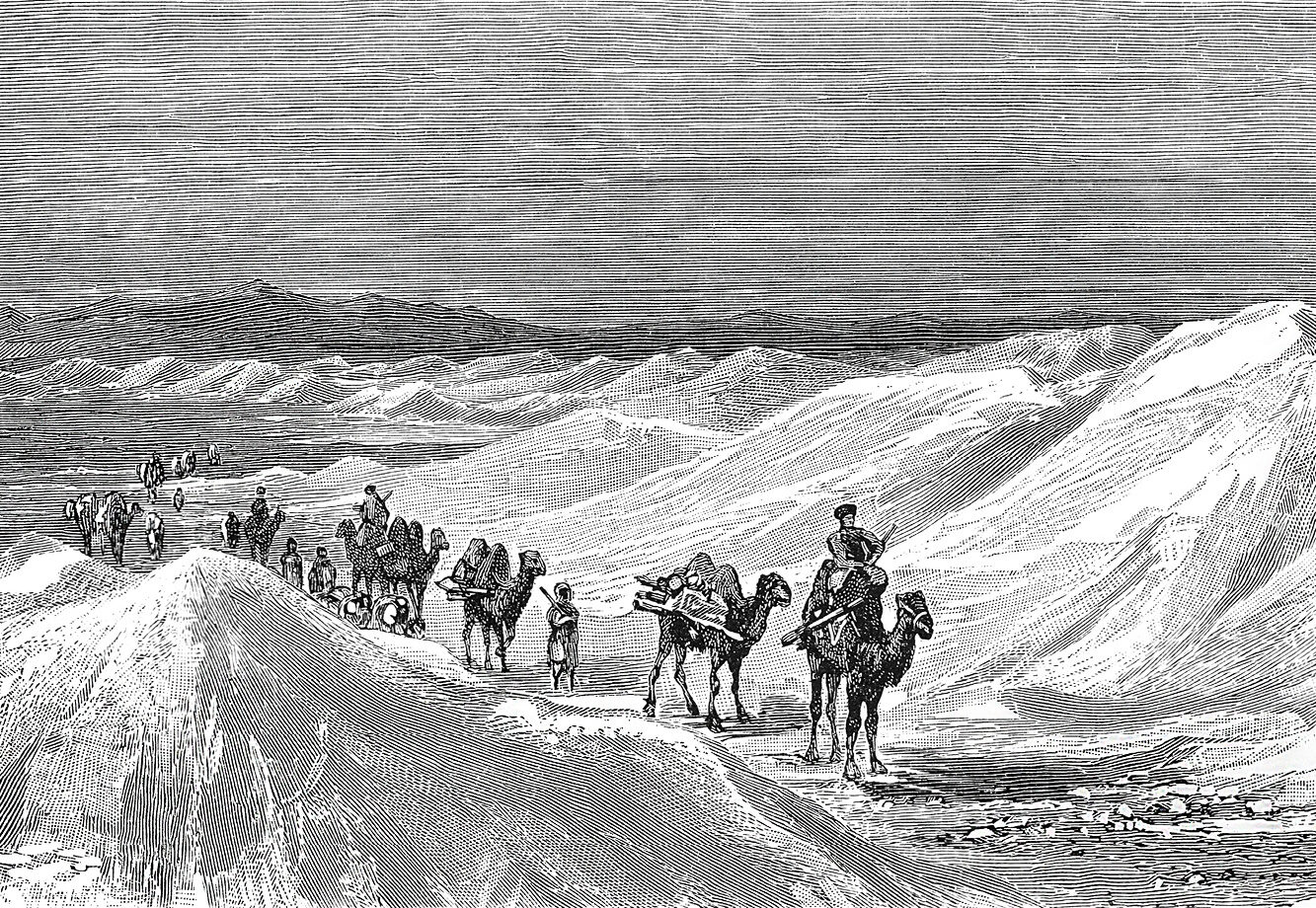
Caravans crossed the Silk Road’s mountains and deserts to carry goods west to Rome
Ancient Civilizations Create the Silk Road
The Silk Road––a series of roughly parallel East-West routes that branched off in different directions to individual centers of trade––reached its zenith just shy of a thousand years ago. These routes saw camel caravans of traders and adventurers carrying goods new to the West from China, on their way to Rome. From the other direction, traders left Rome traveling east with products new to the Orient. Central Asia sat at the crossroads of this network of travel routes. An extensive system of middle men developed who exchanged goods for profit to traders returning to their homeland. Great wealth accumulated, and rich cities and kingdoms grew into major trading centers. They also became meccas for arts and culture, architectural innovations, religions, and fertile places for the creation of new ideas.
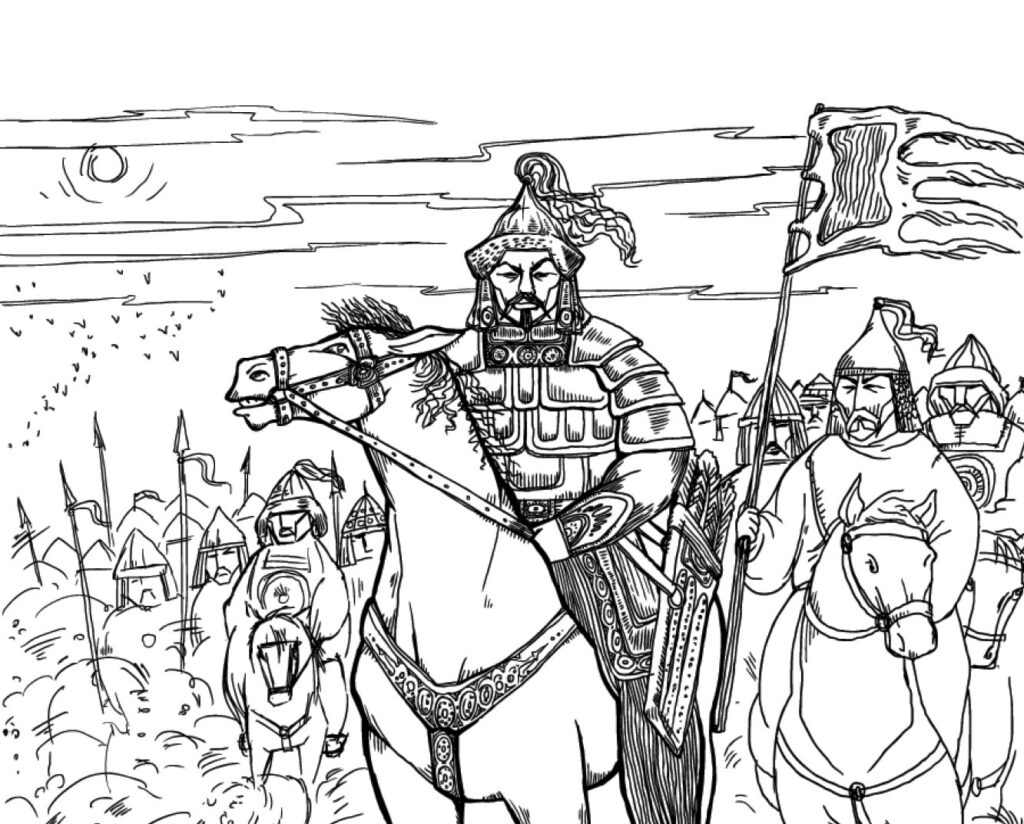
But the glory of the region came to an abrupt halt in the beginning of the thirteenth century. Genghis Khan, and later his grandson Kublai Khan, destroyed the thriving cities and executed much of Central Asia’s urban population to unite regions along the trade routes and create the world’s largest contiguous empire in history. (The Mongol Empire still holds that distinction.) It stretched from the Sea of Japan to Eastern Europe.
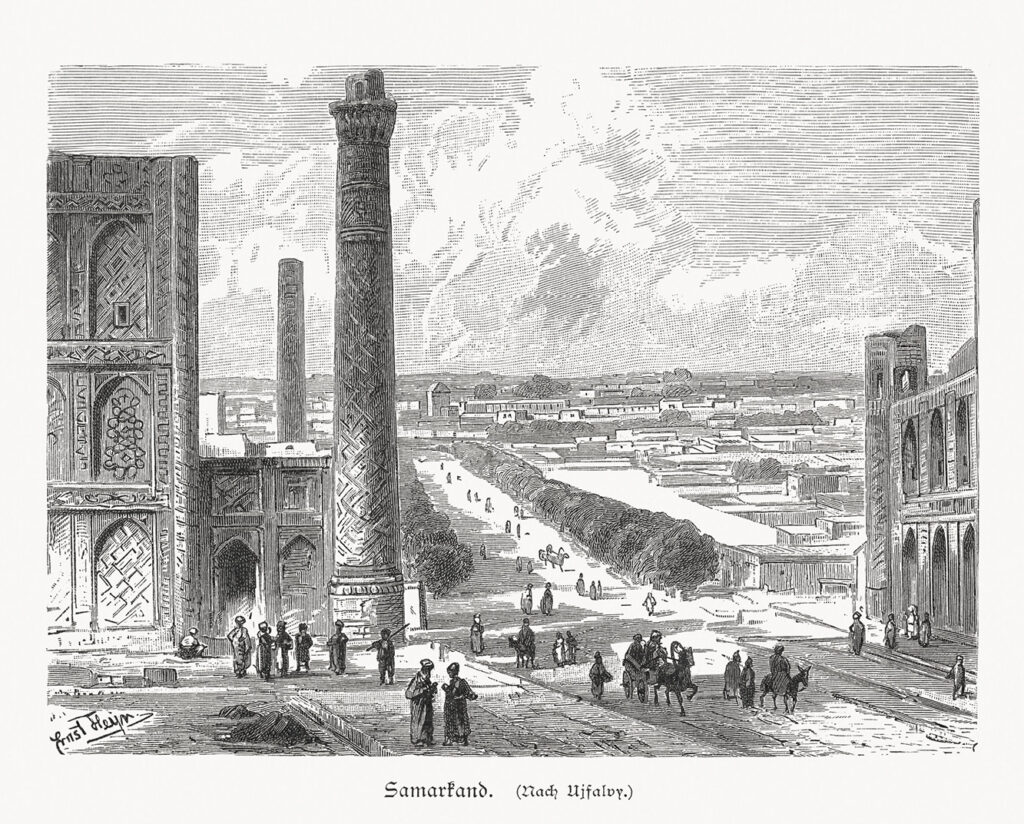
The conqueror Timur rebuilt Samarkand as the capital of his empire and center of arts and culture
A few centuries later as the Mongol Empire weakened and split apart, a distant relative of Genghis called Timur (Tamerlane, as I learned in high school) brutally conquered Iran, Afghanistan, and Central Asia to establish the greatest empire of them all––the Sunni Islamic Timurid Empire. A patron of the arts and religion, he rebuilt several of Central Asia’s Silk Road cities, enhancing them as centers of culture, religion, and wealth. Timur made the city of Samarkand the capital of his empire , which also helped to revive the nearby city of Bukhara. Both of these cities are in present day Uzbekistan.
Another century later, world commerce had moved to the seas, diminishing the reliance on overland trade. With the outbreak of the Bubonic plague that originated in modern Kyrgyzstan and spread to Europe where it killed a third of the population, these events rang the death knell for the Timurid Empire and the Silk Road. People abandoned once vital towns and cities across the region, and they languished for several more centuries. Pastoral nomads of different tribes gradually spread into this region, moving seasonally to feed their herds of animals.
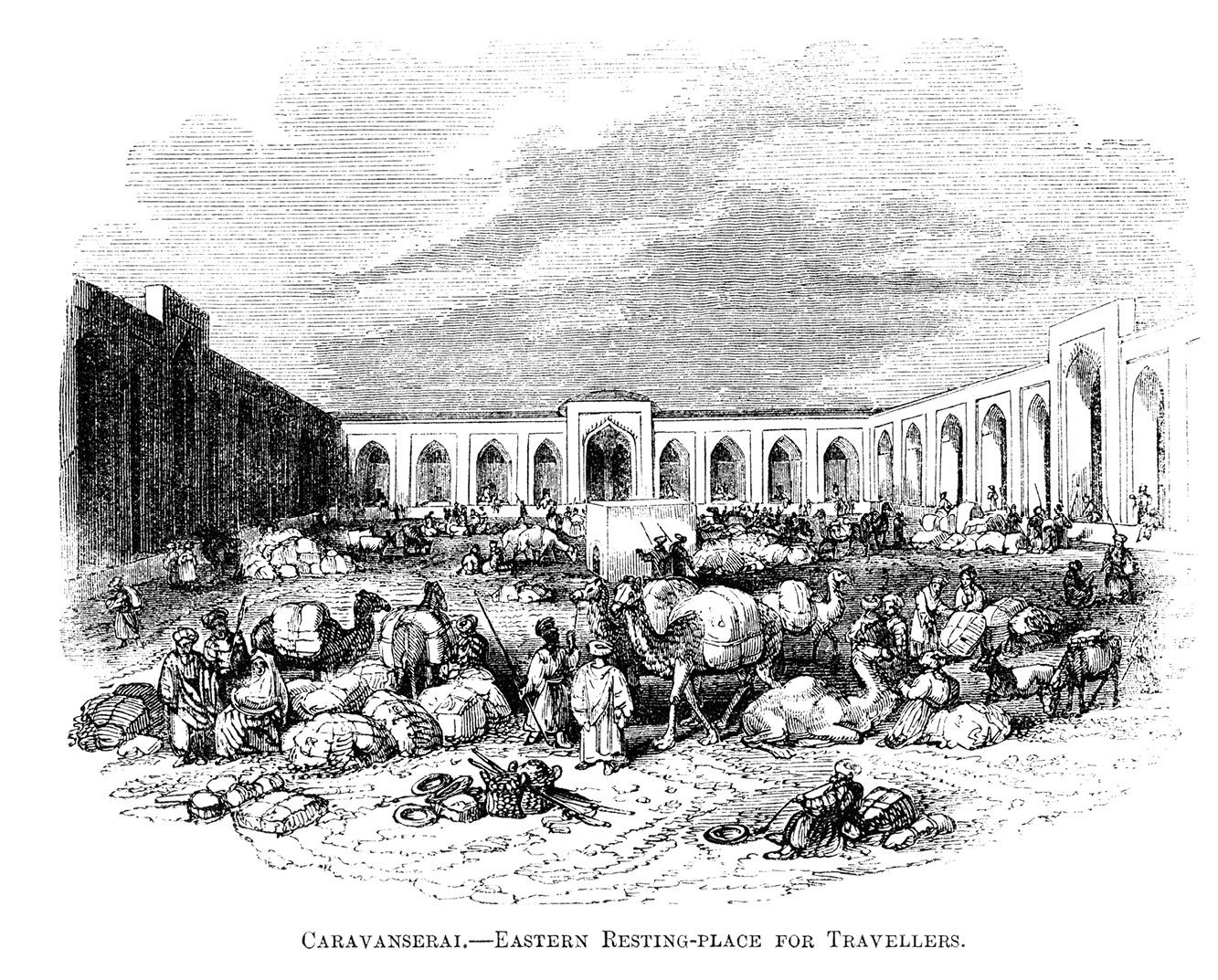
Merchants rest at a caravanseri, an overnight resting place for drivers, camels, and goods
Genghis Khan and his Mongol Horde prepare to attack a Silk Road city
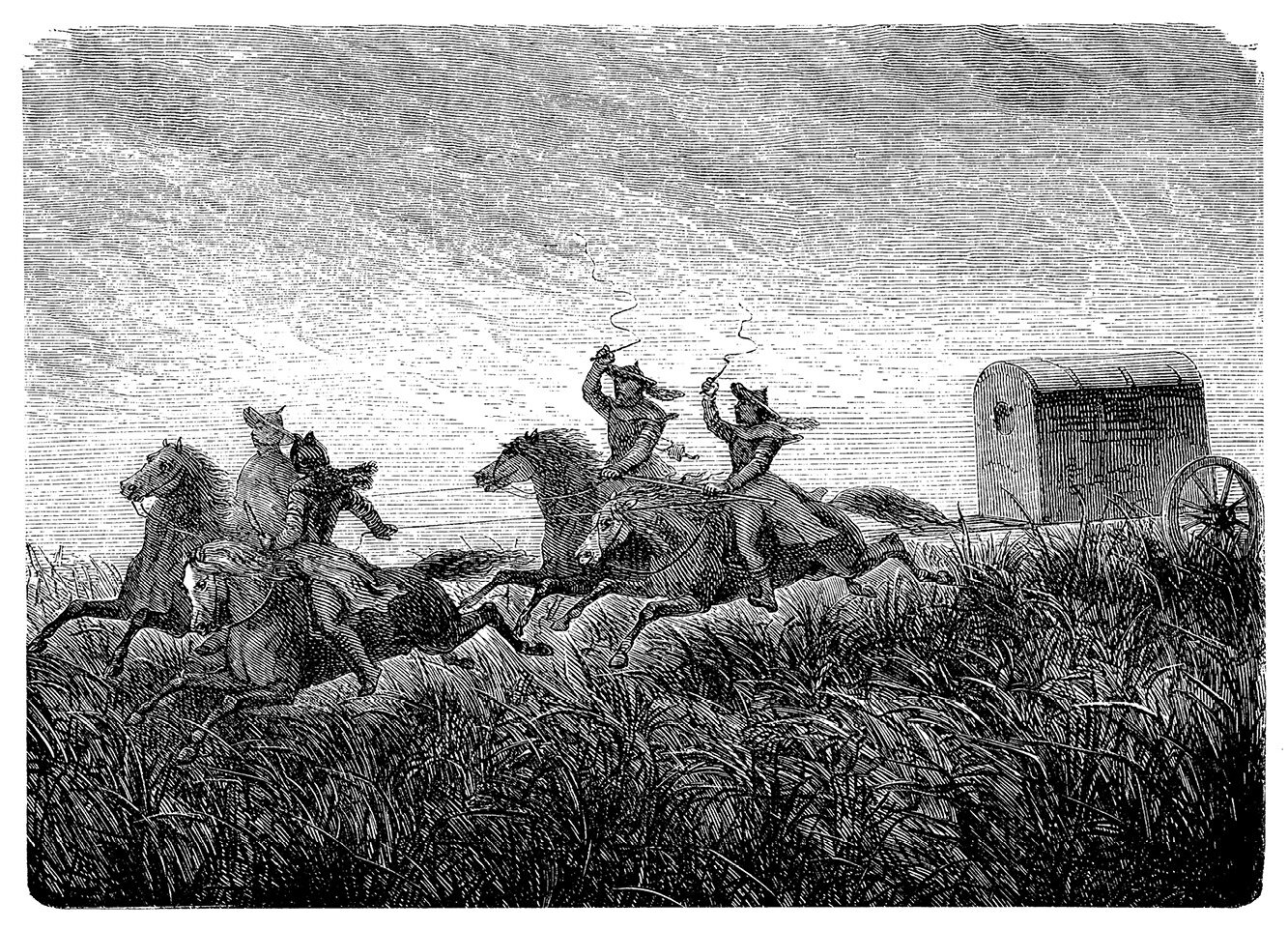
Mongols attack a caravan along the Silk Road
The Modern Era Transforms the Silk Road Region
The nineteenth century saw Czarist Russia move into the area and establish military control over the former Silk Road region. With the Bolshevik Revolution of 1917, Soviets replaced the defeated Czarist armies, and their control had the greatest impact on Central Asia since the Silk Road heyday, lasting through most of the twentieth century.
The Soviets divided the region into five “Stans” and established them as Soviet Socialist Republics (SSRs). They developed and enhanced capital cities, industrialized production, created collective farms, and forced the nomadic communities to settle permanently to work in agriculture and in factories. The Soviets also invested in restoring historic sites, including significant Islamic buildings and architectural treasures. (The quality of the workmanship has received much criticism over the decades, unfortunately.) At the height of Soviet dominance, Russians accounted for 20% of Central Asia’s population.
With the 1990 dissolution of the Soviet Union, the newly independent Stans––Turkmenistan, Uzbekistan, Kyrgyzstan, Tajikistan, and Kazakhstan––found themselves adrift in the global world of economics, politics, and international relations, without the Soviet Union’s support. They all struggled for a decade to find footholds of stability, sometimes squabbling among themselves for resources. Their populations suffered poverty and joblessness. Our Russian guide in Kyrgyzstan told us his parents and siblings experienced dire times during this decade.
However, most of the Stans have made good progress, enough to gain economic stability despite continuing poverty in rural areas, exploit some of their natural resources for export, revive indigenous arts and crafts, and host visitors to appreciate their historical treasures and stunning natural beauty.