We Sail India’s Ganges River in Search of the Bengal Tiger
We travel through small villages of India’s state of Bengal to the Ganges River to board our boat to the Sundarbans
India. The name evokes a range of reactions and emotions, from wondrous and magical to crowded, noisy, and poor. From my seven trips to the subcontinent, I can confirm that India exhibits both extremes. I’ve made my own peace with this dichotomy, allowing myself to experience the rich aspects of this 5000-year-old civilization and culture that fall in between the extremes. The sum of these experiences has greatly impacted my life and opened my eyes to a broader way of being in life.
Huge thanks go to my long-time Bengali friend, Eva, who introduced me to her embracing Kolkata family almost forty years ago. Eva’s Ma adopted Rick and me as her American sons, and the doors to their world of India opened to its history, cultural tapestry, a different spirituality, and the country’s ethnically diverse people.
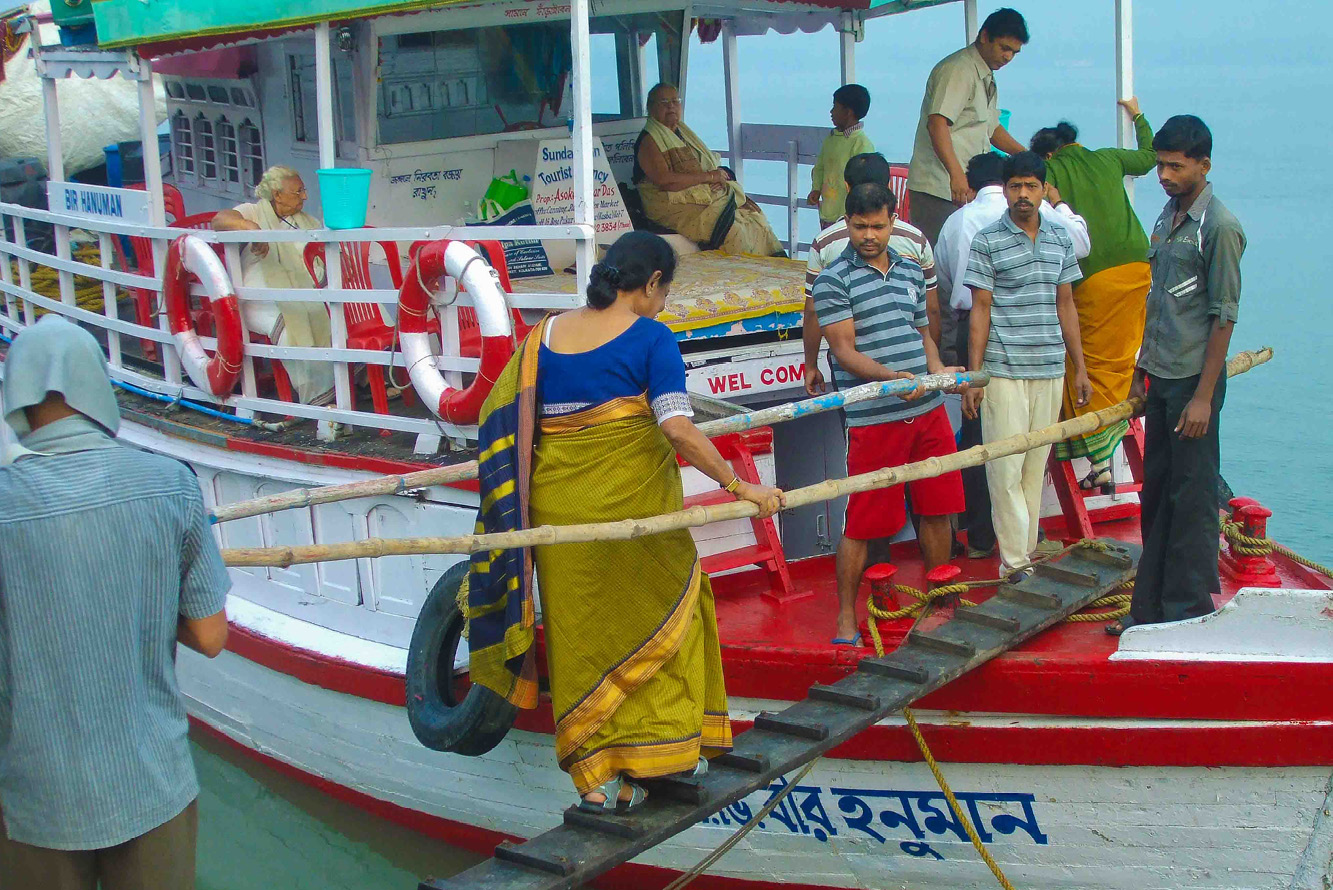
Our travelers’ troupe boards the boat on a makeshift ramp
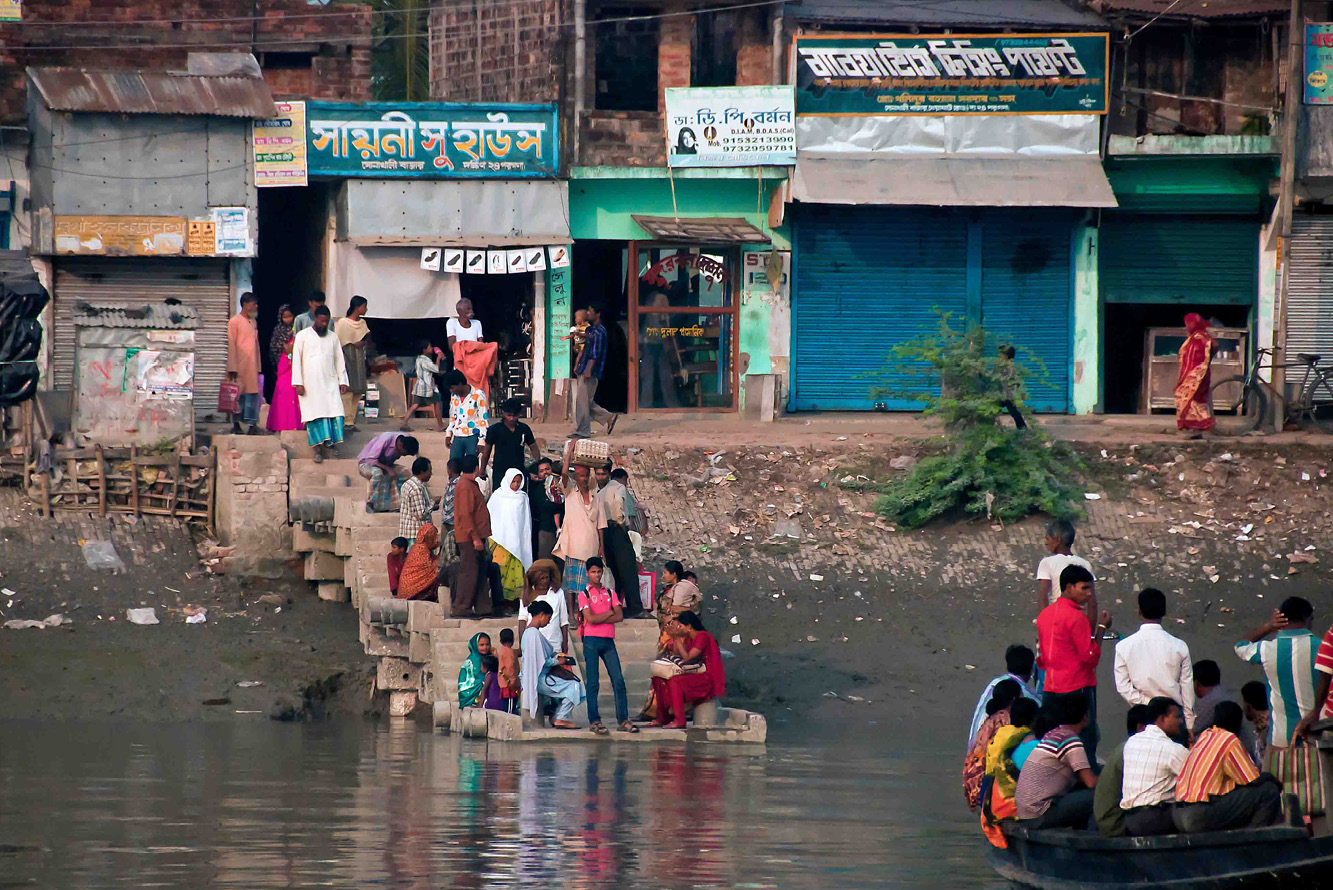
Water “taxis” stop at villages to pick up passengers
On one visit to Kolkata several years ago, Ma and her sister Mashua (mother’s sister in the Bengali language, or “aunt “ to me ) planned a two-day excursion down the Ganges River to the Sundarbans, the delta formed by the confluence of three major rivers before they empty into the Bay of Bengal. The Sundarbans and its hundreds of large and small islands stretch almost 4000 square miles across India’s Bengal region to neighboring Bangladesh and includes four protected UNESCO World Heritage sites. As the world’s largest mangrove forest, it’s the home of a plentiful and diverse array of wildlife, including the elusive Bengal tiger. Of course, we hoped to spy a cat in the woods that line the river bank.
Already in their mid-80s at the time, the matriarchs organized the adventure for our group of thirteen––six family members, two elderly family friends, our two drivers, Mashua’s servant, and us. A two-and-a-half-hour car ride from Kolkata through the villages and countryside of rural Bengal took us to the town of Dhamakhali along the Ganges for embarkation.
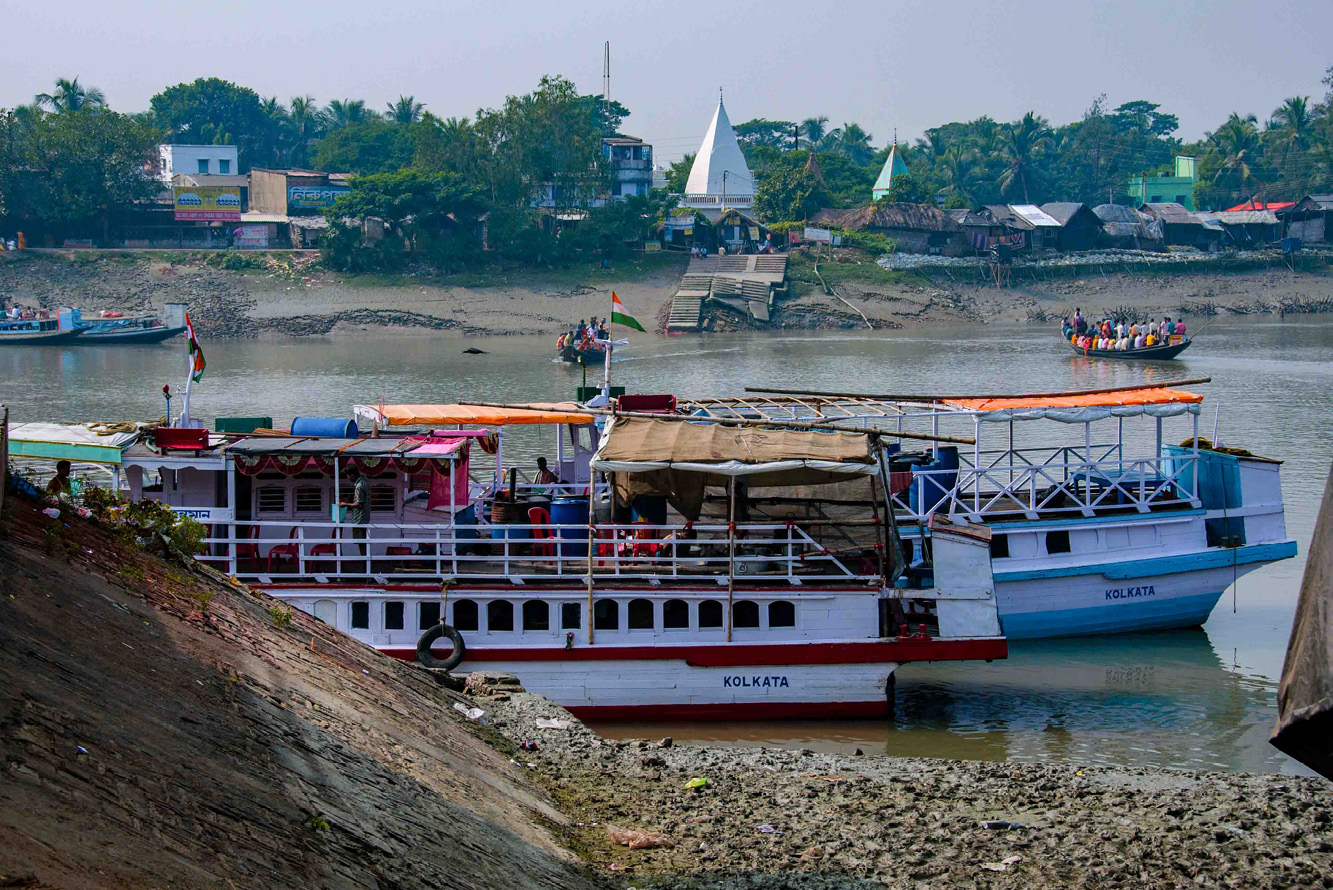
Our boat for the two-day trip accommodated guests, a cooking area on the back upper deck, and a dining room below
The excursion was an extraordinary event. Granted, the boat and the overnight stay at a government-run lodge were not luxurious. The devised gangplank for the “ancients” to board and disembark caused much concern. Rick and I were assigned to help them as they crossed, earning us the title “Lady Wallahs.” We saw few animals (let alone a tiger!), except for the badly behaved monkeys at our lodge. One monkey tried to steal a pack of biscuits Eva’s nineteen-year-old niece brought onto the balcony. The monkey grabbed her at one point; she broke away screaming and ran into Eva’s room, slamming the door. My job was to scare the simian away.
All those issues really didn’t matter in the end. What mattered was the lazy pace of the boat, laughter and playful fun, and chats with Ma and Mashua in the best English they knew. In one conversation, alone with Mashua in the prow of the boat, she rubbed my shoulders and said she and I knew each other in another life. Chitra, a family friend and radio personality, sang songs from the poems of Rabindranath Tagore, India’s Nobel Prize winner and poet laureate from the early twentieth century. We devoured scrumptious Bengali food cooked on board. A peaceful trance enveloped me for hours at a time and felt my soul open up to the communal loving spirit of the Bengali culture.
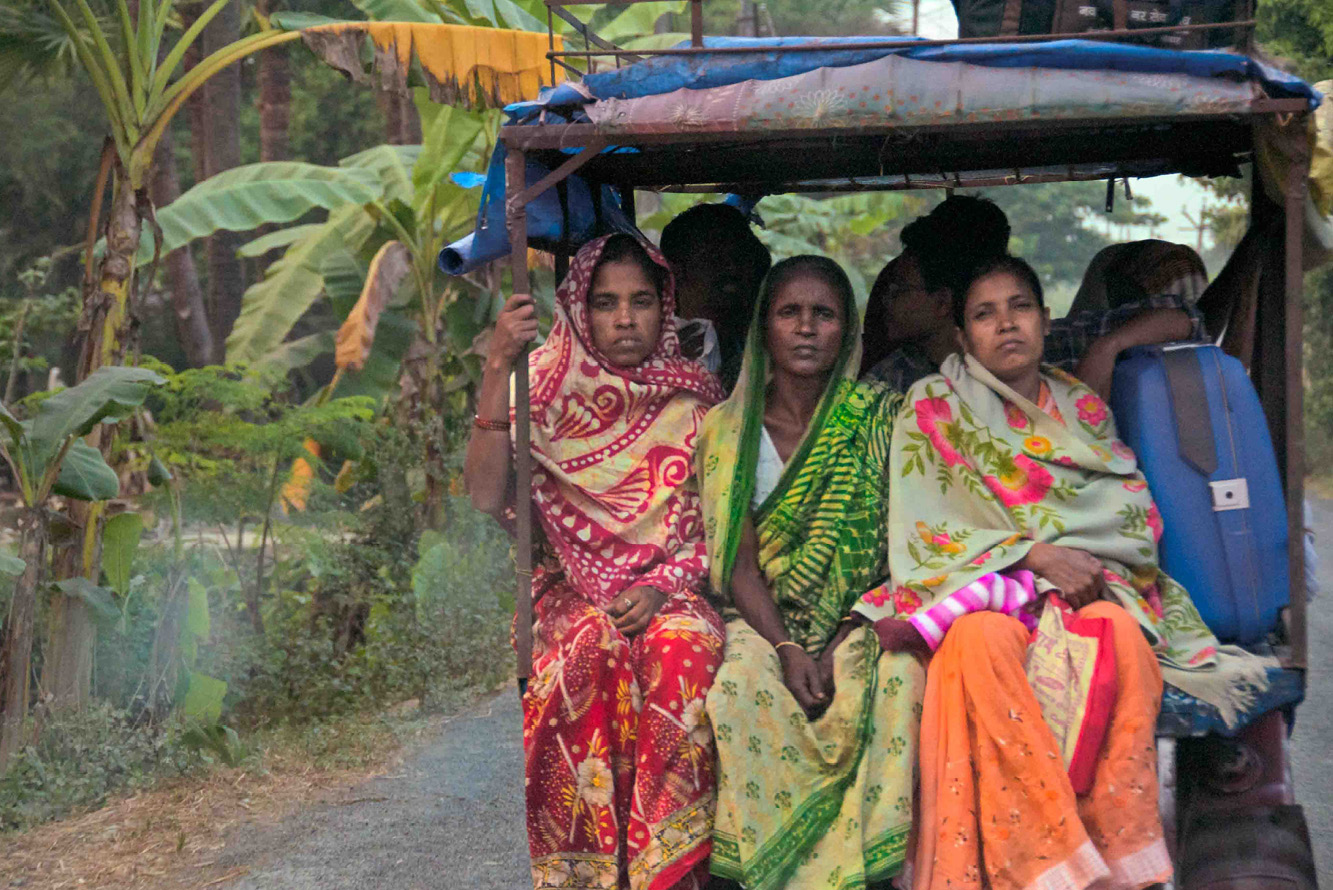
Tuk-tuks serve as taxis to carry passengers between villages and markets
Made over a dozen years ago, the slide show includes scenes of village life shot from our moving car and also photos of men loading the boat with supplies. When we returned to Kolkata, Eva took us to Patuapara, a neighborhood famous for its artisans who make images of gods and goddesses for the several Hindu celebrations that occur each year. Later, Suresh, Eva’s husband, took us to the Parashnath Jain Temple complex of four separate beautiful and artful temples. Craftsmen were carefully painting a building’s façade. A few photos of these two events appear at the end.
Make sure you turn up the volume when viewing the show.
In the future, I’ll publish more of our adventures on fascinating India. Like embers, they glow in my mind as some of my most transformational travel experiences. I am forever grateful the universe granted me this profound gift.
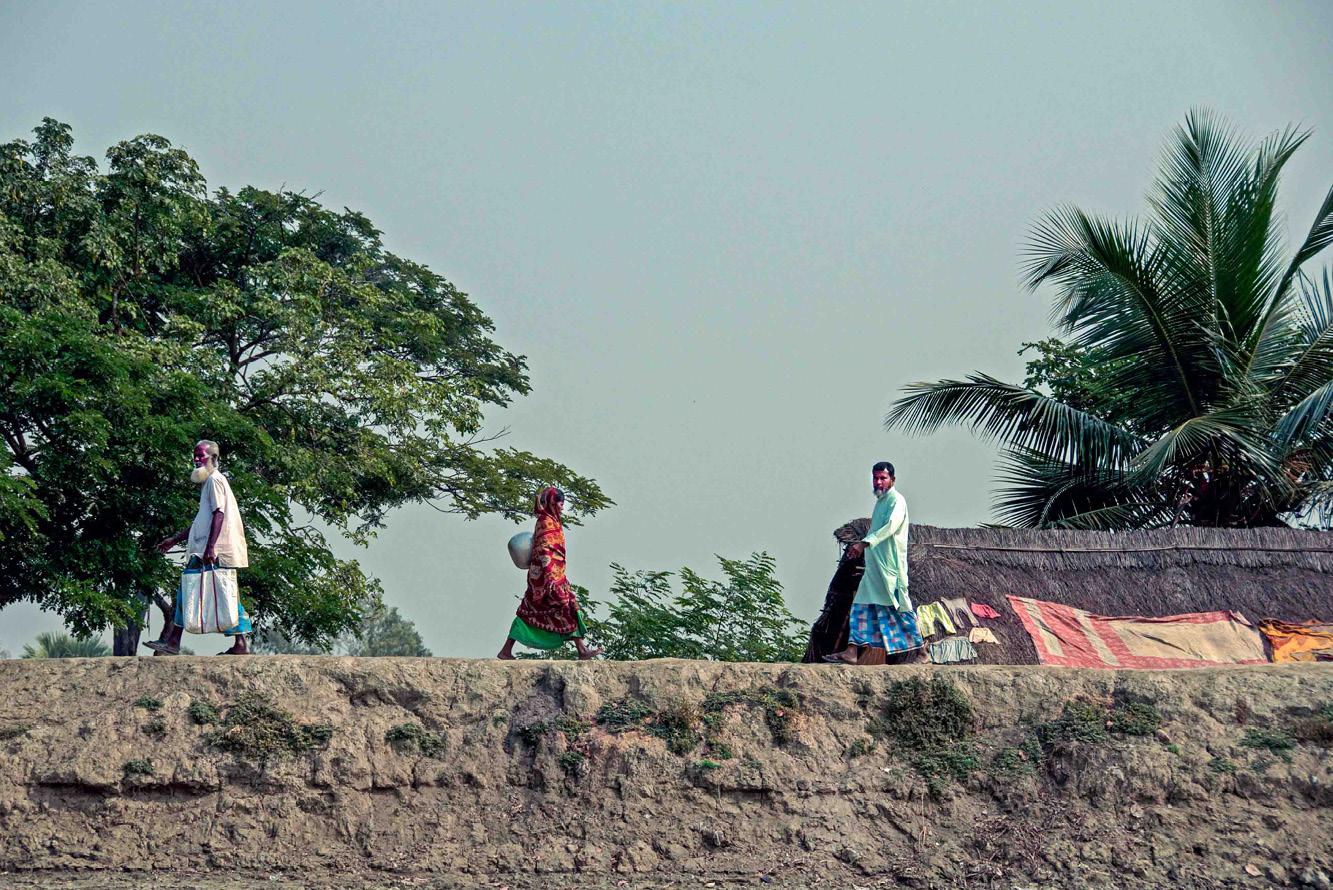
Walking is a main form of transportation for these villagers along the banks of the Ganges
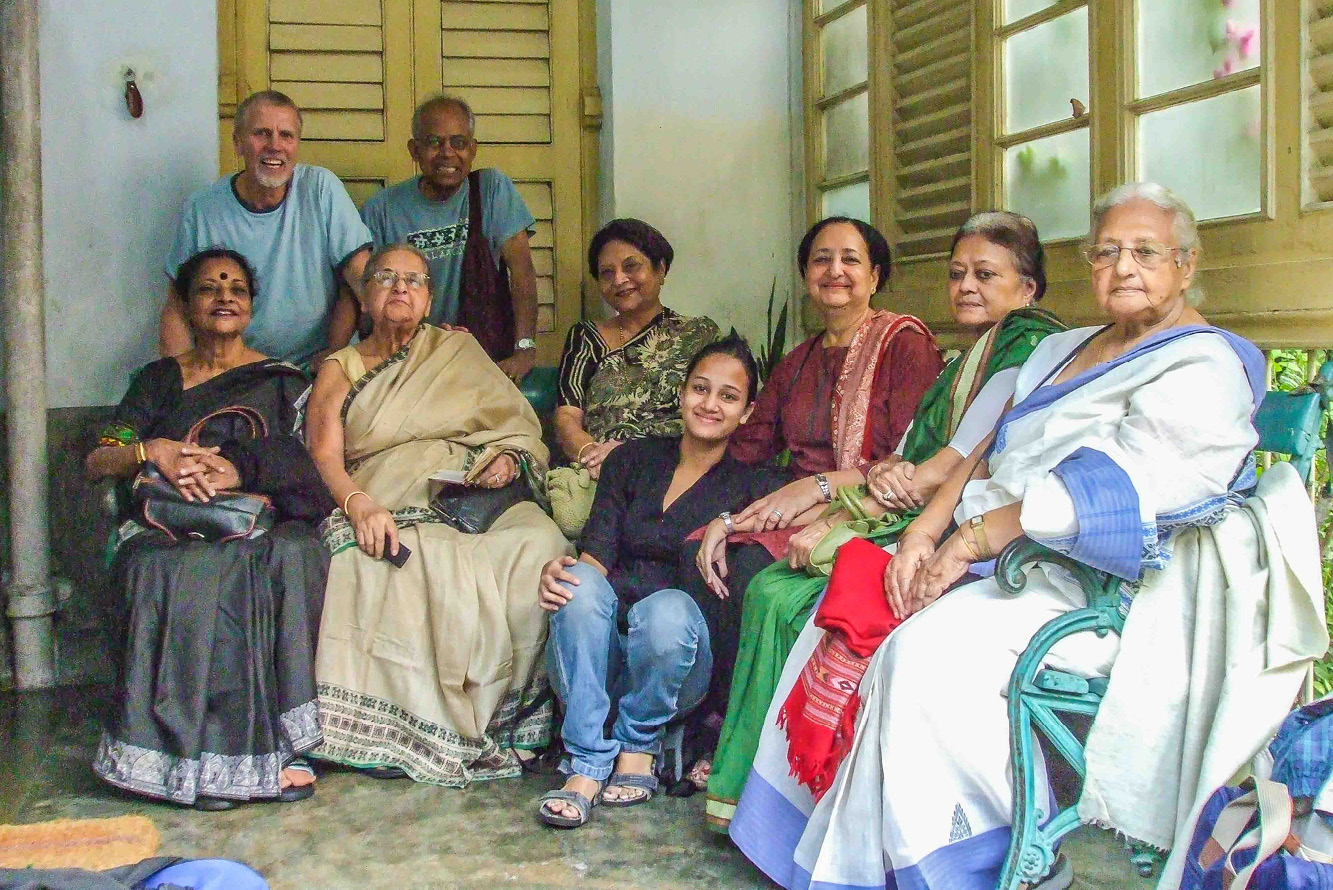
The sailing group poses for a portrait on the porch of the family home in Kolkata